
You see "aerospace grade" and assume it just means "strongest." This leads you to over-spec an expensive alloy, wasting money on performance criteria that your industrial part will never need.
"Aerospace grade" is not a measure of strength, but a philosophy of certainty. It signifies that an alloy's performance—especially its fatigue life and fracture toughness—is so extensively tested and documented that its reliability becomes a non-negotiable guarantee, not just a specification.
I remember talking with a new machining client from the UAE. They wanted a quote for a large forged ring made from 7075-T6, the classic aerospace alloy. The part was for a base fixture on a heavy industrial sorting machine. I asked why they specified 7075. The engineer said, "We want the best, the strongest. Aerospace grade." I understood his logic, but I knew we could serve him better. I explained that while 7075 is incredibly strong, its primary benefit is its strength-to-weight ratio, which wasn't a factor for his static, ground-based machine. It's also more expensive and less corrosion-resistant than other options. I suggested a forged 6082-T6 ring instead. It had more than enough strength for the job, better corrosion resistance, and was significantly more cost-effective. He was grateful. We showed him that choosing the right material isn't about finding the "best" grade, but the smartest grade for the specific mission.
Is 6061 considered an aerospace grade alloy?
You know 6061 is a reliable workhorse alloy. But you see it used less in critical aircraft parts and wonder if it's "good enough" for your high-performance application.
Yes, 6061 is widely used in aerospace, but typically for secondary or non-critical structures. While it lacks the raw strength of 7075, its excellent balance of formability, weldability, corrosion resistance1, and cost makes it ideal for countless applications.
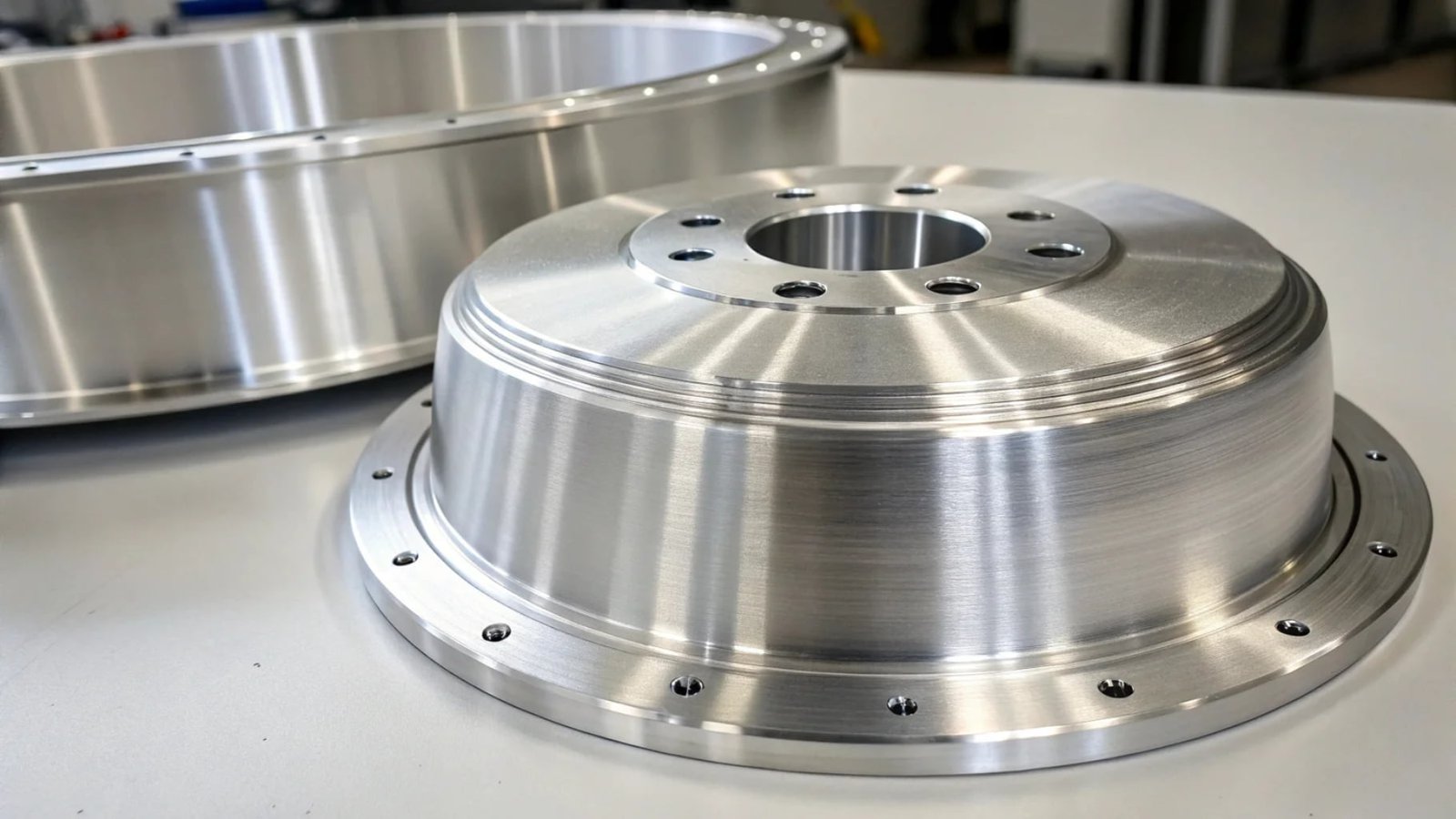
The key to understanding 6061's role is to think about primary versus secondary structures. A primary structure is a part whose failure would lead to catastrophic loss of the aircraft, like a main wing spar or fuselage frame. These demand the highest possible strength and fatigue resistance, which is where alloys like 7075 shine. A secondary structure is still important, but its failure would not cause the plane to fall out of the sky. This includes things like access panels, fairings, interior fittings, and a lot of ground support equipment. For these jobs, 6061 is often the perfect choice. It provides good, reliable strength without the high cost and difficult machinability of the premier aerospace alloys. At SWA Forging, we produce many large 6061 forged discs for customers making jigs and fixtures used to build and maintain aircraft—a perfect example of its role as the industry's essential supporter.
Is 7075 aluminum really that much stronger than 6061?
You are looking at spec sheets for 6061-T6 and 7075-T6. The numbers are different, but you are not sure what that means for your actual machining process and final part performance.
Yes, it is not even a close comparison. 7075-T6 is in a completely different class, with a typical tensile strength around 83,000 psi. This is nearly double the 45,000 psi of 6061-T6. This extra strength comes with trade-offs in cost and machinability.

For our machining customers, that massive jump in strength has real-world consequences. While 6061 is known for being very "machinable," with good chip formation and lower stress on cutting tools, 7075 is a different beast. Its high hardness requires slower cutting speeds, higher machine rigidity, and can lead to increased tool wear. You are literally carving away at a much tougher material. This is why the decision between the two is so important. If your application truly demands the absolute maximum strength-to-weight ratio2—like a structural part on a racing drone or a high-stress robotics arm—then the extra cost and machining time for 7075 is justified. But if the application is a structural bracket for industrial machinery, 6061 provides all the strength you need with a much lower total manufacturing cost.
Strength by the Numbers
| Property | 6061-T6 (The Workhorse) | 7075-T6 (The Champion) | What it Means |
|---|---|---|---|
| Ultimate Tensile Strength | ~45,000 psi (310 MPa) | ~83,000 psi (572 MPa) | The maximum stress the material can withstand before breaking. |
| Yield Strength | ~40,000 psi (276 MPa) | ~73,000 psi (503 MPa) | The stress at which the material begins to permanently deform. |
| Hardness (Brinell) | 95 HB | 150 HB | Resistance to denting and scratching. |
As you can see, 7075 is superior in every strength metric. This is the performance you pay for when you choose a premium aerospace alloy.
So what aluminum is actually used in aerospace?
You hear the term "aerospace aluminum" thrown around. You need to know which specific alloys are the true industry standards to make informed decisions for your high-performance projects.
The main workhorses are the 2xxx and 7xxx series alloys. Specifically, 2024 is prized for its fatigue damage resistance, while 7075 is famous for having one of the highest strength-to-weight ratios of any aluminum alloy.

Engineers choose an alloy based on the specific forces a part will endure. It is not a one-size-fits-all situation.
-
7xxx Series (e.g., 7075): The Strength Champions. The main alloying element is zinc. These alloys are used where the primary stress is compressive, like the upper wing skins and the main structural frames (spars and ribs) inside the wings. Their job is to resist being crushed and to provide maximum rigidity with minimum weight.
-
2xxx Series (e.g., 2024): The Fatigue Fighters. The main alloying element is copper. These alloys are known for their excellent damage tolerance and resistance to fatigue crack growth. They are used where the primary stress is tensile, like the lower wing skins and the fuselage skin, which are constantly being stretched and relaxed during flight and pressurization cycles.
-
Other Series: You will also find other alloys in specialized roles. The 6xxx series (like 6061) is used for less critical fittings and ground equipment. The 5xxx series is used for tubing for fuel and hydraulic lines due to its excellent corrosion resistance and weldability. The choice always comes back to matching the alloy's unique talent to the specific mission of the part.
Conclusion
"Aerospace grade" is not about being the strongest. It is a philosophy of proven certainty. Understanding this lets you choose the smartest, most cost-effective material for your specific engineering mission.