
You ordered 7075 aluminum1 for a critical aerospace job, assuming it was flight-ready. But the parts failed inspection for internal defects, forcing costly rework and jeopardizing your contract.
No, 7075 aluminum is not automatically aircraft grade. It only earns this status when manufactured through processes like forging to ensure a flawless internal structure, then proven with rigorous, traceable certification that guarantees its performance.
A few years back, a new machining client came to us in a serious bind. They had secured a lucrative contract for aircraft landing gear components. To save on costs, they purchased standard 7075-T6 extruded bar from a local stockist. After spending thousands on complex CNC machining, their customer rejected the entire batch. The final ultrasonic inspection revealed internal inconsistencies—microscopic voids and an uneven grain structure—that are unacceptable for flight. They had the right alloy, but the wrong process. We supplied them with custom-forged 7075-T73 blanks, complete with full chemical, mechanical, and ultrasonic test certifications. The forged structure was perfectly uniform and free of defects. They remade the parts and passed every test. It was a tough lesson for them, but they understood that "aircraft grade" is a guarantee you pay for, not a label that comes for free.
What makes 7075 truly aerospace grade?
You see "aerospace grade" on a quote, but what are you actually paying for? You need to know the difference between a material with a label and a material with a guarantee.
Aerospace grade 7075 is defined by its verified performance and flawless condition. It must be produced, tested, and certified to strict aerospace material specifications (AMS), ensuring it has no internal defects and meets guaranteed strength levels.
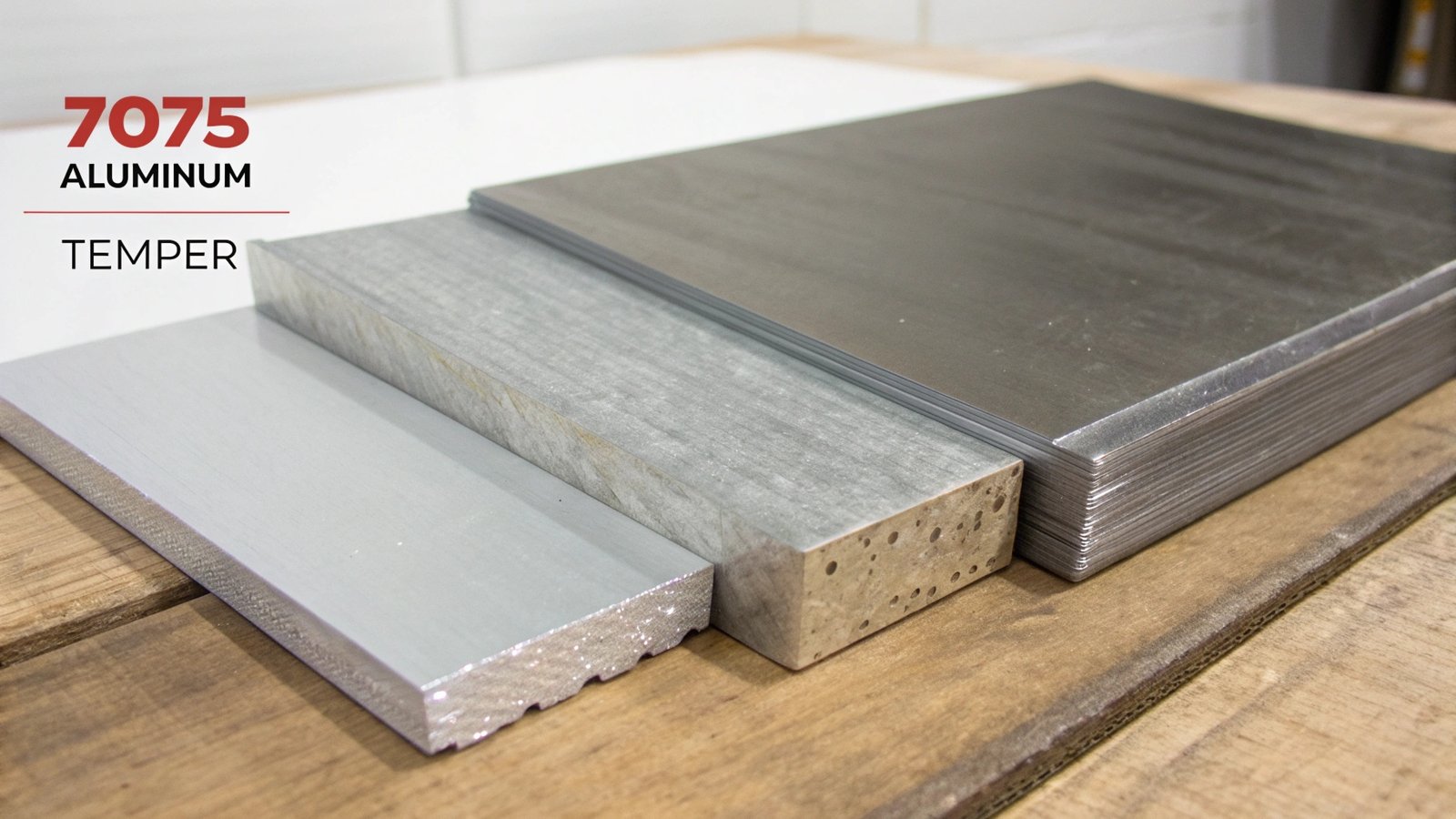
The "grade" is a documented promise of reliability. While standard commercial 7075 and aerospace grade 7075 might share the same chemical composition, their journeys are completely different. To be considered aerospace grade, the material must meet a checklist of non-negotiable requirements.
- Specific Manufacturing Process: For critical parts, this often mandates forging. Forging physically works the metal, refining the grain structure and eliminating the porosity and voids common in cast or extruded products.
- Precise Heat Treatment: Tempers like T6, T73, or T76 are not optional. They are applied with extreme precision and verified to ensure the material has the correct balance of strength and corrosion resistance.
- 100% Inspection: The material undergoes extensive non-destructive testing (NDT). This typically includes ultrasonic inspection to guarantee it is free from any internal cracks, voids, or inclusions that could lead to failure under stress.
- Full Traceability: Every piece of aerospace grade material comes with a paper trail. We provide certificates that trace the part all the way back to the original ingot, with documented results for chemical analysis, mechanical tests, and NDT inspections.
This is what you are buying: a certified, flawless, and reliable component.
What types of aluminum are considered aircraft grade?
You know 7075 is a top choice, but what other options are there? You need to know the common aircraft grade alloys to select the best and most cost-effective option for your specific application.
Several aluminum series are considered aircraft grade, each chosen for a specific purpose. The most common are the high-strength 7xxx series (like 7075), the versatile 6xxx series (like 6061), and the durable 2xxx series (like 2024).

An aircraft is a complex machine, and no single alloy can do it all. Engineers select from a family of proven performers, each with a unique skill set. Of course, any of them must be produced and certified to aerospace standards to qualify.
| Alloy Series | Key Alloys | Primary Use Case | Main Advantage(s) |
|---|---|---|---|
| 7xxx | 7075, 7050 | Main structural components (wing spars, frames) | Highest strength-to-weight ratio |
| 6xxx | 6061 | Secondary structures, fittings, landing mats | Good strength, excellent corrosion resistance, weldable |
| 2xxx | 2024 | Fuselage skin, tension members | High strength, excellent fatigue resistance |
| 5xxx | 5052 | Fuel/oil tanks, non-structural paneling | Excellent corrosion resistance, formability |
As a supplier, our role is to help you navigate these options. While we specialize in high-strength forged rings and discs from alloys like 7075 and 6061, we understand the entire ecosystem. We ensure that the material you order not only has the right alloy number but also the certified manufacturing pedigree required for its specific place on the aircraft.
What are the different grades (tempers) of 7075 aluminum?
You see suffixes like -T6, -T73, or -T7351 after "7075." You need to know what these mean because choosing the wrong one can lead to part failure, especially from corrosion.
The "grades" of 7075 are its tempers, which are different states achieved through heat treatment. The most common are T6 for maximum strength and T73/T7351 for a slightly lower strength but vastly superior stress corrosion resistance.
The temper designation is just as critical as the alloy number itself. It tells you about the material's final mechanical properties, which are fine-tuned for specific challenges an aircraft part will face.
The Main 7075 Tempers:
- 7075-T6: This is the solution heat-treated and artificially aged temper. It offers the highest possible tensile and yield strength for 7075. However, in this state, it is more susceptible to Stress Corrosion Cracking (SCC), where a part under tension can suddenly crack in a corrosive environment.
- 7075-T73: This is an "overaged" temper. The material is held at the aging temperature for longer. This slightly reduces the ultimate strength compared to T6, but it dramatically improves its resistance to SCC. This makes it the default choice for many critical forged aircraft parts where safety and long-term reliability are more important than the absolute maximum strength.
- 7075-T7351: This temper has the same properties as T73. The "51" at the end indicates that the material has been stress-relieved by stretching after heat treatment but before final aging. This process minimizes internal stresses from quenching, ensuring the part remains dimensionally stable after machining. This is a critical requirement for our machining customers.
Choosing the right temper is a crucial design decision. We ensure our forged 7075 products are heat-treated and certified to the exact temper you require.
Where is 7075 aluminum actually used in aircraft?
You need to understand why 7075 is so vital to aerospace. Knowing its specific applications helps you appreciate why its quality and certification are taken so seriously.
7075 aluminum is used in an aircraft's most highly-stressed structural components. This includes wing spars and ribs, fuselage frames and bulkheads, and landing gear components—parts where strength and light weight are absolutely critical.
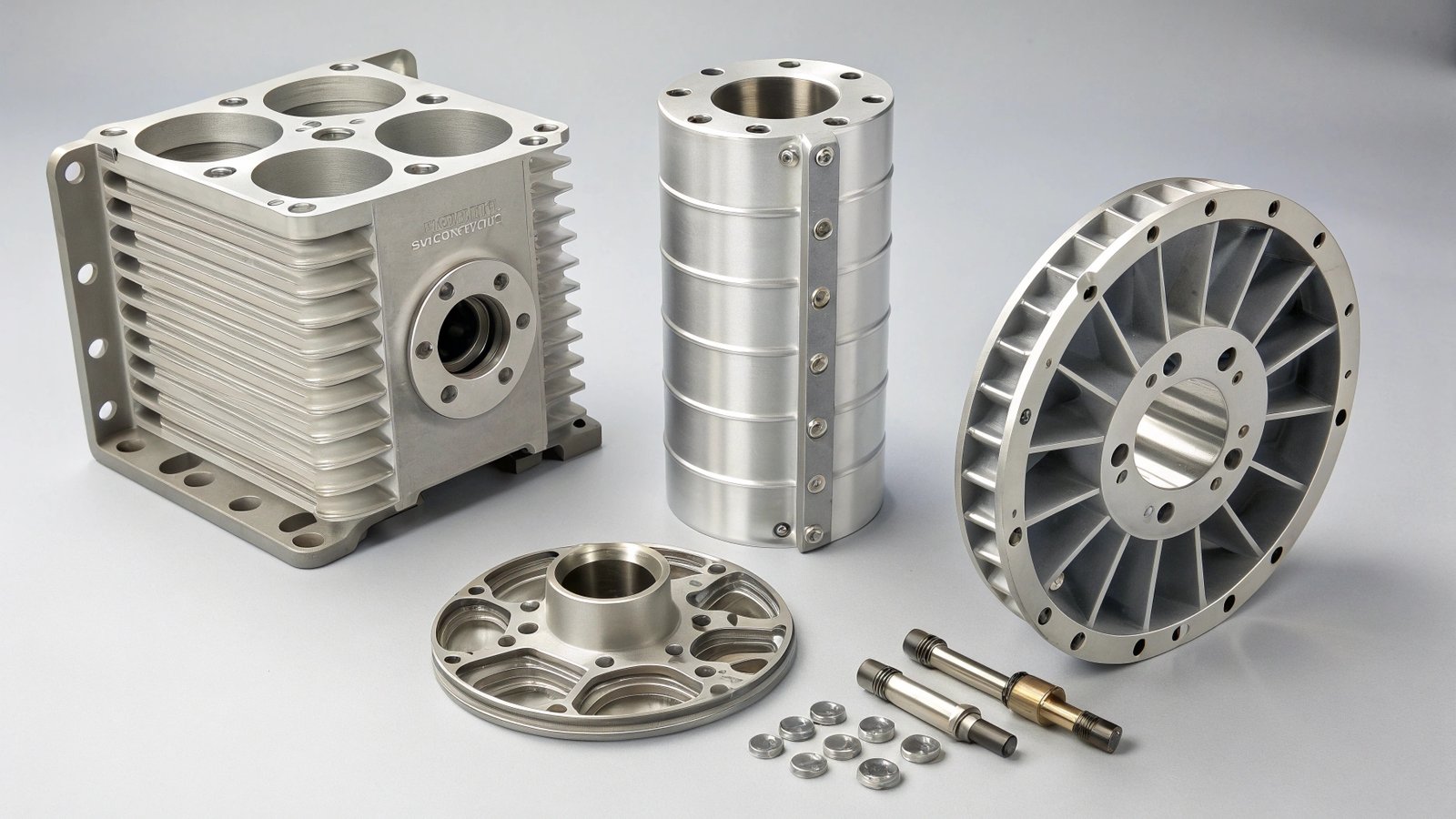
When you look at an airplane, you are looking at a masterclass in materials science. The alloy 7075 is the backbone of that structure. Its steel-like strength at about one-third the weight allows aircraft to be both strong and fuel-efficient. It is not used for simple panels or brackets; it is reserved for the jobs where failure is not an option.
- Wing Structures: The upper wing skins and the underlying spars (the main beams running the length of the wing) are under immense tension and compression during flight. Forged 7075 is the perfect material to handle these loads without adding unnecessary weight.
- Fuselage Frames: The circular frames that form the "skeleton" of the aircraft's body must withstand pressurization cycles and flight stresses over decades. Forged 7075 rings provide the uniform strength and fatigue resistance needed for this task.
- Landing Gear: Components in the landing gear must absorb massive impacts on every landing. The high strength and toughness of forged 7075 make it ideal for these demanding parts.
When we manufacture a forged 7075 ring for an aerospace client, we know it is destined for one of these critical locations. This is why our quality control and certification processes are so rigorous.
Conclusion
7075 aluminum only becomes "aircraft grade" when its potential is unlocked by forging and guaranteed by certification. This ensures the material is not just an alloy, but a promise of flight-worthiness.
Explore the applications of 7075 aluminum in aerospace to understand its critical role in aircraft construction. ↩