
You see T6 on a spec sheet and think it is just a final step. But using an under-treated alloy causes your parts to fail under load, ruining your project and reputation.
T6 is not just a treatment; it's the activation of an alloy's purpose. This process unlocks its engineered strength and hardness, transforming a soft metal into a stable, high-performance structural material that can be machined with absolute predictability.
We once worked with a machining company that tried to cut costs on a large order for forged 6061 discs. They found a supplier offering the raw forgings in an "as-forged" condition, much cheaper than our certified T6 material. Their plan was to have a local shop perform the T6 heat treatment themselves. The parts looked fine when they were delivered, but their customer's quality control rejected the entire batch. The local shop didn't have the precise temperature control or quenching speed needed for 6061. The hardness was inconsistent across the discs, and the internal structure was flawed. They ended up losing the contract. They came back to us for the next job, understanding that buying certified T6 material isn't about paying for a process. It's about guaranteeing the stability and predictability that are essential for high-performance machining.
What is the difference between T4 and T6 heat treat?
You have T4 material, which is formable. You need T6 strength, but the difference seems small. Using T4 in a T6 application could lead to unexpected and catastrophic failure under stress.
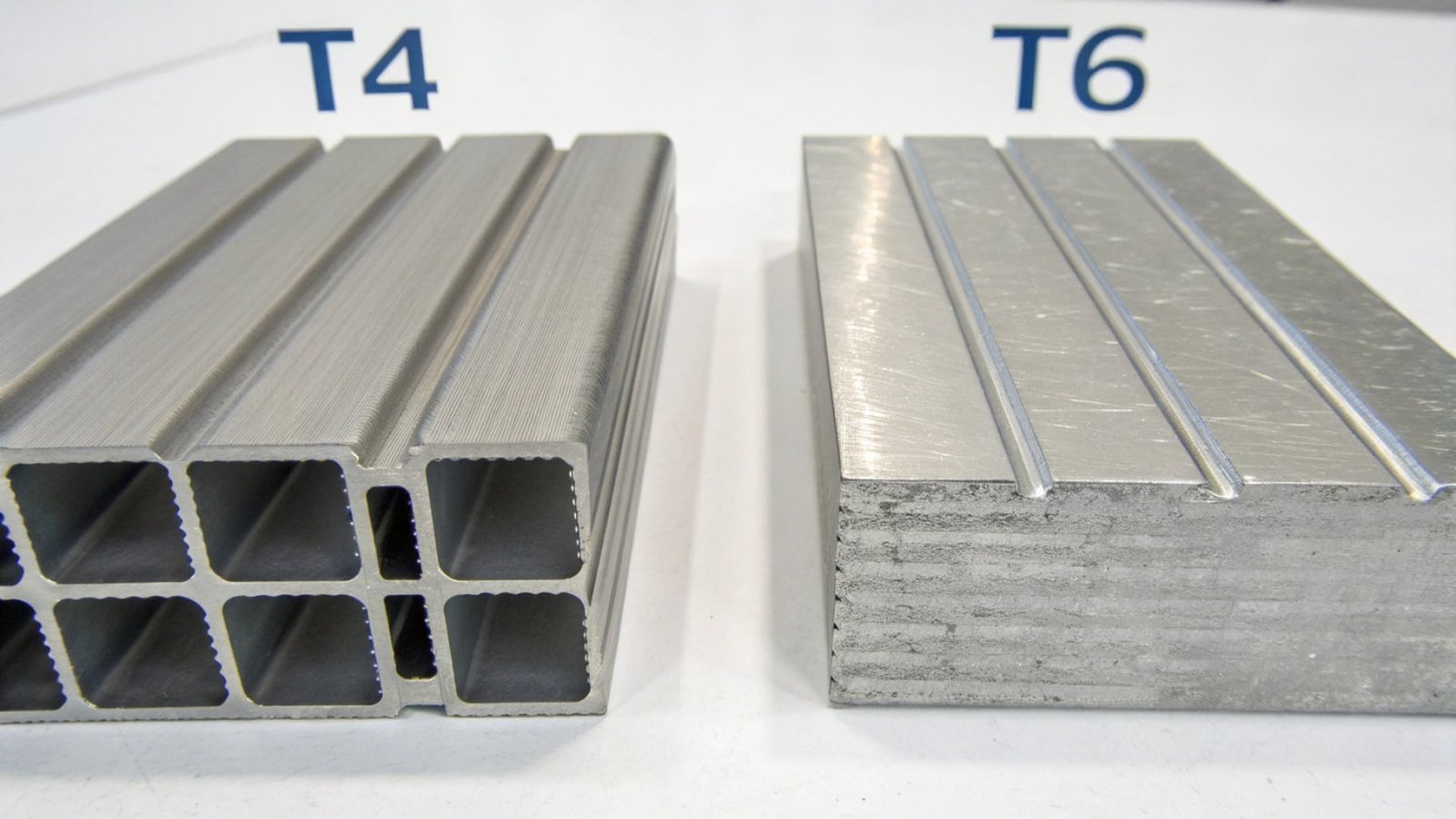
T4 temper means the aluminum is solution heat-treated and then naturally aged at room temperature. T6 is also solution heat-treated but is then artificially aged in an oven to achieve maximum hardness and strength quickly.
Think of T4 as a "work in progress" and T6 as the finished product. T4 is a useful intermediate state. The material is relatively soft and ductile, making it perfect for complex forming or bending operations that would crack a fully hardened T6 part. After the part is shaped, it can then be aged to a stronger temper. T6, on the other hand, is the final destination for strength. It is stable, strong, and ready for service. For our machining customers who receive our large forged rings, they almost always need the T6 condition. They are not forming the part; they are cutting it. They need the material to be in its most stable and predictable state for high-precision CNC work.
Natural vs. Artificial Aging
| Feature | T4 Temper (Naturally Aged) | T6 Temper (Artificially Aged) |
|---|---|---|
| Aging Method | Left at room temperature for several days. | Heated in an oven (e.g., 175°C) for hours. |
| Strength | Moderately strong, but not at its peak. | Maximum achievable strength and hardness. |
| Formability | Good. Can be bent and formed more easily. | Poor. It is brittle and will likely crack if bent. |
| Stability | Less stable. Mechanical properties can change over time. | Very stable. Properties are locked in. |
| Use Case | When a part needs to be formed before reaching full strength. | For finished parts that need maximum strength. |
Can you re-heat treat 6061 T6?
You need to weld or modify a 6061 T6 part. You worry the heat will ruin its strength. This uncertainty could stop you from making a necessary repair or modification on an expensive component.
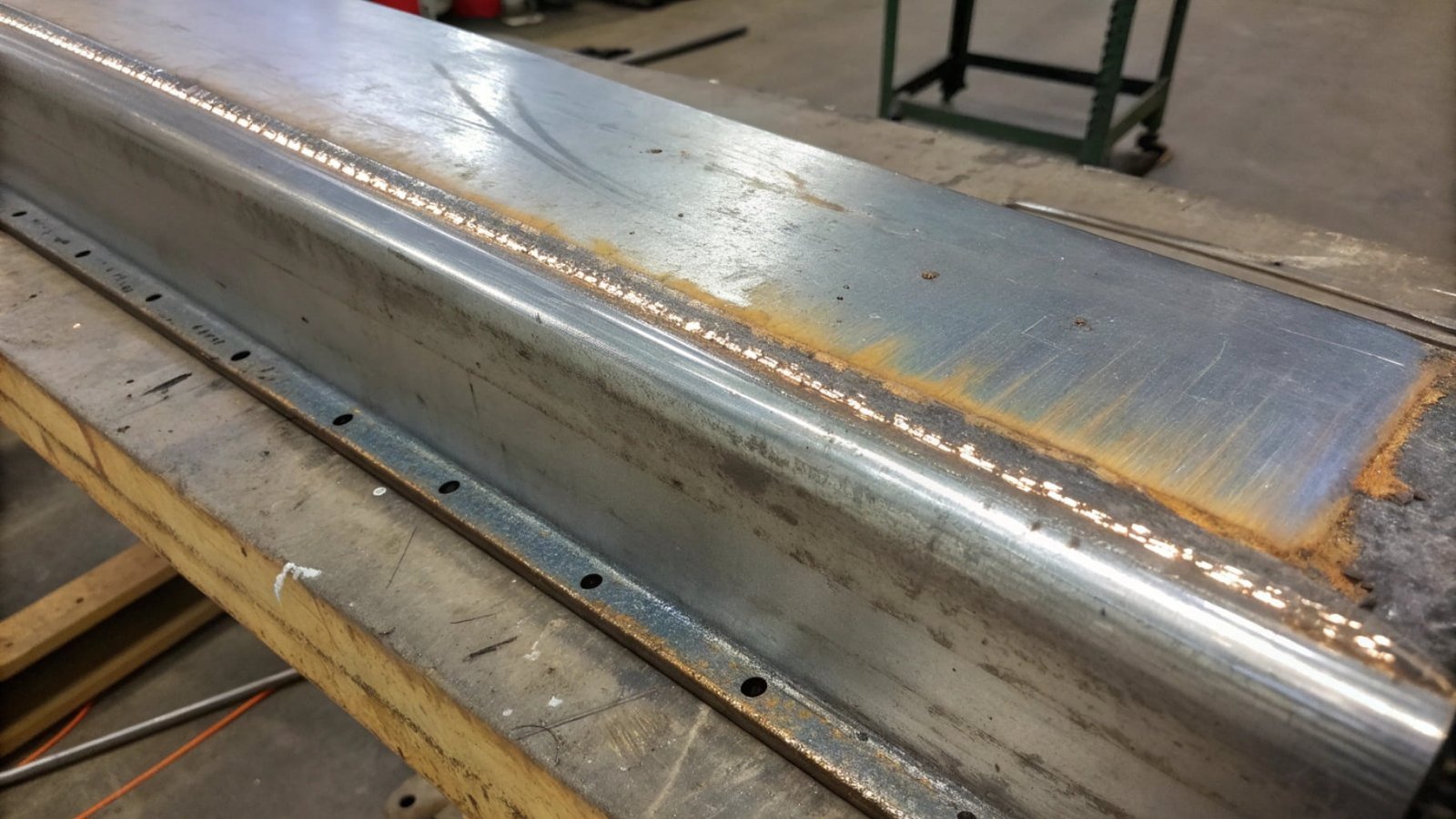
Yes, but with great caution. Any high-heat process like welding completely destroys the T6 temper in the surrounding area. The entire part must be put through the full solution-treat-and-age cycle again to restore its original T6 strength.
This is a critical concept for anyone fabricating with heat-treatable aluminum. The T6 condition is a very precise microscopic structure created by controlled heating and cooling. The intense, uncontrolled heat from a welding torch completely scrambles that structure, turning that area back into a soft, weak state (known as the annealed or 'O' temper). You cannot simply spot-treat the area. Think of it like a cake. If you burn one corner, you can't just "un-burn" it. You have to bake a whole new cake. For a 6061 T6 part, this means taking it completely back to square one with a full heat treatment process to ensure uniform strength throughout the entire component. This is why for our forged parts, all heat treatment is done after the forging process is complete and before any final machining.
The Path to Restoration
Restoring a T6 temper after welding is a specialized industrial process.
- Solution Heat Treatment: The entire part is heated back up to over 500°C to dissolve the alloying elements again. This erases the effects of the welding heat.
- Quenching: The part is rapidly submerged in water to lock the elements in solution. This step is critical and must be done extremely fast.
- Artificial Aging: The part goes back into an aging oven for several hours to precipitate the hardening particles and bring it back to full T6 strength.
This process can be complex and may cause warping, so it must be done by professionals.
Is 7075 T6 heat treated?
You see 7075 T6 listed for an aerospace application. You know it is a high-performance alloy, but you want to confirm that the "T6" means it is ready for its demanding role.
Yes, absolutely. 7075 aluminum achieves its famous aerospace-level strength because of the T6 heat treatment. In its soft, non-heat-treated state, 7075 is not suitable for any structural use. The T6 temper is what activates its potential.
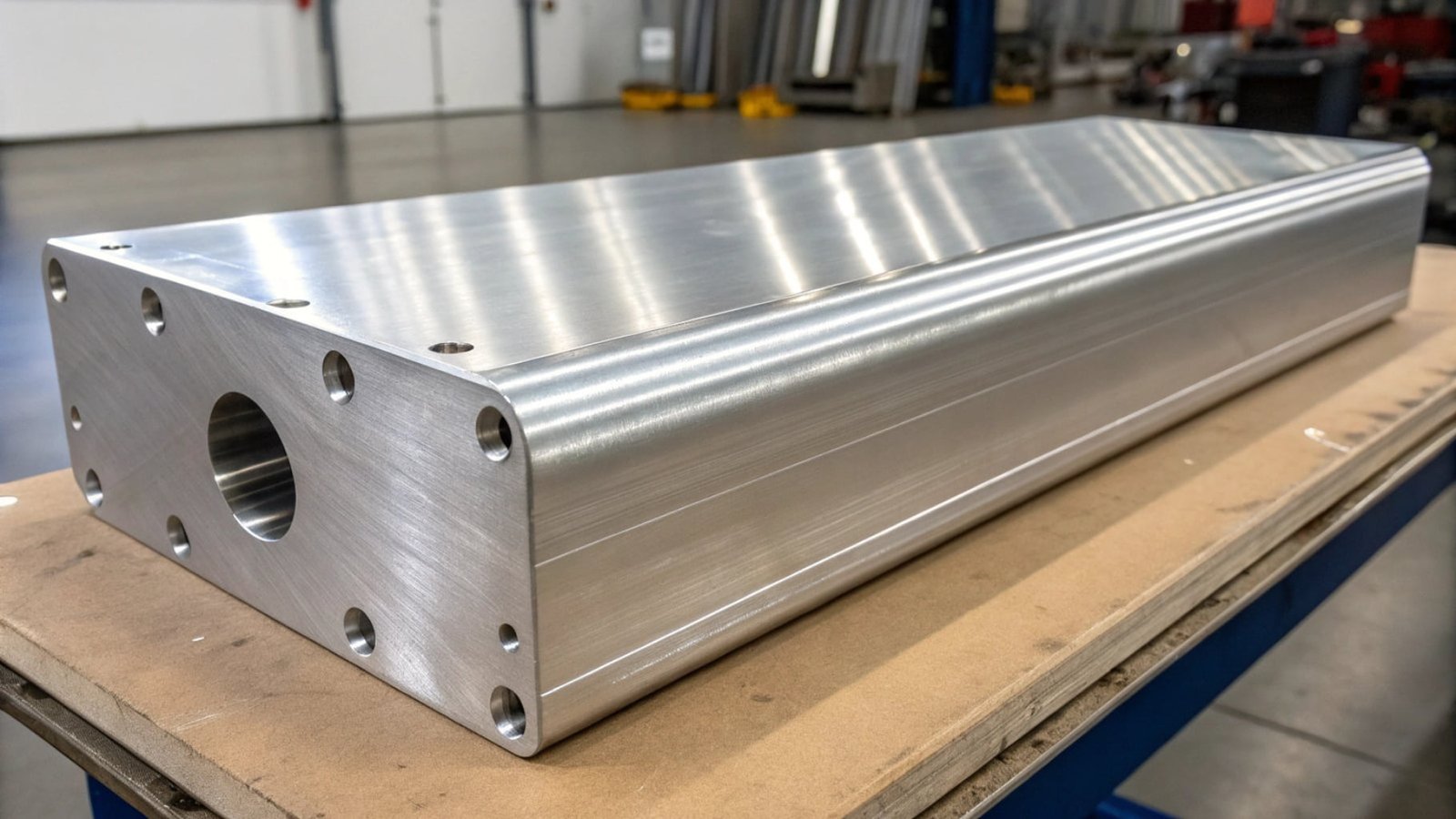
For an ultra-high-performance alloy like 7075, the T6 temper is not just an enhancement; it is the entire reason for its existence. The large amount of zinc, magnesium, and copper in the 7075 "recipe" makes it highly responsive to heat treatment. The T6 process for 7075 is even more critical and precisely controlled than for 6061. It is what allows 7075 to achieve a strength-to-weight ratio that can compete with some steels. When a client orders a 7075 forged disc from us, they are not just buying the alloy. They are buying the guarantee that it has been perfectly heat-treated to the T6 condition, ensuring it has the stable, predictable, and extreme strength required for their critical application. Without the T6, 7075 is just a very expensive, soft aluminum.
Temper is Everything
The temper defines the material's performance level.
- 7075-O (Annealed): This is the softest, most ductile state. It is used only when extreme forming is required before any heat treatment. Tensile strength is low, around 220 MPa.
- 7075-W (Solution Heat-Treated): An unstable intermediate condition immediately after quenching, before artificial aging.
- 7075-T6 (Fully Hardened): The most common high-strength state. It is solution heat-treated and then artificially aged. Tensile strength is very high, typically over 510 MPa. This is the condition used for most structural parts.
- 7075-T7 (Overaged): This temper involves a modified aging process that slightly reduces peak strength but significantly improves stress corrosion cracking resistance, which is important for thick sections.
Conclusion
T6 is not just a specification on a page. It is the activation of an alloy's engineered purpose, transforming it from a soft metal into a strong, stable, and predictable material ready for any challenge.