1. Material Composition & Manufacturing Process
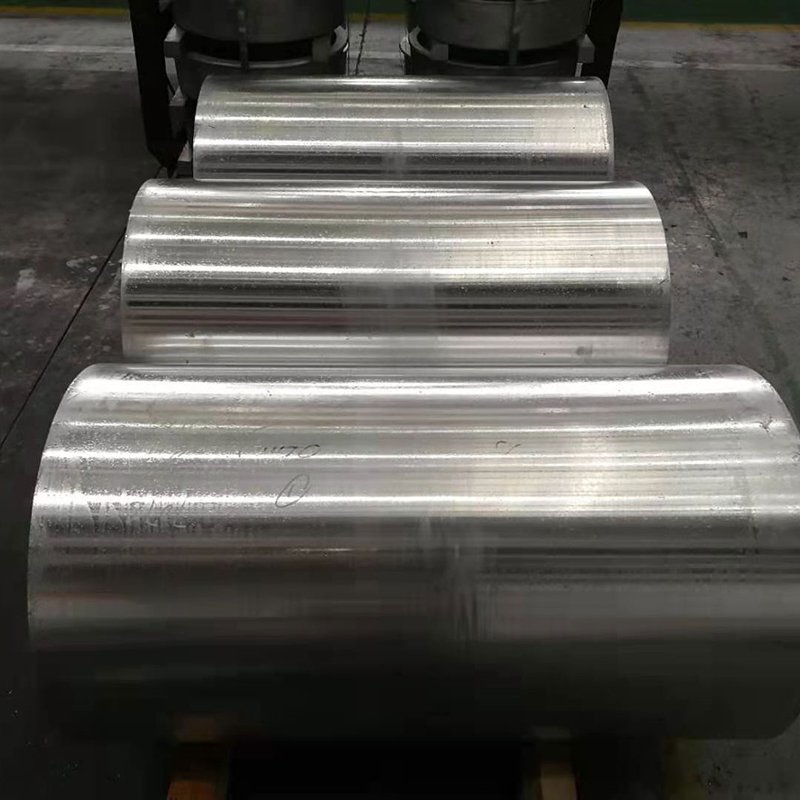
2024 aluminum alloy (AMS 4120, ASTM B211) is a high-strength aircraft-grade aluminum-copper alloy prized for its excellent strength-to-weight ratio, superior machinability, and good fatigue performance. The bar stock configuration offers optimized properties for critical structural components:
- Primary Alloying Elements:
- Copper (Cu): 3.8-4.9% (primary strengthening element)
- Magnesium (Mg): 1.2-1.8% (precipitation hardening)
- Manganese (Mn): 0.3-0.9% (grain structure control)
- Silicon (Si): ≤0.5% (improves castability)
- Base Material:
- Aluminum (Al): ≥90.7% (balance)
- Controlled Impurities:
- Iron (Fe): ≤0.5% max
- Zinc (Zn): ≤0.25% max
- Titanium (Ti): ≤0.15% max
- Chromium (Cr): ≤0.10% max
- Other elements: ≤0.05% each, ≤0.15% total
Premium Manufacturing Process:
- Billet Preparation:
- Primary high-purity aluminum (99.7% minimum)
- Precise alloying element additions
- Filtration through ceramic foam filters
- Degassing treatment (hydrogen < 0.15 ml/100g)
- Direct-chill semi-continuous casting
- Homogenization:
- 480-500°C for 12-24 hours
- Uniform temperature control: ±5°C
- Microstructural equilibration
- Cu-rich phase dissolution
- Extrusion:
- Preheating to 370-400°C
- Lubrication optimization
- Computerized extrusion force monitoring
- Exit temperature control: 450-480°C
- Cooling rate optimization for property development
- Straightening within 4mm/m
- Solution Heat Treatment:
- 490-500°C for 1 hour (diameter-dependent)
- Temperature uniformity: ±3°C
- Rapid transfer to quenching medium
- Quenching:
- Cold water (5-30°C)
- Agitation for uniform cooling
- Maximum transfer time: 15 seconds
- Minimum cooling rate: 100°C/sec at surface
- Cold Straightening:
- Hydraulic press straightening
- Maximum 1-2% cold work
- Residual stress minimization
- Artificial Aging:
- T3: Natural aging at room temperature
- T351: Stress relief + natural aging
- T4: Solution heat treated + natural aging
- T6: Artificial aging at 190°C for 12 hours
Full process traceability with lot-specific quality documentation.
2. Mechanical Properties of 2024 Aluminum Bar
| Property | T351 (min) | T351 (typical) | T6 (min) | T6 (typical) | Test Method |
| Ultimate Tensile Strength | 425 MPa | 440-470 MPa | 440 MPa | 460-490 MPa | ASTM E8 |
| Yield Strength (0.2%) | 290 MPa | 310-345 MPa | 345 MPa | 360-400 MPa | ASTM E8 |
| Elongation (2 inch) | 10% | 12-17% | 5% | 6-10% | ASTM E8 |
| Hardness (Brinell) | 110 HB | 115-125 HB | 120 HB | 125-135 HB | ASTM E10 |
| Fatigue Strength (5×10⁸) | 130 MPa | 140-150 MPa | 120 MPa | 125-140 MPa | ASTM E466 |
| Shear Strength | 270 MPa | 285-300 MPa | 280 MPa | 290-310 MPa | ASTM B769 |
| Fracture Toughness (K₁c) | 26 MPa√m | 28-32 MPa√m | 20 MPa√m | 22-25 MPa√m | ASTM E399 |
| Modulus of Elasticity | 73.1 GPa | 73.1 GPa | 73.1 GPa | 73.1 GPa | ASTM E111 |
Property Distribution:
- Longitudinal to transverse property ratio: 1.00:0.85-0.90
- Variation across diameter: <5% for bars up to 100mm
- Core to surface hardness variation: <8 HB
- Property retention after thermal exposure: Excellent below 100°C
3. Microstructural Characteristics
Key Microstructural Features:
- Grain Structure:
- Elongated grains in extrusion direction
- ASTM grain size 5-7 (50-70μm)
- Aspect ratio: 2:1 to 5:1
- Subgrain development in T351 temper
- Precipitate Distribution:
- Al₂Cu (θ/θ’) strengthening precipitates: 5-50nm
- Al₂CuMg (S-phase) precipitates
- Al₁₂Mn₃Si dispersoids: 50-200nm
- Al₇Cu₂Fe intermetallics: Controlled size and distribution
- Texture Development:
- Strong <111> and <100> fiber textures
- Deformation texture retained after heat treatment
- Texture intensity: 3-8× random
- Special Features:
- Recrystallization controlled by Mn dispersoids
- Natural aging involves GP zone formation
- T6 temper: θ’ (Al₂Cu) precipitate dominance
- Precipitate-free zones near grain boundaries: <50nm
4. Dimensional Specifications & Tolerances
| Parameter | Standard Range | Precision Tolerance | Commercial Tolerance | Test Method |
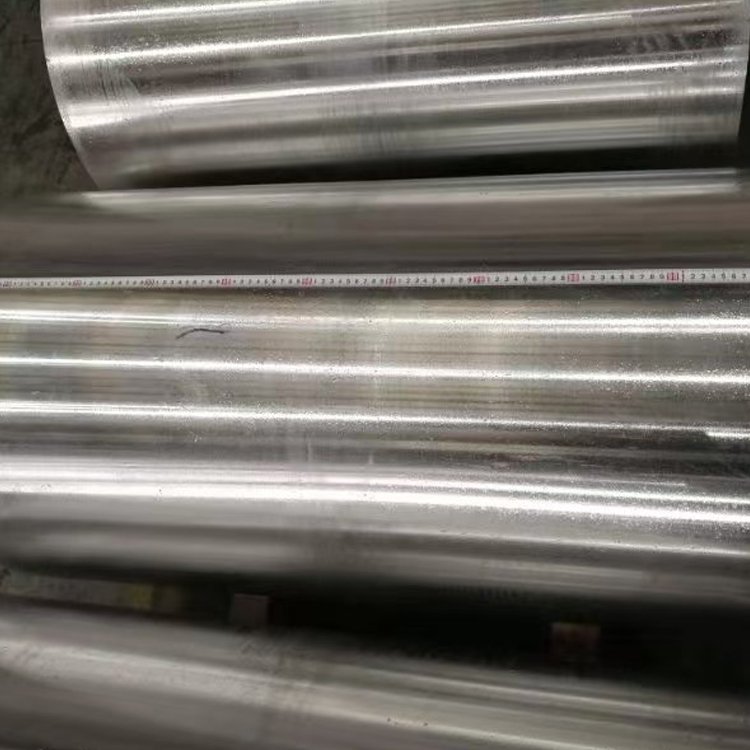
| Diameter (Round) | 10-300 mm | ±0.15mm up to 30mm | ±0.25mm up to 30mm | Micrometer |
| ±0.5% above 30mm | ±1.0% above 30mm | |||
| Width (Rectangle) | 10-250 mm | ±0.20mm up to 50mm | ±0.30mm up to 50mm | Caliper |
| ±0.4% above 50mm | ±0.8% above 50mm | |||
| Length | 2000-6000 mm | ±3mm | ±6mm | Tape measure |
| Straightness | N/A | 0.5mm/m | 1.0mm/m | Straightedge |
| Twist (Rectangular) | N/A | 2° max per meter | 4° max per meter | Protractor |
| Surface Roughness | N/A | 3.2 μm Ra max | 6.3 μm Ra max | Profilometer |
Standard Available Forms:
- Round Bar: Diameters 10-300mm
- Hexagonal Bar: Across flats 10-100mm
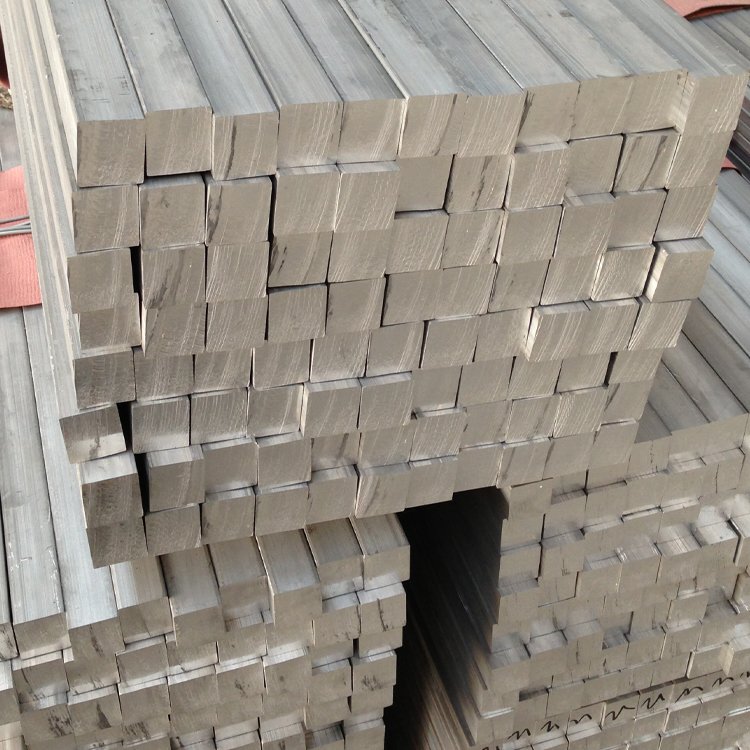
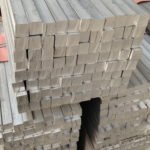
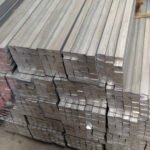
- Square Bar: Side dimensions 10-150mm
- Rectangular Bar: Width up to 250mm, thickness from 10mm
- Cut-to-length service available
5. Temper Designations & Heat Treatment Options
| Temper Code | Process Description | Optimal Applications | Key Characteristics |
| T351 | Solution heat treated, stress relieved by stretching (1-3%), naturally aged | Aerospace structural components, machined parts | Excellent machinability, good strength-toughness balance |
| T4/T451 | Solution heat treated, naturally aged | Parts requiring maximum formability | Best formability, moderate strength |
| T6/T651 | Solution heat treated, artificially aged | Maximum strength applications | Highest strength, reduced ductility |
| T861 | Solution heat treated, cold worked, artificially aged | Highly stressed components | High strength with good SCC resistance |
| T3 | Solution heat treated, cold worked, naturally aged | General purpose applications | Good balance of properties |
Temper Selection Guidance:
- T351: Optimal for parts machined from bar stock
- T6: When maximum strength is required
- T4: When post-forming operations are needed
- T861: For components exposed to high stress in corrosive environments
6. Machining & Fabrication Characteristics
| Operation | Tool Material | Recommended Parameters | Comments |
| Turning | Carbide, PCD | Vc=300-600 m/min, f=0.1-0.3 mm/rev | Excellent chip breaking |
| Drilling | HSS-Co, Carbide | Vc=70-120 m/min, f=0.2-0.4 mm/rev | Good hole quality |
| Milling | Carbide, PCD | Vc=300-700 m/min, fz=0.1-0.3 mm | Climb milling preferred |
| Tapping | HSS-E, TiN coated | Vc=15-25 m/min | Excellent thread quality |
| Reaming | Carbide, PCD | Vc=40-80 m/min, f=0.2-0.5 mm/rev | H7 tolerance achievable |
| Deep Drilling | Carbide, HSS-Co | Vc=60-90 m/min, pecking cycle | Excellent chip evacuation |
Fabrication Guidance:
- Machinability Rating: 70% (1100 aluminum = 100%)
- Surface Finish: Excellent (Ra 0.8-3.2μm achievable)
- Chip Formation: Short to medium chips
- Coolant: Water-soluble emulsion preferred (8-10% concentration)
- Tool Wear: Moderate with proper parameters
- Burr Formation: Minimal with sharp tooling
- Cold Working: Good formability in T4 condition
- Hot Working: 350-450°C recommended temperature range
- Weldability: Limited (pre-welding cleaning critical)
7. Corrosion Resistance & Protection Systems
| Environment Type | Resistance Rating | Protection Method | Expected Performance |
| Industrial Atmosphere | Moderate | Anodizing + paint | 5-10 years with maintenance |
| Marine Environment | Poor | Anodizing + chromate + paint | 3-5 years with maintenance |
| High Humidity | Fair | Anodizing Type II | 2-3 years without additional protection |
| Stress Corrosion | Poor in T351, Better in T861 | Shot peening + protection | Application specific |
| Exfoliation | Fair to Good | Proper heat treatment | T7x tempers preferred for critical apps |
Surface Protection Options:
- Anodizing:
- Type II (Sulfuric): 10-25μm thickness
- Type III (Hard): 25-75μm thickness
- Chromic: 2-7μm (aerospace applications)
- Conversion Coatings:
- Chromate per MIL-DTL-5541 Class 1A
- Non-chromium alternatives available
- Painting Systems:
- Epoxy primer + polyurethane topcoat
- Aerospace-qualified systems available
- Mechanical Protection:
- Shot peening for enhanced fatigue and SCC resistance
- Burnishing for improved surface finish
8. Physical Properties for Engineering Design
| Property | Value | Design Consideration |
| Density | 2.78 g/cm³ | Weight calculation for components |
| Melting Range | 502-638°C | Heat treatment limitations |
| Thermal Conductivity | 120-150 W/m·K | Thermal management design |
| Electrical Conductivity | 30-40% IACS | Electrical applications design |
| Specific Heat | 875 J/kg·K | Thermal mass calculations |
| Thermal Expansion (CTE) | 23.2 ×10⁻⁶/K | Thermal stress analysis |
| Young’s Modulus | 73.1 GPa | Deflection and stiffness calculations |
| Poisson’s Ratio | 0.33 | Structural analysis parameter |
| Machinability Rating | 70% (1100=100%) | Manufacturing planning |
Design Considerations:
- Operating Temperature Range: -80°C to +120°C
- Property Retention: Excellent below 100°C
- Electrical Conductivity: 30% IACS (T3), 40% IACS (T6)
- Stress Relaxation: Minimal below 100°C
- Magnetic Properties: Non-magnetic
- Damping Capacity: Low (typical of aluminum alloys)
9. Quality Assurance & Testing
Standard Testing Procedures:
- Chemical Composition:
- Optical emission spectroscopy
- Verification of all major elements and impurities
- Mechanical Testing:
- Tensile testing (longitudinal and transverse)
- Hardness testing (Brinell or Rockwell)
- Electrical conductivity for temper verification
- Dimensional Inspection:
- Diameter/dimensions at multiple locations
- Straightness verification
- Surface finish measurement
- Visual Inspection:
- Surface defects assessment
- Finish quality verification
- Specialized Testing (When Required):
- Ultrasonic inspection per AMS-STD-2154
- Penetrant inspection
- Grain flow evaluation
- Microstructural examination
Standard Certifications:
- Mill Test Report (EN 10204 3.1)
- Chemical analysis certification
- Mechanical properties certification
- Heat treatment certification
- Dimensional inspection report
10. Applications & Design Considerations
Primary Applications:
- Aircraft landing gear components
- Aerospace fittings and connectors
- High-strength structural elements
- Critical automotive components
- Defense industry applications
- Precision machine parts
- Mold tooling components
- High-performance bolts and fasteners
- Hydraulic system components
- Connecting rods and drive shafts
Design Advantages:
- Excellent strength-to-weight ratio
- Superior machinability for complex parts
- Good fatigue performance
- High fracture toughness in T351 condition
- Dimensional stability after machining
- Suitable for critical load-bearing applications
- Good wear resistance with appropriate surface treatments
- Proven history in aerospace applications
- Predictable and consistent properties
- Widely available in various sizes and forms