1. Material Composition & Standards
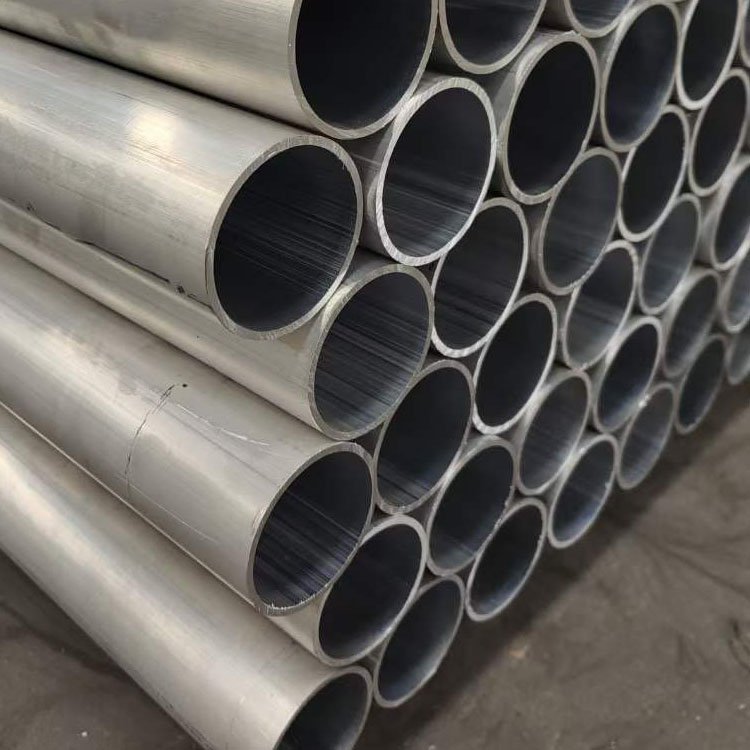
Conforming to ASTM B221, AMS 4171, and EN 755-2 international standards, 2024-T3 aluminum round tubes feature a precision-engineered composition optimized for aerospace applications:
- Primary Elements:
- Copper (Cu): 3.8-4.9% (forms strengthening Al₂Cu precipitates)
- Magnesium (Mg): 1.2-1.8% (enhances corrosion resistance)
- Manganese (Mn): 0.3-0.9% (improves work hardening)
- Base Material:
- Aluminum (Al): ≥93.5% (balance)
- Impurity Limits:
- Iron (Fe): ≤0.50%
- Silicon (Si): ≤0.50%
- Zinc (Zn): ≤0.25%
- Titanium (Ti): ≤0.15%
Third-party validation through NORSOK M650 chemical verification ensures batch-to-batch consistency. The precise Cu/Mg ratio (2.5:1 optimal) enables effective precipitation hardening during natural aging cycles. This alloy is designated as UNS A92024 under unified numbering system standards and meets Boeing BMS7-260 and Airbus AIMS 05-01-005 aerospace specifications.
2. Strength Performance
2024-T3 demonstrates exceptional strength-to-weight ratios critical for high-stress applications:
| Property | Value | Test Standard |
| Tensile Strength (Rm) | 440-485 MPa | ASTM E8 |
| Yield Strength (Rp0.2) | 290-345 MPa | ASTM E8 |
| Shear Strength | 283 MPa | ASTM B769 |
| Compressive Yield | 275 MPa | ASTM E9 |
| Bearing Strength | 580 MPa (e/D=1.5) | ASTM E238 |
| Fatigue Endurance (5×10⁸ cycles) | 138 MPa | R.R. Moore Test |
| Fracture Toughness (KIC) | 28 MPa√m | ASTM E399 |
The alloy maintains:
- 85% of room temperature strength at 120°C
- Notched sensitivity ratio of 1.25 (Kt=3)
- 27% higher cyclic stress capacity than 6061-T6
- Fully reversible stress limit: 125 MPa (R=-1)
3. Heat Treatment State
The T3 temper sequence involves precisely controlled processing stages:
Solution Treatment:
- 495°C ±5°C for 20-30 minutes (α-phase dissolution)
- Atmosphere-controlled furnaces with ±3°C uniformity
Quenching:
- Rapid water quenching (>200°C/sec cooling rate)
- Time between furnace and quench tank: <15 seconds
Cold Working:
- 3-5% reduction via pilgering or stretch straightening
- Strain rate controlled at 0.5-2% per minute
Natural Aging:
- Minimum 96-120 hours at 25°C
- Relative humidity <65%
Resulting Microstructure:
- Grain size: ASTM 6-7 (15-30μm)
- S’ (Al₂CuMg) precipitate distribution
- Dislocation density: 10¹⁰/cm²
- Recrystallization threshold: 260°C
Post-forming heat treatment above 100°C is prohibited due to quench sensitivity and risk of preferential precipitation at grain boundaries.
4. Dimensions & Customization
Manufactured to meet aerospace dimensional tolerances:
| Parameter | Standard Range | Precision Tolerance | Custom Options |
| Outer Diameter | 10-200 mm | ±0.05mm (>50mm OD) | Non-round profiles |
| Wall Thickness | 1.0-15 mm | ±5% WT | Tapered walls |
| Length | 1-6 m | +0/-0.5mm | Up to 12m |
| Straightness | – | 0.3mm/m max. | ±0.1mm/m |
| Ovality | – | ≤0.5% TIR | 0.2% TIR |
| Perpendicularity | – | ≤0.5° | ≤0.1° |
Processing Options:
- Cutting: CNC abrasive sawing (±0.1mm) or EDM
- Surface grinding for bearing fits (Ra<0.4μm)
- CNC end-forming for complex joint geometries
- Passivation per MIL-STD-753C
5. Corrosion Resistance Properties
Environmental Performance Ratings
| Environment | Exposure Rating | Service Life* | Protection Recommendation |
| Marine Splash Zone | Poor (250hrs SST) | 2-3 years | MIL-A-8625 Type I Anodize |
| Industrial Atmos. | Moderate (500hrs) | 5-8 years | PEO Coating |
| Rural Atmosphere | Good (1000hrs) | 10+ years | PVDF Coating |
| Alclad Version | Excellent | 20+ years | 5% Clad Layer |
*With proper surface protection
Protection Systems:
- Anodizing:
- Chromic acid (Type I): 8-12μm thickness
- Sulfuric acid (Type II): 15-25μm thickness
- Coatings:
- Plasma Electrolytic Oxidation: 50-70μm ceramic layer (400-600 HV)
- Epoxy-Polyurethane: 120μm DFT (>2000hrs salt spray)
- Cathodic Protection: Zinc-rich primers (85% Zn content)
6. Machinability Characteristics
Optimization Parameters
| Operation | Tool Material | Speed (m/min) | Feed (mm/rev) | Notes |
| Turning | Carbide K20 | 150-250 | 0.12-0.20 | 7° positive rake |
| Milling | Carbide K10 | 200-400 | 0.05-0.15 | Climb milling required |
| Drilling | TiAlN Coated | 30-40 | 0.03-0.08 | 135° point angle |
| Tapping | HSS-Co5 | 8-12 | Pitch matched | Use UNJ thread form |
Performance Metrics:
- Machinability index: 70% (baseline: 2011-T3=100%)
- Surface roughness: Ra 0.8μm achievable
- Chip control: Requires HP coolant >70 bar
- Tool life expectancy: 30 minutes continuous cutting
- Thermal deformation: <0.05mm at 80°C
7. Weldability & Joining Methods
Fusion Welding Not Recommended
HAZ cracking susceptibility exceeds 80% (AWS D1.2). Approved alternatives:
Friction Stir Welding (FSW)
- Tool rotation: 800-1,200 RPM
- Traverse speed: 60-150mm/min
- Shoulder diameter: 1.2× wall thickness
- Z-force control: 8-15 kN
Adhesive Bonding
- Structural epoxies: FM73 or EA9394 (≥20MPa shear)
- Surface prep: Chromate conversion coating (MIL-C-5541)
- Curing cycle: 120°C/2hrs under 50kPa pressure
Mechanical Fastening
- Hi-Lok pins: Shear strength 65kN (6mm ø)
- Rivet spacing: ≥4× diameter edge distance
- Collateral damage exclusion zone: 1.5× fastener diameter
9. Physical Properties
| Property | Value | Test Standard |
| Density | 2.78 g/cm³ | ASTM B311 |
| Thermal Conductivity (100°C) | 121 W/m·K | ASTM E1461 |
| CTE (20-100°C) | 23.2 μm/m·°C | ASTM E228 |
| Electrical Resistivity | 50 nΩ·m | ASTM B193 |
| Modulus of Elasticity | 73.1 GPa | ASTM E111 |
| Specific Heat (25°C) | 875 J/kg·K | ASTM E1269 |
| Latent Heat of Fusion | 390 kJ/kg | – |
| Recrystallization Temp | 260°C | – |
9. Surface Quality Standards
- Seamless construction: No longitudinal weld lines
- Surface finish: Ra ≤0.8μm (mill finish), polishable to Ra 0.1μm
- Visual inspection: Per AMS 2771 Class A
- Defect limits:
- No inclusions >0.3mm (ASTM B557)
- Scratches <0.05mm depth
- Die lines not exceeding 0.1μm Ra
- Cleaning protocols:
- Ultrasonic degreasing (AMS 2646)
- Acid etching for adhesive bonds
10. Certifications & Testing
Non-Destructive Testing
- Ultrasonic: Level B (EN 1714) detecting flaws >0.8mm
- Eddy Current: ASTM E309 (0.5mm sensitivity)
- Dye Penetrant: ASME Section V Article 6
- Hydrostatic: 50MPa test pressure for 30 seconds
Mechanical Testing
- Tensile: ASTM E8 at multiple temperatures
- Hardness: Rockwell B scale (ASTM E18)
- Impact: Charpy V-notch at -65°C (min. 4J)
Certifications
- Nadcap AC7117 (Materials Testing)
- AS9100 Aerospace Quality
- PED 2014/68/EU Category IV
- ISO 9001:2015 Quality Management
Aerospace Applications: Landing gear components, missile guidance systems, actuator housings, hydraulic lines, and wing spar reinforcements where strength-to-weight ratio is critical.
Packaging: VCI paper + double-layer PE film with desiccant, ISPM 15 compliant wooden crates. Standard lead time: 8 weeks.