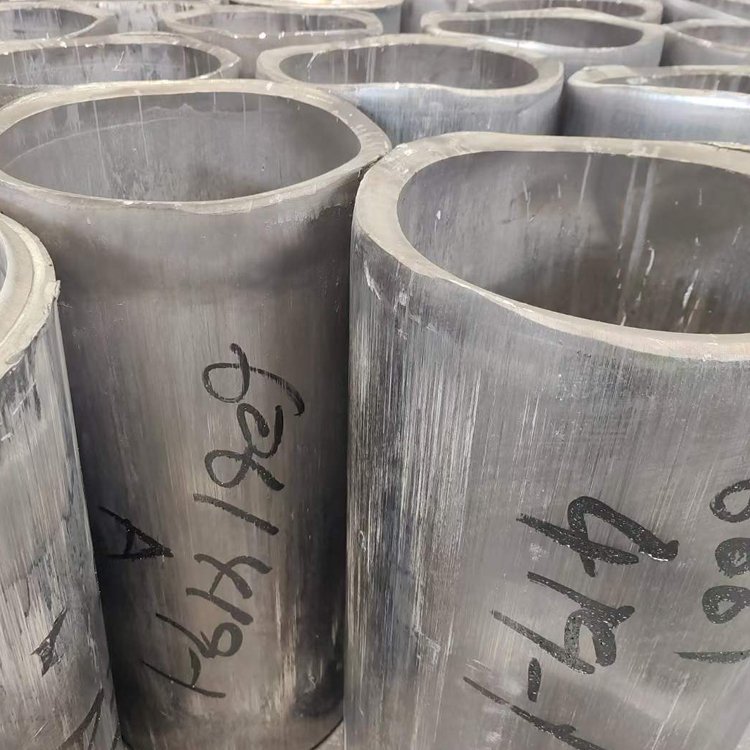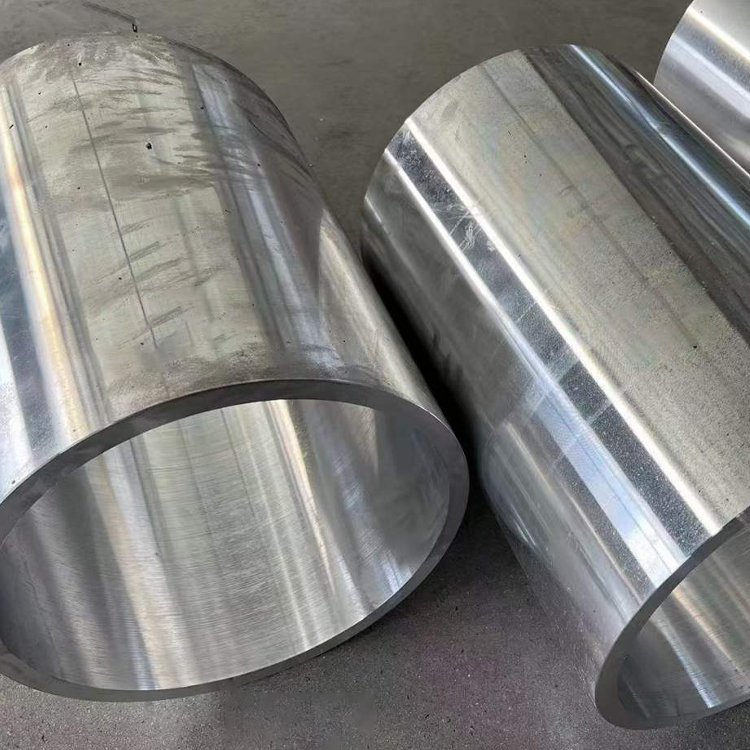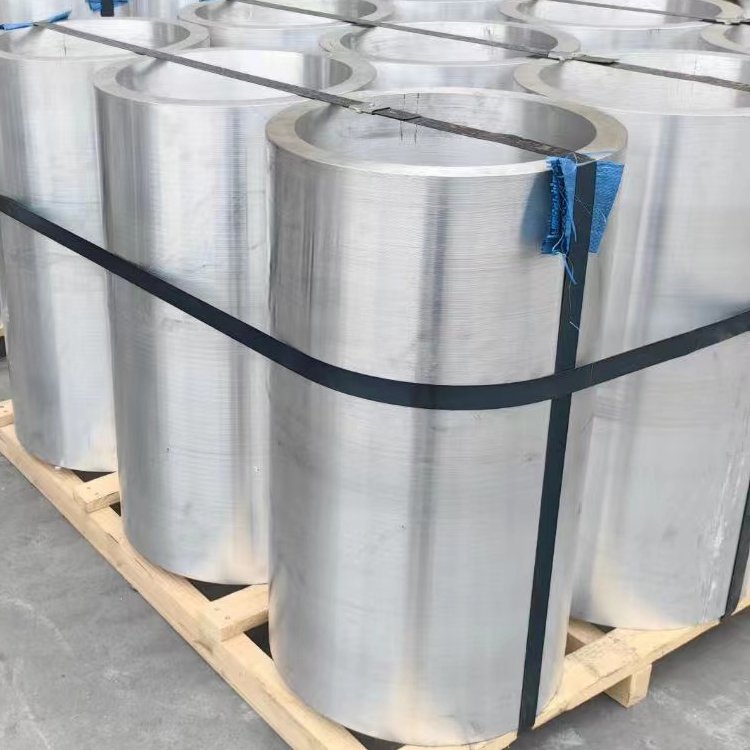
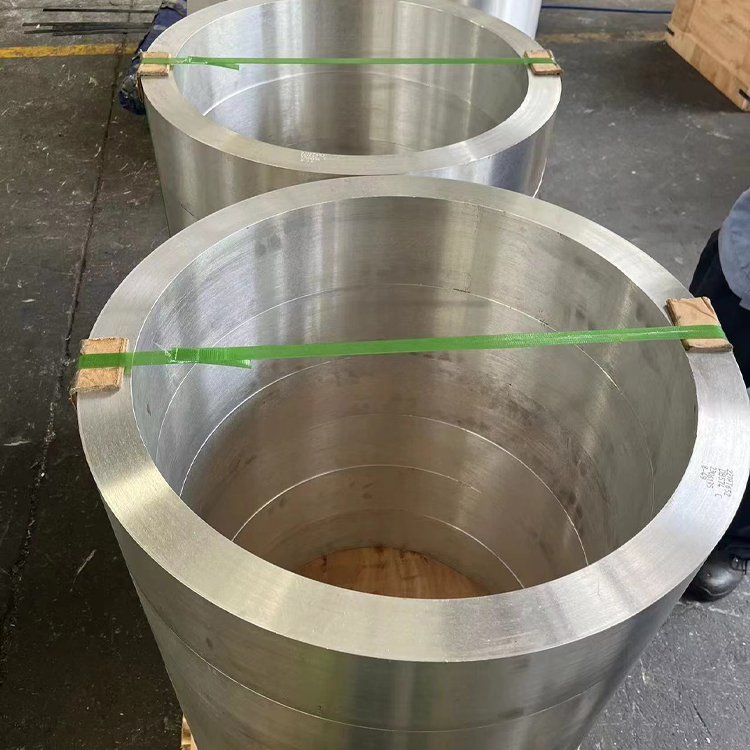
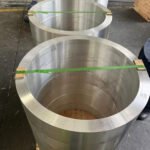

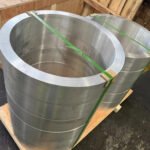
1. Material Composition & Aerospace Forging Process
2A12 (AA2124) aerospace-grade forged tubes comply with AMS 4157, ASTM B247, and MIL-T-9046 specifications, formulated for optimal strength-to-weight ratio in flight-critical components:
- Alloy Chemistry:
- Copper (Cu): 3.8-4.9% (primary strengthening)
- Magnesium (Mg): 1.2-1.8% (precipitation hardening)
- Manganese (Mn): 0.30-0.9% (grain refinement)
- Base Material:
- Aluminum (Al): ≥92.5% (balance)
- Controlled Impurities:
- Iron (Fe): ≤0.30% max
- Silicon (Si): ≤0.50% max
- Zinc (Zn): ≤0.25% max
- Titanium (Ti): ≤0.15% max
Precision Forging Protocol:
- Pre-heating: 390-430°C under argon shield
- Isothermal Forging: 350-400°C ±10°C
- Reduction Ratio: 5:1 minimum
- Strain Rate Control: 0.1-3 sec⁻¹
- Grain Flow Alignment: Longitudinal ±5° deviation
- Press Requirements: 12,000-40,000 ton hydraulic
- Post-Forging Thermal Conditioning: Stress equalization at 250°C/2hr
Certified to NADCAP AC7102 for aerospace forgings with full digital traceability per AS9100 standards.
2. Mechanical Performance in Aerospace Service
| Property | Forged T6 Temper | Extruded Baseline | Aerospace Standard |
| Ultimate Tensile Strength | 440-470 MPa | 400-430 MPa | ASTM E8 |
| Yield Strength (Rp0.2) | 290-330 MPa | 260-290 MPa | ASTM E8 |
| Elongation (%) | 10-15% | 7-12% | ASTM E8 |
| Fracture Toughness KIC | 38 MPa√m | 32 MPa√m | ASTM E399 |
| Fatigue Strength (10⁷) | 145 MPa | 120 MPa | ASTM E466 |
| Compression Strength | 420 MPa | 380 MPa | ASTM E9 |
| Stress Rupture (100hr/100°C) | 180 MPa | 150 MPa | ASTM E139 |
| Bearing Strength | 620 MPa | 570 MPa | ASTM E238 |
Superior anisotropy ratio (L/T=0.85) provides 18-22% higher transverse strength versus conventional extrusions in wing spar applications.
3. Heat Treatment & Microstructural Control
Aerospace T6 Treatment:
- Solution Treatment: 495°C ±5°C for 1-2 hours
- Atmosphere control: <20ppm oxygen
- Quenching: Polyvinyl pyrrolidone solution (40% conc)
- Quench rate: >170°C/sec at core
- Stabilization: -55°C cryogenic hold/3hr
- Aging: 190°C/12hr + 160°C/10hr duplex aging
Microstructural Features:
- Grain Size: ASTM 8-9 (10-20μm)
- Precipitate Structure: S’ (Al₂CuMg) phase dominant
- Texture Intensity: 3.0-4.5 random multiples
- Dislocation Density: 8×10¹⁰/cm²
- Phase Distribution:
- Al₂Cu particles: 0.3-0.8μm
- Al₂CuMg particles: 20-50nm
- Recrystallization: <5%
4. Aerospace-Grade Dimensional Precision
| Parameter | Standard Range | Flight Critical Tolerance | Special Configurations |
| Outer Diameter | 20-450 mm | ±0.02% OD | Elliptical cross-sections |
| Wall Thickness | 1.5-25 mm | ±3% WT | Variable thickness walls |
| Length | 1-10 m | +0/-0.8 mm | Up to 15m sections |
| Ovality | ≤0.4% | ≤0.15% for actuators | – |
| Straightness | 0.5 mm/m | 0.1 mm/m (hydraulic lines) | – |
| Wall Runout | ≤0.3% TIR | ≤0.1% TIR (fuel systems) | – |
Aerospace Manufacturing Methods:
- Spin Forging for thin-wall sections
- Mandrel Flow Forming
- Isothermal Press Forging
- Ring Rolled Flange Integration
- Superplastic Forming for complex shapes
5. Environmental Durability in Flight Conditions
| Environment | Performance Rating | Degradation Metrics | Mitigation Systems |
| Altitude Cycling | Excellent | <0.001% dimensional change | Passivation per AMS 2470 |
| Hydraulic Fluid | Class A | 0.05 mm/yr erosion | Plasma Electrolytic Oxidation |
| Jet Fuel Immersion | Good | Weight gain <0.5 mg/cm²/yr | Electroless Nickel plating |
| Thermal Cycling | Excellent | ΔCTE matched to composites | Graded thermal barriers |
| Icing Conditions | Good | Fatigue debit <8% | Anti-icing coatings |
Surface Enhancement:
- Chromic Acid Anodizing: 8-15μm thickness
- Tiodize® Treatment: Solid-film lubricant
- HVOF WC-10Co: 1200 HV50 protection
- Hermetic Sealing: Vapor-deposited SiO₂ layers
6. Machining for Aerospace Components
| Operation | Tooling Specification | Parameters | Aircraft Applications |
| Precision Boring | Diamond-coated carbide | 180-250 m/min, 0.05mm/rev | Landing gear cylinders |
| 5-axis Milling | Nano-composite SiAlN tools | 500-700 m/min | Wing rib fittings |
| Gun Drilling | Coolant-fed carbide | 30-50 m/min | Fuel injection rails |
| Thread Grinding | CBN wheels | 10-15 m/min | Engine mount threads |
| Skiving | PCD form tools | 80-120 m/min | Hydraulic manifold ports |
Machining Advantages:
- Surface Finish: Ra 0.1-0.4μm achievable
- Cryo-Machining Improvement:
- Tool life: +250%
- Residual stress: Compressive profile
- EDM Capability: Stable with copper-tungsten electrodes
- Dimensional Stability: ±0.005mm/m after machining
7. Aerospace Joining Technology
Friction Stir Welding Parameters:
- Tool Design: WC-Co scrolled shoulder
- Rotation: 600-900 RPM
- Traverse: 80-200 mm/min
- Down Force: 12-20 kN
- Weld Quality:
- UTS Efficiency: 95% parent metal
- Fatigue Performance: 90% base material
Alternative Joining Methods:
- Laser Beam Welding:
- Power: 4-6 kW
- Speed: 2-5 m/min
- Shielding: Helium gas curtain
- Adhesive Bonding:
- Epoxy polyimide films: 25 MPa shear at 150°C
- Surface prep: Sol-gel treatment
- Mechanical Fastening:
- Hi-Lite® Collars: 160-ksi shear strength
- Lockbolt Systems: Vibration resistant to 2000Hz
8. Physical Properties for Flight Systems
| Property | Value | Aerospace Significance |
| Density | 2.78 g/cm³ | 30% lighter than titanium |
| CTE (20-150°C) | 22.7 μm/m·°C | Matched to carbon composites |
| Thermal Conductivity | 138 W/m·K | Avionics cooling efficiency |
| Electrical Resistivity | 44 nΩ·m | EMI shielding effectiveness |
| Elastic Modulus | 73 GPa | Wing flex optimization |
| Damping Capacity | 0.003 | Vibration attenuation |
| Magnetic Susceptibility | 0.72×10⁻⁶ | Non-interference with sensors |
| Cryogenic Toughness (-196°C) | 42 MPa√m | LH2/LOX system compatibility |
9. Quality Verification & Aerospace Certification
Non-Destructive Evaluation:
- Phased Array UT: 15MHz probes (detect 0.3mm flaws)
- X-Ray Tomography: 5μm voxel resolution
- Eddy Current Array: 0.2mm crack detection
- Thermographic Inspection: 2μm subsurface resolution
- Residual Stress Mapping: XRD with 10μm spot size
Certification Testing:
- Fatigue Testing: 10⁹ cycle capability
- Creep Testing: 10,000hr/150°C
- SCC Threshold: >120 MPa per ASTM G47
- Flammability Resistance: FAR 25.853 compliant
- Outgassing: <1.0% TML, <0.1% CVCM per ESA ECSS
Industry Approvals:
- AS9100 Aerospace Quality Management
- NADCAP AC7117 NDE Special Process
- MIL-F-83142 Forgings Certification
- EASA 21G Production Approval
- ITAR Registration Compliance
10. Aerospace Applications
Primary Aerospace Uses:
- Landing gear torque links
- Helicopter rotor shafts
- Hydraulic actuator cylinders
- Missile launch canisters
- Spacecraft structural trusses
- Jet engine compressor housings
- Wing flap tracks
- Flight control linkages
Packaging & Handling:
- Nitrogen-purged VCI foil wrapping
- Desiccant-controlled containers
- Non-marking nylon slings handling
- Cleanroom assembly protocols
- AS6081 counterfeit protection