1. Material Composition & Standards
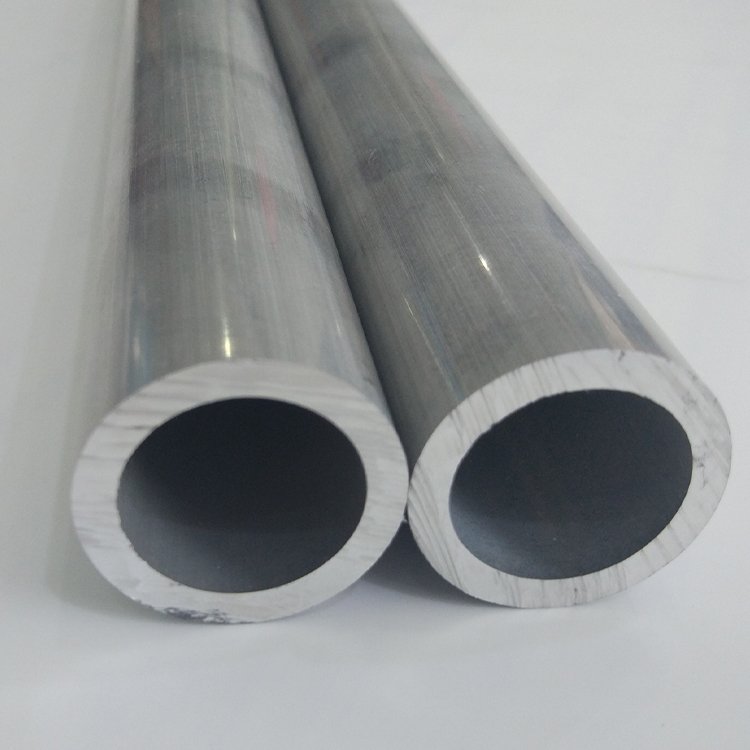
Conforming to ASTM B210, AMS 4005, and EN 573-3 standards, 5052 aluminum tubing features a magnesium-enriched alloy composition optimized for marine and industrial applications:
- Primary Elements:
- Magnesium (Mg): 2.2-2.8% (enhances strength and corrosion resistance)
- Chromium (Cr): 0.15-0.35% (improves stress corrosion cracking resistance)
- Base Material:
- Aluminum (Al): ≥96.8% (balance)
- Impurity Limits:
- Iron (Fe): ≤0.40%
- Silicon (Si): ≤0.25%
- Copper (Cu): ≤0.10%
- Manganese (Mn): ≤0.10%
- Zinc (Zn): ≤0.10%
The alloy is supplied in strain-hardened tempers including H32 (¼ hard), H34 (½ hard), and H38 (full hard) per ASTM B210 specifications. Third-party verification through NADCAP AC7117 ensures consistent chromium distribution critical for pitting resistance in chloride environments.
2. Strength Performance
5052 demonstrates superior ductility-to-strength ratios ideal for pressure vessels and structural forms:
| Property | H32 Temper | H34 Temper | H38 Temper | Test Standard |
| Tensile Strength (Rm) | 195-240 MPa | 230-275 MPa | 270-305 MPa | ASTM E8 |
| Yield Strength (Rp0.2) | 160-195 MPa | 195-230 MPa | 250-285 MPa | ASTM E8 |
| Elongation at Break (%) | 12-18% | 8-12% | 5-8% | ASTM E8 |
| Shear Strength | 125 MPa | 145 MPa | 170 MPa | ASTM B769 |
| Burst Pressure (OD20×WT2mm) | 18.5 MPa | 23.1 MPa | 28.7 MPa | ASTM B641 |
| Fatigue Endurance (10⁷ cycles) | 100 MPa | 115 MPa | 130 MPa | ISO 1099 |
| Impact Toughness (20°C) | 27 J | 22 J | 15 J | ASTM E23 |
Retains >95% strength at -40°C and demonstrates consistent compressive yield strength within 2% of tensile values.
3. Heat Treatment & Processing
As a non-heat-treatable alloy, mechanical properties are achieved through strain hardening:
Cold Working Process
- Hot Rolling: Initial reduction at 400-450°C to 12mm thickness
- Cold Drawing: 15-25% area reduction per pass
- H32: 8-15% total reduction
- H34: 16-24% total reduction
- H38: 25-30% total reduction
- Stabilization: 150°C for 60 minutes to relieve residual stresses
Resulting Microstructure
- Grain size: ASTM 7-10 (5-15μm elongated grains)
- Dislocation density: 10⁹/cm² (H32) to 10¹⁰/cm² (H38)
- Texture coefficient: <0.7 for deep drawing applications
- Recrystallization threshold: 260-280°C
Post-forming annealing is permitted at 345°C for stress relief without property degradation.
4. Dimensions & Customization
Manufactured to marine engineering standards with enhanced corrosion allowances:
| Parameter | Standard Range | Precision Tolerance | Custom Options |
| Outer Diameter | 6-300 mm | ±0.1% OD | Oval/rectangular profiles |
| Wall Thickness | 0.5-12 mm | +10%/-5% WT | Variable wall sections |
| Length | 1-12 m | +3mm/-0mm | Coiled lengths 30m+ |
| Straightness | – | 1mm/m max. | ±0.3mm/m |
| Ovality | – | ≤1.0% TIR | ≤0.3% TIR |
| Bend Radius (min) | 1.5× OD | ±5% | Tight radius: 0.75× OD |
Fabrication Capabilities:
- CNC rotary draw bending (up to 180° bends)
- Hydroforming for complex cross-sections
- Expanded ends for tube-to-tube joining
- Thread rolling per ASME B1.20.1
5. Corrosion Resistance Properties
Environmental Performance Ratings
| Environment | ISO 9223 Rating | Corrosion Rate (μm/yr) | Protection Recommendation |
| Marine Offshore | RC5 (Excellent) | <5 μm/yr | MIL-PRF-85582 marine coat |
| Chemical Process | RC4 (Good) | 8-20 μm/yr | PVDF lining |
| Coastal Atmosphere | RC4 (Good) | 5-15 μm/yr | Anodize Type IIB |
| Deicing Salt Exposure | RC4 (Good) | 10-25 μm/yr | Ceramic-epoxy coating |
Protection Systems:
- Anodizing:
- Type IIB (hard coat): 25-75μm thickness
- Chromic acid (Type I): 5-8μm for thin walls
- Coatings:
- Fluoropolymer systems (PVDF): 30-50μm DFT (30-year warranty)
- Ceramic-modified epoxies: 200μm DFT
- Thermal spray aluminum (TSA): 150μm arc-sprayed layer
- Galvanic Isolation: Dielectric unions for dissimilar metal connections
6. Machinability Characteristics
Optimization Parameters
| Operation | Tool Material | Speed (m/min) | Feed (mm/rev) | Notes |
| Turning | Carbide K01 | 300-500 | 0.20-0.40 | Positive rake geometries |
| Milling | Carbide K10 | 400-600 | 0.10-0.20 | 6-flute end mills preferred |
| Drilling | TiN Coated | 70-100 | 0.05-0.12 | 118° point angle |
| Tapping | HSS-Co8 | 15-25 | Pitch matched | 85% thread depth |
Performance Metrics:
- Machinability index: 80% (baseline: 2011-T3=100%)
- Surface roughness: Ra 0.4μm achievable
- Built-up edge resistance: Class 3 (ISO 3685)
- Chip formation: Continuous chips requiring breakers
- Coolant recommendation: 7-10% emulsion concentration
7. Weldability & Joining Methods
Exceptional Fusion Weldability
GTAW and GMAW approved per AWS D1.2 procedures:
Gas Tungsten Arc Welding (GTAW)
- Filler wire: ER5356 (AlMg5Cr) or ER5556
- Shielding gas: Ar +25-30% He mixture
- Heat input: <1.2 kJ/mm
- Interpass temp: <100°C
Tube-to-Tube Joining
- Orbital Welding:
- Rotation speed: 4-10 RPM
- Current pulsation: 150Hz with 40% background
- Brazing:
- Aluminum-silicon filler: BAISi-4 (4047 alloy)
- Torch temperature: 590-620°C
- Mechanical Connections:
- Swagelok fittings: Up to 400bar working pressure
- Victaulic grooved couplings: Size range 15-300mm
8. Physical Properties
| Property | Value | Test Standard |
| Density | 2.68 g/cm³ | ASTM B311 |
| Thermal Conductivity (25°C) | 138 W/m·K | ASTM E1461 |
| CTE (20-100°C) | 23.8 μm/m·°C | ASTM E228 |
| Electrical Resistivity | 47 nΩ·m | ASTM B193 |
| Modulus of Elasticity | 70.3 GPa | ASTM E111 |
| Magnetic Permeability | 1.02 μH/m | ASTM A342 |
| Sound Velocity | 5150 m/s | ASTM E494 |
| Emissivity (100°C) | 0.10 (polished) | ASTM C835 |
| Reflectivity (visible) | 75-85% | ASTM E903 |
9. Surface Quality Standards
- Seamless (ASTM B210) or welded (ASTM B491) construction
- Surface finishes:
- Mill finish: Ra 0.5-1.5μm
- Smooth finish: Ra 0.2-0.5μm (for sanitary applications)
- Mirror polish: Ra <0.025μm achievable
- Defect classification (EN 10246-14):
- Scratches: ≤0.03mm depth
- Die lines: ≤0.1% OD
- Inclusion size: ≤0.2mm
- No visible seam on welded tubes
- Cleaning protocols:
- Electropolishing per ASTM B912
- Degreasing to AMS 2658 Class D
10. Certifications & Testing
Non-Destructive Testing
- Eddy Current: ASTM E309 with 0.25mm sensitivity
- Hydrostatic: 1.5× design pressure for 60 seconds
- Helium Leak Testing: <10⁻⁶ mbar·L/s sensitivity
- Ultrasonic Wall Measurement: ±0.01mm resolution
Material Certifications
- NORSOK M650 approved for offshore applications
- PED 2014/68/EU Annex I compliance
- FDA CFR 21.177.1500 for food contact
- AD2000-Merkblatt HP0 approved for pressure vessels
- Lloyd’s Register Type Approval Certificate
Marine Applications: Hull penetrations, railings, masts, heat exchangers, fuel lines, and desalination components where seawater corrosion resistance is paramount.
Packaging: VCI foam-end caps + shrink-wrap bundles, wooden crates with polyethylene moisture barrier. Standard lead time: 4 weeks for stocked sizes.