1. Material Composition & Manufacturing Process
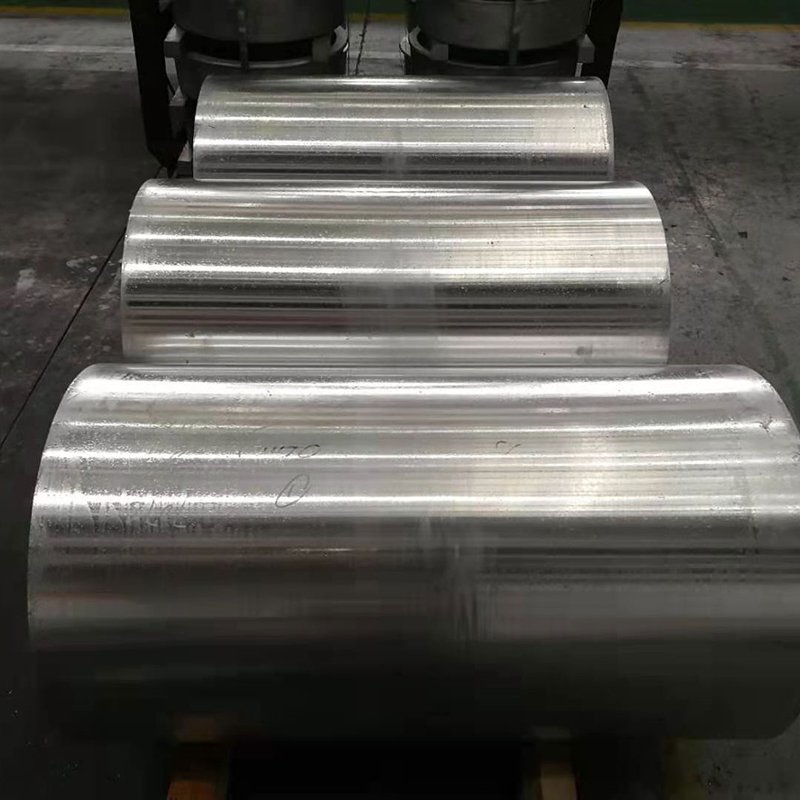
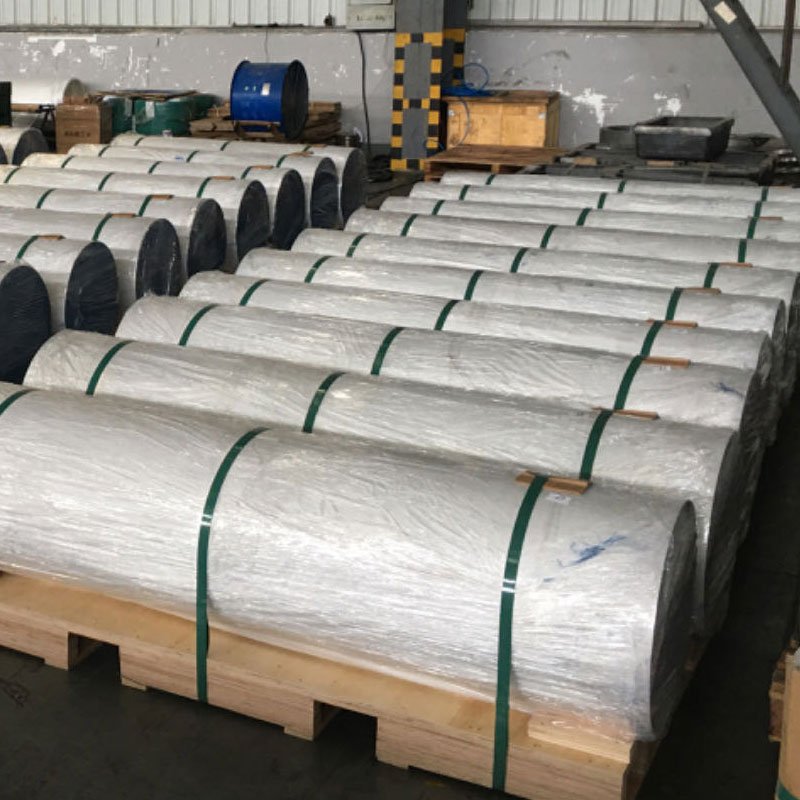
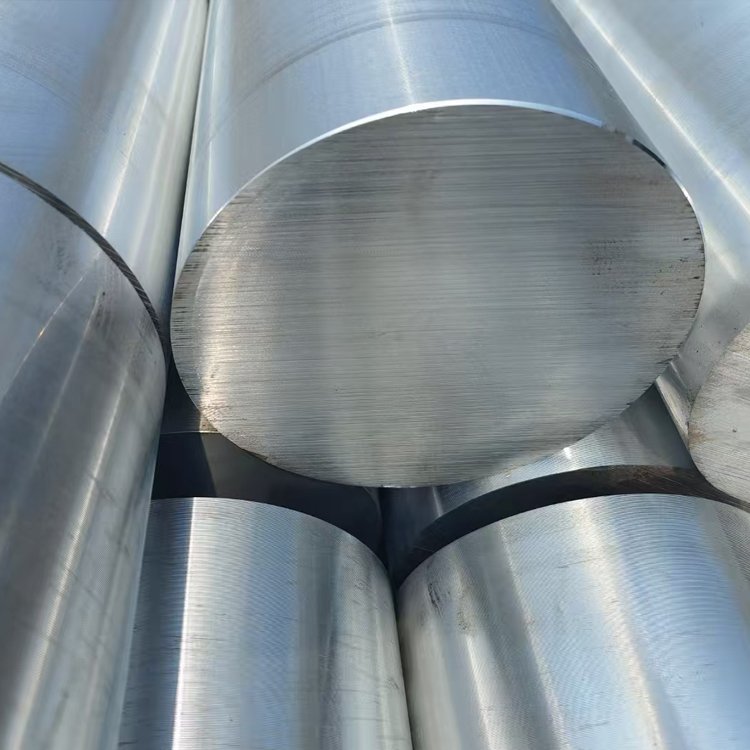
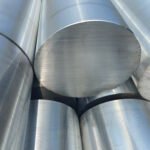
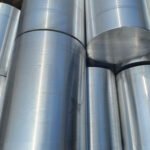
5052 large diameter aluminum bar is a medium-strength, non-heat-treatable aluminum-magnesium alloy that offers exceptional corrosion resistance, good formability, and weldability across a wide range of diameters, making it ideal for marine, general fabrication, and structural applications:
- Primary Alloying Elements:
- Magnesium (Mg): 2.2-2.8% (solid solution strengthening)
- Chromium (Cr): 0.15-0.35% (corrosion resistance enhancement)
- Base Material:
- Aluminum (Al): ≥95.7% (balance)
- Controlled Impurities:
- Iron (Fe): ≤0.40% max
- Silicon (Si): ≤0.25% max
- Copper (Cu): ≤0.10% max
- Manganese (Mn): ≤0.10% max
- Zinc (Zn): ≤0.10% max
- Other elements: ≤0.05% each, ≤0.15% total
Premium Manufacturing Process:
- Melt Preparation:
- High-purity primary aluminum (99.7% minimum)
- Precise alloying element additions
- Melt filtration through ceramic foam filters (20-30 ppi)
- Advanced degassing treatment (hydrogen < 0.15 ml/100g)
- Grain refinement with Al-Ti-B master alloy
- Direct-chill (DC) semi-continuous casting to produce large ingots
- Homogenization:
- 450-480°C for 6-12 hours
- Uniform temperature control: ±5°C
- Controlled cooling rate: 30-50°C/hour
- Hot Working (Extrusion or Forging):
- Large extrusion presses: Capable of producing bars up to 300mm diameter
- Or Forging: Processing ingots into bars via radial forging or die forging
- Deformation temperature: 350-420°C
- Ensures adequate deformation and grain refinement for optimal internal quality
- Cold Working (for H Tempers):
- Stretching or straightening to achieve desired hardness
- Ensures uniform deformation across the large diameter
- Annealing (for O Temper):
- 340-360°C for 1-3 hours
- Controlled cooling to achieve optimal grain structure and ductility
- Finishing:
- Surface conditioning (e.g., peeled, ground, or precision turned)
- Precision straightening
- Dimensional verification
- Surface quality inspection
Full manufacturing traceability with comprehensive documentation for all production steps.
2. Mechanical Properties of 5052 Large Diameter Aluminum Bar
| Property | O (Annealed) | H32 | H34 | H38 | Test Method |
| Ultimate Tensile Strength | 170-215 MPa | 230-265 MPa | 255-290 MPa | 290-320 MPa | ASTM E8 |
| Yield Strength (0.2%) | 65-95 MPa | 160-190 MPa | 180-210 MPa | 220-250 MPa | ASTM E8 |
| Elongation (2 inch) | 18-30% | 12-18% | 8-14% | 5-10% | ASTM E8 |
| Hardness (Brinell) | 45-55 HB | 60-70 HB | 68-78 HB | 75-85 HB | ASTM E10 |
| Fatigue Strength (5×10⁸) | 90-110 MPa | 120-140 MPa | 130-150 MPa | 140-160 MPa | ASTM E466 |
| Shear Strength | 110-130 MPa | 140-160 MPa | 150-170 MPa | 165-185 MPa | ASTM B769 |
| Modulus of Elasticity | 70.3 GPa | 70.3 GPa | 70.3 GPa | 70.3 GPa | ASTM E111 |
Property Distribution:
- Axial vs. Radial properties: <5% variation in strength properties
- Internal property variation across large diameter bars: typically less than 5%
- Core to surface hardness variation: <5 HB
- Property retention after welding: Excellent compared to heat-treatable alloys
3. Microstructural Characteristics
Key Microstructural Features:
- Grain Structure:
- Equiaxed grains in annealed condition
- Elongated grains in strain-hardened tempers
- ASTM grain size 5-8 (63-22μm)
- Uniform grain distribution across section, especially ensured in large diameter bars through proper processing
- Precipitate Distribution:
- Al₁₂Mg₂Cr dispersoids: 50-200nm, uniform distribution
- Al-Fe-Si intermetallics: Refined distribution
- Cr-rich dispersoids: Enhances corrosion resistance
- Texture Development:
- Near-random orientation in O condition
- Moderate deformation texture in H32/H34 tempers
- Strong deformation texture in H38 temper
- Special Features:
- Minimal Mg₂Si precipitates at grain boundaries
- Low dislocation density in O condition
- Higher dislocation density in strain-hardened tempers
- Excellent recrystallization control in intermediate tempers
4. Dimensional Specifications & Tolerances
| Parameter | Standard Range | Precision Tolerance | Commercial Tolerance | Test Method |
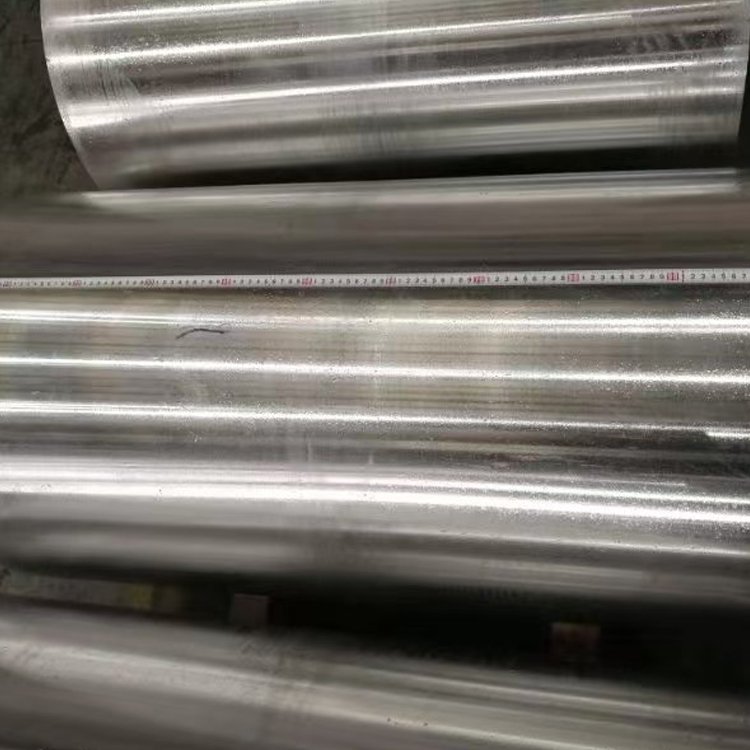
| Diameter | 100-500 mm | ±0.5mm up to 200mm | ±1.0mm up to 200mm | Micrometer/Caliper |
| ±0.3% above 200mm | ±0.6% above 200mm | |||
| Ovality | N/A | 50% of diameter tolerance | 75% of diameter tolerance | Micrometer/Caliper |
| Length | 1000-6000 mm | ±5mm | ±10mm | Tape measure |
| Straightness | N/A | 0.8mm/m | 1.5mm/m | Straightedge/Laser |
| Surface Roughness | N/A | 3.2 μm Ra max | 6.3 μm Ra max | Profilometer |
| Cut End Squareness | N/A | 0.5° max | 1.0° max | Protractor |
Standard Available Forms:
- Large Diameter Round Bar: Diameters 100-500mm
- Cut-to-length service available
- Special tolerances available upon request
- Precision ground or turned bars for critical applications
- Custom lengths and surface finishes available
5. Temper Designations & Work Hardening Options
| Temper Code | Process Description | Optimal Applications | Key Characteristics |
| O | Fully annealed, softened | Applications requiring maximum formability | Maximum ductility, lowest strength |
| H32 | Quarter-hard (strain hardened) | General purpose fabrication | Good balance of strength and formability |
| H34 | Half-hard (strain hardened) | Moderate strength applications | Higher strength with moderate ductility |
| H36 | Three-quarter hard | High-strength requirements | High strength with reduced formability |
| H38 | Full-hard (strain hardened) | Maximum strength applications | Highest strength with minimum formability |
Temper Selection Guidance:
- O: Maximum forming, bending, or drawing operations
- H32: General purpose fabrication with moderate forming
- H34: Applications requiring higher strength with some formability
- H36/H38: Applications requiring maximum strength with minimal forming
6. Machining & Fabrication Characteristics
| Operation | Tool Material | Recommended Parameters | Comments |
| Turning | HSS, Carbide | Vc=180-400 m/min, f=0.1-0.4 mm/rev | Good surface finish with proper tooling |
| Drilling | HSS, Carbide | Vc=60-120 m/min, f=0.15-0.35 mm/rev | Good hole quality, minimal burring |
| Milling | HSS, Carbide | Vc=180-500 m/min, fz=0.1-0.2 mm | Use climb milling for best finish |
| Tapping | HSS, TiN coated | Vc=15-30 m/min | Good thread quality with proper lubrication |
| Reaming | HSS, Carbide | Vc=40-90 m/min, f=0.2-0.5 mm/rev | H8 tolerance achievable |
| Sawing | HSS, Carbide-tipped | Vc=1000-2000 m/min | Fine tooth pitch for best results |
Fabrication Guidance:
- Machinability Rating: 70% (1100 aluminum = 100%)
- Surface Finish: Very Good (Ra 0.8-3.2μm readily achievable)
- Chip Formation: Medium-length chips; chip breakers beneficial
- Coolant: Water-soluble emulsion preferred (5-8% concentration)
- Tool Wear: Low with proper parameters
- Weldability: Excellent with TIG, MIG, and resistance welding
- Cold Working: Excellent formability in O condition
- Hot Working: 340-420°C recommended temperature range
- Cold Bending: Minimum radius 1× diameter (O temper), 1.5× diameter (H32), 2× diameter (H34/H38)
7. Corrosion Resistance & Protection Systems
| Environment Type | Resistance Rating | Protection Method | Expected Performance |
| Industrial Atmosphere | Excellent | Clean surface | 15-20+ years |
| Marine Atmosphere | Very Good | Clean surface | 10-15+ years |
| Seawater Immersion | Good | Cathodic protection | 5-10+ years with maintenance |
| High Humidity | Excellent | Standard cleaning | 15-20+ years |
| Stress Corrosion | Excellent | Proper temper selection | Superior to 6xxx/7xxx series |
| Galvanic Corrosion | Good | Proper isolation | Careful design with dissimilar metals |
Surface Protection Options:
- Anodizing:
- Type II (Sulfuric): 10-25μm thickness
- Type III (Hard): 25-50μm thickness
- Color anodizing: Excellent color retention
- Mechanical Finishing:
- Polishing: Enhanced appearance and reduced corrosion initiation sites
- Brushed finish: Decorative and functional
- Bead blasting: Uniform matte appearance
- Painting Systems:
- Chromate conversion coating pretreatment
- Epoxy primer + polyurethane topcoat
- Marine-grade systems available
- Chemical Conversion:
- Alodine/Iridite chromate conversion
- RoHS-compliant alternatives
8. Physical Properties for Engineering Design
| Property | Value | Design Consideration |
| Density | 2.68 g/cm³ | Weight calculation for components |
| Melting Range | 607-649°C | Welding parameters |
| Thermal Conductivity | 138 W/m·K | Thermal management design |
| Electrical Conductivity | 35-37% IACS | Electrical applications design |
| Specific Heat | 880 J/kg·K | Thermal mass calculations |
| Thermal Expansion (CTE) | 23.8 ×10⁻⁶/K | Thermal stress analysis |
| Young’s Modulus | 70.3 GPa | Deflection and stiffness calculations |
| Poisson’s Ratio | 0.33 | Structural analysis parameter |
| Damping Capacity | Moderate | Vibration-sensitive applications |
Design Considerations:
- Operating Temperature Range: -80°C to +200°C
- Cryogenic Performance: Good (increased strength at low temperatures)
- Magnetic Properties: Non-magnetic
- Recyclability: 100% recyclable with high scrap value
- Environmental Impact: Low carbon footprint compared to steel alternatives
9. Quality Assurance & Testing
Standard Testing Procedures:
- Chemical Composition:
- Optical emission spectroscopy
- Verification of all major elements and impurities
- Mechanical Testing:
- Tensile testing (longitudinal)
- Hardness testing (Brinell)
- Dimensional Inspection:
- Diameter measurements at multiple locations
- Straightness verification
- Ovality measurement
- Visual Inspection:
- Surface defects assessment
- Finish quality verification
- Specialized Testing (When Required):
- Ultrasonic inspection per ASTM E114
- Grain size determination (ASTM E112)
- Corrosion testing (ASTM B117 salt spray)
- Conductivity testing (eddy current)
Standard Certifications:
- Mill Test Report (EN 10204 3.1)
- Chemical analysis certification
- Mechanical properties certification
- Dimensional inspection report
- Material traceability documentation
10. Applications & Design Considerations
Primary Applications:
- Marine Components:
- Large marine structural members
- Ship equipment shafts, rods
- Offshore platform structures
- Desalination equipment parts
- Energy & Chemical:
- Storage tank and pressure vessel components
- Heat exchanger components
- Piping system flanges and connectors
- Internal structures for chemical equipment
- General Machinery Manufacturing:
- Large machine structural frames
- Drive shafts, rollers
- Jigs and fixtures
- Various mechanical parts
- Architecture & Infrastructure:
- Curtain wall structural supports
- Bridge and large building connectors
- Outdoor sculptures and decorative elements
- Rail Transit:
- Subway and train structural components
- Bogie components
- Electrified railway conductive components
Design Advantages:
- Excellent corrosion resistance in most environments
- Superior formability, especially in O temper
- Excellent weldability without post-weld heat treatment
- Good fatigue resistance
- Attractive appearance with various finishes
- Non-magnetic properties for electronic applications
- Non-sparking properties for safety applications
- Good machinability for complex components
- Lightweight alternative to stainless steel
- Moderate strength with excellent ductility
Design Limitations:
- Lower strength compared to 6xxx and 7xxx series alloys
- Not heat-treatable for strength enhancement
- Moderate wear resistance
- May experience stress relaxation under sustained loading
- Not recommended for high-temperature applications above 200°C
- Limited strength retention after welding in strain-hardened tempers
Economic Considerations:
- Cost-effective alternative to stainless steel
- Good balance of properties and cost
- Lower maintenance costs in corrosive environments
- Reduced finishing costs due to natural corrosion resistance
- Excellent recyclability and high scrap value
- Lower fabrication costs compared to harder materials
Sustainability Aspects:
- 100% recyclable with no loss of properties
- Energy-efficient alternative to steel
- Long service life reduces replacement frequency
- No harmful substances or RoHS-restricted elements
- Low environmental impact throughout lifecycle
- High percentage of recycled content available
Material Selection Guidance:
- Choose 5052 when corrosion resistance and formability are priorities
- Select harder tempers (H34/H38) for increased strength requirements
- Consider 6061-T6 when higher strength is required with moderate corrosion resistance
- Consider 5083 for higher strength marine applications
- Consider 3003 for less demanding applications with cost constraints
Processing Recommendations:
- Allow for springback in forming operations (increases with harder tempers)
- Use appropriate radius in bending operations based on temper
- Employ proper cleaning procedures before welding