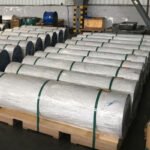
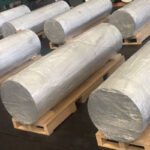
1. Material Composition & Manufacturing Process
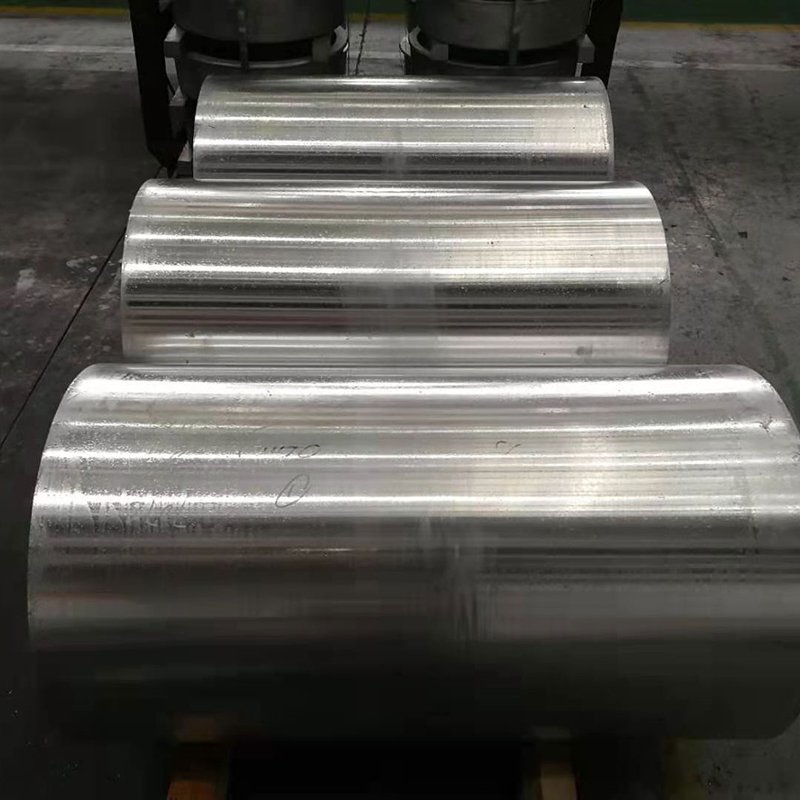
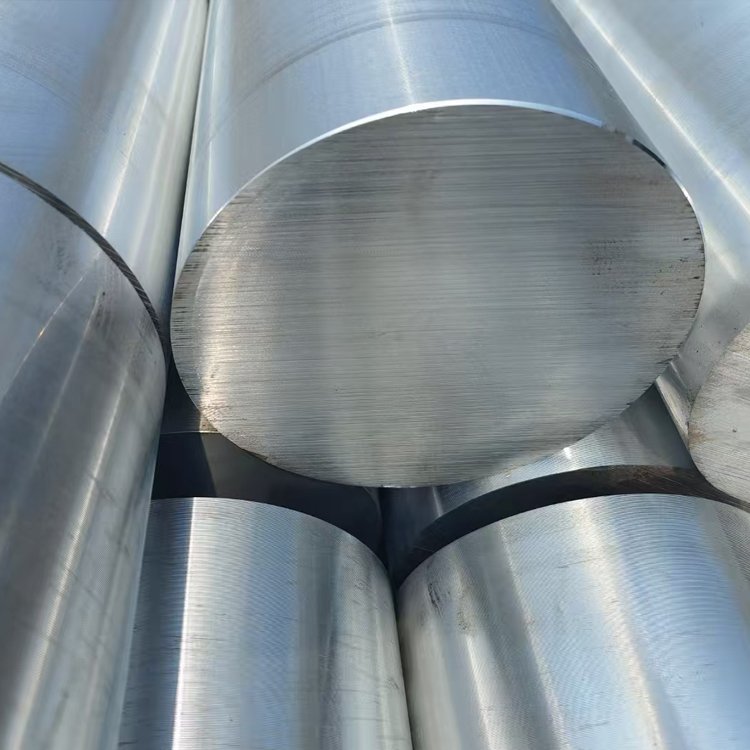
5083 forged aluminum round bar is a high-strength, non-heat-treatable aluminum-magnesium alloy specifically engineered to deliver exceptional performance in extremely harsh environments, particularly marine and cryogenic applications. Its precisely controlled forging process optimizes its internal microstructure, providing superior toughness, corrosion resistance, weldability, and fatigue strength, making it an ideal choice for shipbuilding, oil & gas, cryogenic engineering, and military applications:
- Primary Alloying Elements:
- Magnesium (Mg): 4.0-4.9% (primary strengthening element, provides high strength and good weldability)
- Manganese (Mn): 0.4-1.0% (further enhances strength and refines grain)
- Chromium (Cr): 0.05-0.25% (inhibits recrystallization, improves stress corrosion resistance)
- Base Material:
- Aluminum (Al): ≥93.2% (balance)
- Controlled Impurities:
- Iron (Fe): ≤0.40% max
- Silicon (Si): ≤0.40% max
- Copper (Cu): ≤0.10% max
- Zinc (Zn): ≤0.25% max
- Titanium (Ti): ≤0.15% max
- Other elements: ≤0.05% each, ≤0.15% total
Premium Forging Process:
- Melt Preparation:
- High-purity primary aluminum (99.7% minimum)
- Precise alloying element additions with ±0.05% tolerance
- Advanced filtration through ceramic foam filters (30-40 ppi)
- Advanced degassing treatment (hydrogen < 0.10 ml/100g)
- Grain refinement with Al-Ti-B master alloy
- Direct-chill (DC) semi-continuous casting to produce large-sized ingots
- Homogenization:
- 420-450°C for 10-24 hours
- Uniform temperature control: ±5°C
- Controlled cooling rate: 15-25°C/hour
- Eliminates microsegregation and homogenizes alloy composition
- Billet Preparation:
- Surface conditioning (scalping)
- Ultrasonic inspection (100% volumetric)
- Preheating: 380-420°C for uniform temperature
- Forging Sequence:
- Open-die preforming: 380-420°C
- Closed-die or radial forging for finishing: 350-400°C
- Hydraulic press capacity: 2,000-10,000 tons (depending on bar size)
- Computer-controlled ram speed and pressure
- Multi-stage forging to optimize grain flow and refine grains
- Minimum reduction ratio: 3:1 to 5:1, ensuring dense and uniform internal structure
- Annealing (O Temper) / Strain Hardening (H Tempers):
- O Temper: 340-360°C for 1-3 hours, ensuring maximum ductility
- H Tempers: Achieved through cold working (e.g., stretching, straightening), such as H111, H112
- Final Processing:
- Surface conditioning (e.g., peeled, ground, or precision turned)
- Precision straightening
- Dimensional verification
- Surface quality inspection
All production stages are subject to stringent quality control and traceability management.
2. Mechanical Properties of 5083 Forged Round Bar
| Property | O (Annealed) | H111 | H112 | Test Method |
| Ultimate Tensile Strength | 270-305 MPa | 290-330 MPa | 280-320 MPa | ASTM E8 |
| Yield Strength (0.2%) | 110-135 MPa | 130-160 MPa | 115-145 MPa | ASTM E8 |
| Elongation (2 inch) | 16-22% | 14-20% | 16-22% | ASTM E8 |
| Hardness (Brinell) | 65-75 HB | 75-85 HB | 70-80 HB | ASTM E10 |
| Fatigue Strength (5×10⁸ Cycles) | 120-140 MPa | 130-150 MPa | 125-145 MPa | ASTM E466 |
| Shear Strength | 160-180 MPa | 175-195 MPa | 170-190 MPa | ASTM B769 |
| Modulus of Elasticity | 70.3 GPa | 70.3 GPa | 70.3 GPa | ASTM E111 |
| Fracture Toughness (K1C, typical) | 26-30 MPa√m | 28-32 MPa√m | 27-31 MPa√m | ASTM E399 |
Property Distribution:
- Axial vs. Radial properties: <3% variation in strength properties (due to forged isotropy)
- Internal property variation across large diameter bars: typically less than 5%
- Core to surface hardness variation: <3 HB
- Property retention after welding: Welded zones can retain over 90% of parent material strength with good ductility
- Cryogenic performance: Strength and toughness even improve at -196°C (liquid nitrogen temperature), with no brittle transition
3. Microstructural Characteristics
Key Microstructural Features:
- Grain Structure:
- Fine, uniform equiaxed grains
- ASTM grain size 6-8 (45-22μm)
- Forging process ensures grain flow follows the bar’s contour, enhancing mechanical properties and fatigue resistance
- Uniform grain distribution across the entire cross-section, free from coarse grain segregation
- Precipitate Distribution:
- β-Mg₅Al₈ phase: Fine and uniformly dispersed, acting as the primary strengthening phase
- AlMn or AlFeMn dispersoids: Further refines grains and inhibits recrystallization
- AlCr phase: Improves stress corrosion resistance
- Texture Development:
- Mild texture induced by forging, designed to optimize multi-directional properties
- Forged bars exhibit superior isotropy compared to rolled products
- Special Features:
- Continuous precipitation of β-phase at grain boundaries effectively controlled to avoid stress corrosion sensitivity
- Moderate dislocation density, beneficial for work hardening
- Absence of coarse primary intermetallic compounds
4. Dimensional Specifications & Tolerances
| Parameter | Standard Range | Precision Tolerance | Commercial Tolerance | Test Method |
| Diameter | 100-800 mm | ±0.5mm up to 300mm | ±1.0mm up to 300mm | Micrometer/Caliper |
| ±0.2% above 300mm | ±0.5% above 300mm | |||
| Ovality | N/A | 50% of diameter tolerance | 75% of diameter tolerance | Micrometer/Caliper |
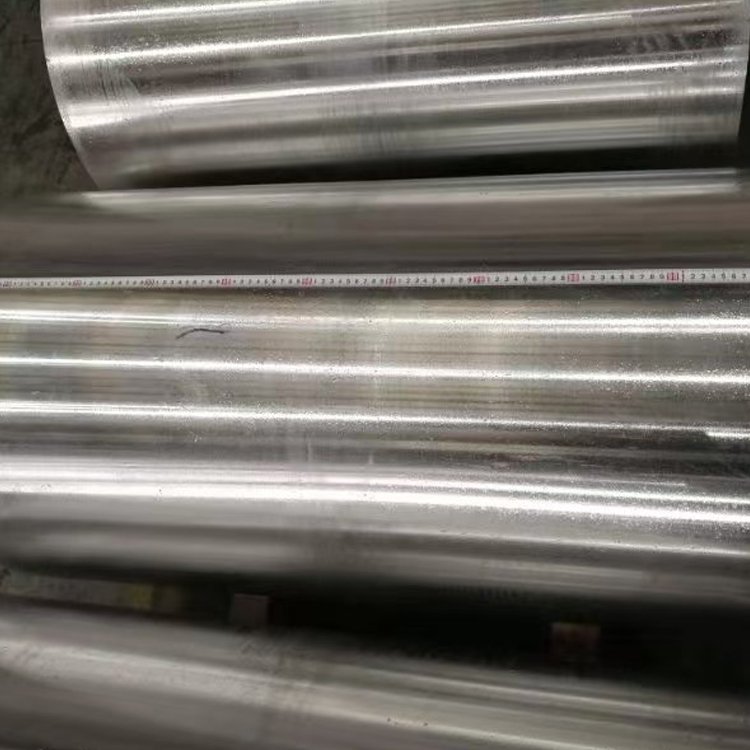
| Length | 1000-6000 mm | ±5mm | ±10mm | Tape measure |
| Straightness | N/A | 0.5mm/m | 1.0mm/m | Straightedge/Laser |
| Surface Roughness | N/A | 3.2 μm Ra max | 6.3 μm Ra max | Profilometer |
| Cut End Squareness | N/A | 0.5° max | 1.0° max | Protractor |
Standard Available Forms:
- Forged Round Bar: Diameters 100mm to 800mm
- Custom cut-to-length service available
- Special tolerances and surface finishes (e.g., peeled, ground, precision turned) available upon request
- Available in various forged tempers, such as O, H111, H112
5. Temper Designations & Work Hardening Options
| Temper Code | Process Description | Optimal Applications | Key Characteristics |
| O | Fully annealed, softened | Applications requiring maximum formability | Maximum ductility, lowest strength |
| H111 | Moderately strain hardened after full annealing | General structures, excellent post-weld properties | Good balance of strength and ductility |
| H112 | Flattened only after forging | Retains residual stresses from forging | Suitable for further processing before machining |
| H321 | Stabilized H32 temper | High strength, strict corrosion resistance requirements | Excellent SCC resistance, higher strength |
Temper Selection Guidance:
- O: For complex cold forming operations or where further deep processing is needed
- H111: For structural components requiring high strength, weldability, and good corrosion resistance
- H112: Used directly after forging, suitable for parts with significant machining
- H321: For marine and cryogenic applications with extremely high stress corrosion cracking resistance requirements
6. Machining & Fabrication Characteristics
| Operation | Tool Material | Recommended Parameters | Comments |
| Turning | Carbide, PCD | Vc=150-400 m/min, f=0.1-0.4 mm/rev | Easy to achieve good surface finish, moderate tool wear |
| Drilling | Carbide, TiN coated | Vc=60-150 m/min, f=0.15-0.35 mm/rev | Through-coolant drills recommended, good for deep holes |
| Milling | Carbide, HSS | Vc=200-600 m/min, fz=0.1-0.25 mm | High-positive rake angle tools, large depth of cut, high feed |
| Tapping | HSS-E-PM, TiCN coated | Vc=15-30 m/min | Proper lubrication for good thread quality |
| Reaming | Carbide, HSS | Vc=50-100 m/min, f=0.2-0.5 mm/rev | H7/H8 tolerance achievable |
| Sawing | Carbide-tipped blade | Vc=800-2000 m/min | Efficient cutting for large diameter bars |
Fabrication Guidance:
- Machinability Rating: 70% (1100 aluminum = 100%), slightly lower machinability in strain-hardened tempers
- Chip Formation: Gummy chips, tend to wrap around tools, requires good chip breakers
- Coolant: Water-soluble cutting fluid (8-12% concentration), high flow rate cooling
- Tool Wear: Moderate, regular tool inspection needed
- Weldability: Excellent with TIG and MIG welding, one of the best weldable aluminum alloys
- Cold Working: Good formability in O temper, moderate in H111 temper
- Hot Working: Recommended temperature range 300-400°C
- Stress Corrosion Cracking: O, H111, H112 tempers have excellent resistance to stress corrosion cracking
- Cryogenic Properties: Retains or improves strength and toughness at extremely low temperatures
7. Corrosion Resistance & Protection Systems
| Environment Type | Resistance Rating | Protection Method | Expected Performance |
| Industrial Atmosphere | Excellent | Clean surface | 20+ years |
| Marine Atmosphere | Excellent | Clean surface | 15-20+ years |
| Seawater Immersion | Very Good | Cathodic protection or painting | 10-15+ years with maintenance |
| High Humidity | Excellent | Clean surface | 20+ years |
| Stress Corrosion | Excellent | Appropriate temper selection (H111/H112/H321) | Extremely low susceptibility |
| Exfoliation | Excellent | Standard protection | Extremely low susceptibility |
| Galvanic Corrosion | Good | Proper isolation | Careful design with dissimilar metals |
Surface Protection Options:
- Anodizing:
- Type II (Sulfuric): 10-25μm thickness, provides additional protection and aesthetics
- Type III (Hard): 25-75μm thickness, increases wear resistance and hardness
- Dyeing and sealing: Enhances aesthetics and corrosion resistance
- Conversion Coatings:
- Chromate conversion coatings (MIL-DTL-5541): Excellent base for paints or adhesives
- Chromium-free alternatives: Environmentally compliant
- Painting Systems:
- Epoxy primer + polyurethane topcoat: Provides excellent long-term protection, especially for marine applications
- Antifouling paint: For submerged parts of ships
8. Physical Properties for Engineering Design
| Property | Value | Design Consideration |
| Density | 2.66 g/cm³ | Lightweight design, center of gravity control |
| Melting Range | 575-635°C | Welding and casting parameters |
| Thermal Conductivity | 121 W/m·K | Thermal management, heat transfer design |
| Electrical Conductivity | 34% IACS | Electrical conductivity in electrical applications |
| Specific Heat | 897 J/kg·K | Thermal mass and heat capacity calculations |
| Thermal Expansion (CTE) | 24.0 ×10⁻⁶/K | Dimensional changes due to temperature variations |
| Young’s Modulus | 70.0 GPa | Deflection and stiffness calculations |
| Poisson’s Ratio | 0.33 | Structural analysis parameter |
| Damping Capacity | Moderate | Vibration and noise control |
Design Considerations:
- Operating Temperature Range: -200°C to +80°C (performance degrades above this)
- Cryogenic Performance: Maintains or improves strength and toughness at extremely low temperatures, ideal for cryogenic structural materials
- Magnetic Properties: Non-magnetic
- Recyclability: 100% recyclable with high scrap value
- Formability: Good in O temper, moderate in H111 temper
- Dimensional Stability: Good dimensional stability after forging and stress relief
- Strength-to-Weight Ratio: Advantageous in applications requiring high strength and corrosion resistance
9. Quality Assurance & Testing
Standard Testing Procedures:
- Chemical Composition:
- Optical emission spectroscopy
- X-ray fluorescence analysis
- Verification of all major elements and impurity content
- Mechanical Testing:
- Tensile testing (longitudinal, transverse, and radial)
- Hardness testing (Brinell, multiple locations)
- Impact testing (Charpy V-notch, especially for cryogenic applications)
- Fatigue testing (as required)
- Nondestructive Testing:
- Ultrasonic inspection (100% volumetric, per ASTM B594/E2375, or AMS 2630)
- Eddy current testing (surface and near-surface defects)
- Penetrant inspection (surface defects)
- Radiographic testing (internal macroscopic defects)
- Microstructural Analysis:
- Grain size determination
- Precipitate and intermetallic evaluation
- Grain flow pattern verification
- Stress corrosion sensitivity testing
- Dimensional Inspection:
- CMM (Coordinate Measuring Machine) verification
- Diameter, length, straightness, ovality, etc.
Standard Certifications:
- Material Test Report (EN 10204 3.1 or 3.2)
- Chemical analysis certification
- Mechanical properties certification
- Heat treatment/forging certification
- Nondestructive testing certification
- Conformance to ASTM B247 (forged bar), AMS 4114, EN AW-5083, etc.
10. Applications & Design Considerations
Primary Applications:
- Marine Industry:
- Shipbuilding and yacht construction (hull structures, masts, deck equipment)
- Offshore drilling platform structures
- Desalination equipment
- Submarine components
- Cryogenic Engineering:
- Liquefied Natural Gas (LNG) storage tanks and transfer pipelines
- Aerospace cryogenic fuel tanks
- Ultra-low temperature equipment components
- Transportation Industry:
- Railway vehicles (high-speed train bodies, freight cars)
- Automotive fuel tanks and structural components
- Tankers, bulk material carriers
- Military and Defense:
- Armored vehicle structures
- Naval ship and submarine components
- Military bridges
- Pressure Vessels:
- Medium to high-pressure vessels
- Aerospace pressure vessels
Design Advantages:
- Excellent corrosion resistance, especially in marine and industrial environments
- Superior weldability, high weld strength with no need for post-weld heat treatment
- Exceptional cryogenic toughness, with improved properties at extremely low temperatures
- High strength and good ductility, suitable for structural components
- Forging process optimizes grain flow and internal quality
- Excellent resistance to stress corrosion cracking and exfoliation corrosion
- Lightweight, contributing to energy savings and emission reduction
- Non-magnetic, suitable for specific applications
Design Limitations:
- Not strengthened by heat treatment
- Lower strength compared to 2xxx and 7xxx series high-strength alloys
- Long-term use above 65°C may lead to sensitization (Mg₂Al₃ precipitation), increasing susceptibility to stress corrosion; H111 or H321 tempers should be selected
- Machinability is not as good as alloys like 6061
- Relatively higher cost
Economic Considerations:
- High-performance material, higher initial cost but long lifespan and low maintenance costs
- Excellent corrosion resistance reduces long-term protection needs
- Good weldability lowers the cost of fabricating complex structures
- Lightweight properties help reduce transportation fuel costs
Sustainability Aspects:
- 100% recyclable, high resource utilization efficiency
- Aluminum production processes are becoming increasingly environmentally friendly, with reduced energy consumption
- Long service life reduces waste generation
Material Selection Guidance:
- Choose 5083 when the highest levels of corrosion resistance, weldability, and cryogenic performance are required
- 5083 is ideal when high strength is needed for service in marine environments
- For structures serving long-term at temperatures above 65°C, H111 or H321 tempers should be selected
- Consider 7xxx series alloys when higher strength is paramount and corrosion resistance or cryogenic performance are not primary concerns