1. Material Overview & Manufacturing Process
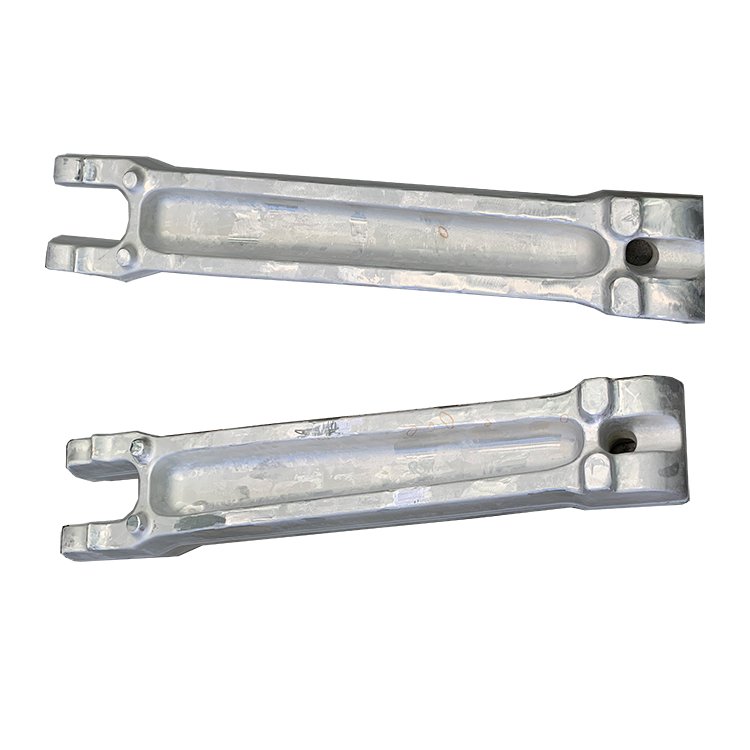
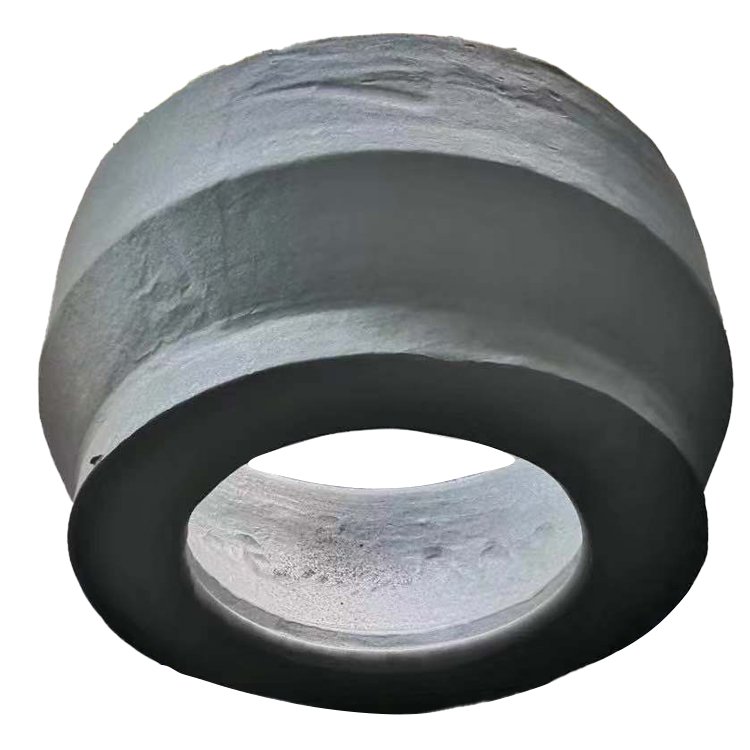
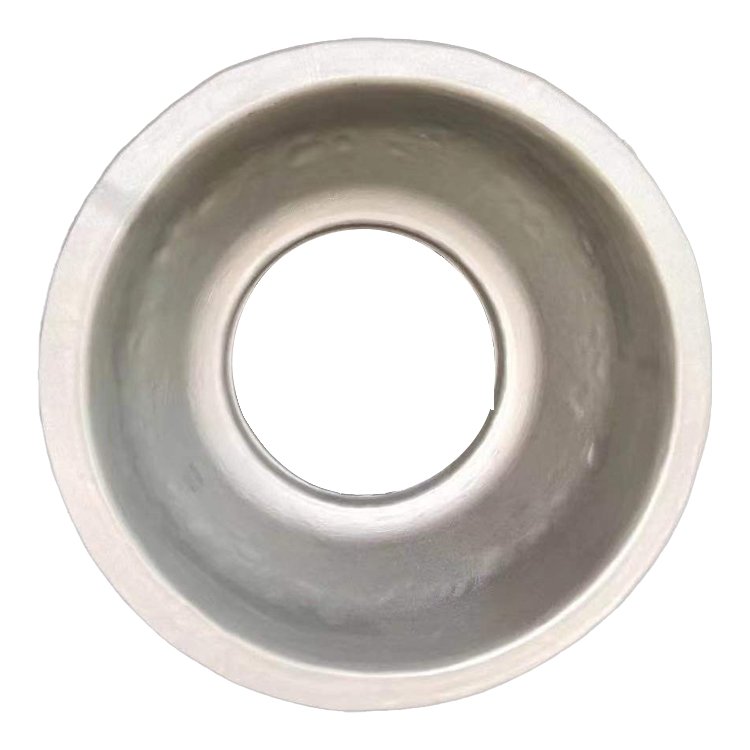
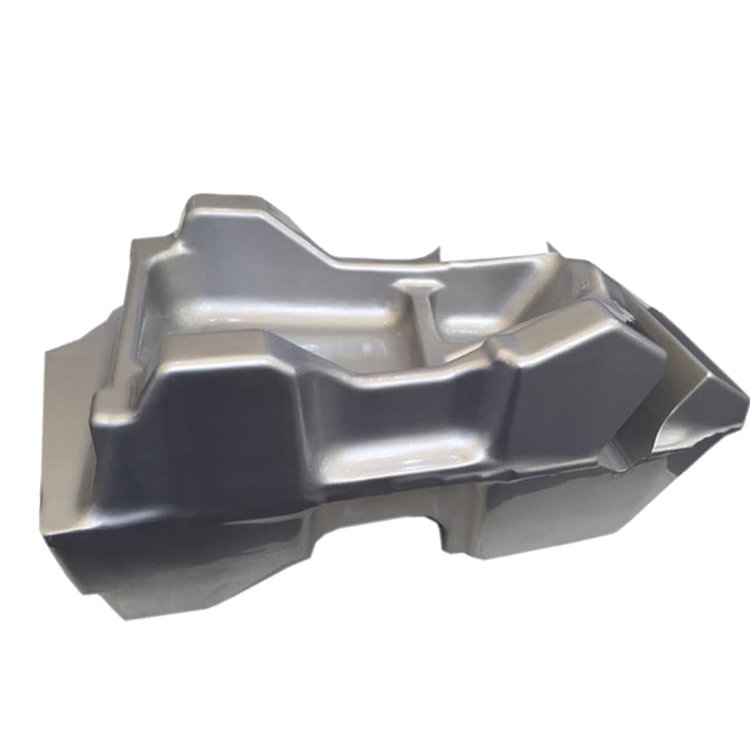
6061 large aluminum alloy die forgings represent a perfect combination of medium strength, excellent corrosion resistance, good weldability, and superior machinability, enabling the production of large-sized complex components through the die forging process. 6061 is a typical Al-Mg-Si series alloy, possessing good overall properties, widely used in structural components where ultra-high strength is not the primary requirement, but high demands are placed on corrosion resistance, weldability, machinability, and cost-effectiveness. Large die forgings typically refer to components weighing tens to hundreds of kilograms, with dimensions up to several meters, complex shapes, or requiring high uniformity of mechanical properties, applied in general machinery, structural engineering, transportation (e.g., large vehicles, non-primary load-bearing structures of ships), power plants, and other fields. Through large-scale die forging, the various advantages of 6061 alloy are fully exploited, while the dense grain structure and continuous grain flow formed during forging ensure the stability and reliability of large components in their service environment.
- Primary Alloying Elements:
- Magnesium (Mg): 0.8-1.2% (improves strength, enhances corrosion resistance)
- Silicon (Si): 0.4-0.8% (forms Mg₂Si strengthening phase with magnesium)
- Copper (Cu): 0.15-0.40% (slightly improves strength, but may reduce corrosion resistance)
- Chromium (Cr): 0.04-0.35% (inhibits recrystallization, improves toughness)
- Base Material:
- Aluminum (Al): Balance
- Controlled Impurities:
- Iron (Fe): 0.70% max
- Manganese (Mn): 0.15% max
- Titanium (Ti): 0.15% max
- Zinc (Zn): 0.25% max
- Other elements: 0.05% max each, 0.15% max total
Manufacturing Process (for Large Die Forgings): The production process for 6061 large die forgings emphasizes dimensional accuracy, uniformity of mechanical properties, and cost-effectiveness.
- Raw Material Preparation & Large-Size Ingots:
- High-quality 6061 large-size ingots or large-section extruded bars are selected as forging billets. Ingot production must ensure uniform internal structure, absence of macroscopic defects, and minimal segregation.
- Ingots must undergo chemical composition analysis and ultrasonic inspection to ensure metallurgical quality.
- Multi-Pass Pre-forging (Upsetting and Drawing):
- Large ingots typically first undergo multi-pass upsetting and drawing pre-forging to break down coarse as-cast structures, refine grains, eliminate internal porosity and segregation, and form a uniform, fine-grained structure with continuous grain flow.
- Pre-forging is carried out on large hydraulic or oil presses, with precise control of deformation temperature and amount.
- Cutting:
- Billets are precisely cut according to the pre-forged dimensions and final forging requirements.
- Heating:
- Large billets are uniformly heated in large forging furnaces to ensure thorough heat penetration. The forging temperature range for 6061 is relatively wide (typically 400-500°C), but temperature uniformity must still be ensured to avoid local overheating.
- Large Die Forging Formation:
- One or more precise strikes/pressures are applied on 10,000-ton or even tens of thousands of tons large hydraulic presses or forging hammers. Die design is complex, utilizing CAE simulation techniques to predict metal flow, ensuring metal flow lines follow the complex contour of the part and achieve near-net shaping.
- Stepwise Forging: For extremely complex or very large parts, forging may be conducted in multiple dies and steps to gradually form the final shape.
- Trimming:
- After forging, the heavy flash around the periphery of the large forging is removed.
- Heat Treatment:
- Solution Heat Treatment: The large forging is heated in a precisely controlled large heat treatment furnace to approximately 530°C ± 5°C and held for sufficient time to allow alloying elements to fully dissolve into the solid solution. Due to 6061’s lower quench sensitivity, its quench transfer time requirements are less strict than 7075, but uniform cooling must still be ensured.
- Quenching: Rapid cooling from the solutionizing temperature. For large forgings, large quenching tanks are typically used for water quenching (room temperature water), supplemented by forced circulation to ensure uniform and rapid cooling, achieving optimal strengthening.
- Aging Treatment:
- T6 Temper: Standard artificial aging treatment (approx. 160-175°C for 6-18 hours) to achieve maximum strength and hardness. This is the most commonly used temper for large 6061 forgings.
- Straightening & Stress Relief (if required):
- Mechanical straightening may be required after quenching to correct dimensions and shape.
- For certain high-precision parts or those requiring extensive subsequent machining, tensile or compression stress relief (e.g., T651 temper) can be performed to reduce residual stress and minimize machining distortion.
- Finishing & Inspection:
- Deburring, shot peening (improves fatigue performance), dimensional inspection, surface quality checks.
- Finally, comprehensive nondestructive testing (e.g., ultrasonic, penetrant) and mechanical property tests are performed to ensure the product complies with relevant standards.
2. Mechanical Properties of 6061 Large Die Forgings
6061 large die forgings in the T6 temper exhibit good medium strength, excellent toughness, and good fatigue performance. Their performance indicators are typically strictly required by relevant industrial standards, with guaranteed values distinguished for longitudinal (L), transverse (LT), and short-transverse (ST) directions.
| Property Type | T6 Typical Value | Test Direction | Standard |
| Ultimate Tensile Strength (UTS) | 290-330 MPa | L/LT/ST | ASTM B557 |
| Yield Strength (0.2% YS) | 240-290 MPa | L/LT/ST | ASTM B557 |
| Elongation (2 inch) | 10-18% | L/LT/ST | ASTM B557 |
| Brinell Hardness | 95-105 HB | N/A | ASTM E10 |
| Fatigue Strength (10⁷ Cycles) | 95-115 MPa | N/A | ASTM E466 |
| Fracture Toughness K1C | 25-35 MPa√m | N/A | ASTM E399 |
| Shear Strength | 190-220 MPa | N/A | ASTM B769 |
| Elastic Modulus | 68.9 GPa | N/A | ASTM E111 |
Property Uniformity and Anisotropy:
- The size and weight of large die forgings make internal mechanical property uniformity a challenge. However, advanced forging and heat treatment processes maximize property uniformity.
- 6061 alloy has relatively low anisotropy, and forging further optimizes its internal structure, resulting in smaller property differences in various directions, which is crucial for the reliability of large structural components.
3. Microstructural Characteristics
The microstructure of 6061 large die forgings is the fundamental guarantee of their good overall performance.
Key Microstructural Features:
- Refined, Uniform, and Dense Grain Structure:
- After upsetting and die forging with a large forging ratio, coarse as-cast grains are thoroughly broken down, forming fine, uniform, and dense recrystallized grains. This eliminates casting defects such as porosity, gas pockets, and segregation, significantly improving the material’s ductility, toughness, and fatigue life.
- Dispersoids formed by elements such as chromium (Cr) effectively pin grain boundaries, inhibiting excessive grain growth during heat treatment and maintaining fine-grain strengthening.
- Continuous Grain Flow Highly Conforming to Part Shape:
- This is the most significant characteristic and advantage of large die forgings. As the metal plastically flows within the large die cavity, its grains are elongated and form continuous fibrous flow lines that closely conform to the part’s complex external and internal structures.
- This grain flow alignment with the part’s primary stress direction under actual operating conditions effectively transfers loads, significantly improving the part’s fatigue performance and impact toughness in critical stress areas (e.g., large connection holes, corners, varying cross-sections). In large components, the control and continuity of grain flow are crucial for overall structural integrity.
- Uniform Distribution of Strengthening Phases (Precipitates):
- After strictly controlled solution heat treatment and aging, the primary strengthening phase Mg₂Si precipitates uniformly in the aluminum matrix with optimal size, morphology, and spacing.
- The precipitation behavior of strengthening phases in 6061 alloy is relatively stable, less prone to continuous grain boundary precipitation that leads to SCC sensitivity issues, making it a reliable choice for large components.
- High Metallurgical Cleanliness and Low Defect Rate:
- Large die forgings have a dense internal structure, free from casting defects. Through strict control of raw material impurity content, the formation of harmful iron-rich or silicon-rich phases is reduced, thereby ensuring the material’s toughness, fatigue life, and damage tolerance.
4. Dimensional Specifications & Tolerances
6061 large aluminum alloy die forgings are typically used in applications with high requirements for dimensional accuracy and geometric tolerances, while also considering cost-effectiveness.
| Parameter | Typical Size Range | Commercial Forging Tolerance | Precision Machining Tolerance | Test Method |
| Max Envelope Dimension | 1000 – 6000 mm | ±0.5% or ±2 mm | ±0.1 – ±0.5 mm | CMM/Laser Scan |
| Min Wall Thickness | 10 – 200 mm | ±1.0 mm | ±0.3 – ±0.8 mm | CMM/Thickness Gauge |
| Weight Range | 50 – 5000 kg | ±4% | N/A | Electronic Scale |
| Surface Roughness (Forged) | Ra 12.5 – 50 μm | N/A | Ra 3.2 – 12.5 μm | Profilometer |
| Flatness | N/A | 0.5 mm/100mm | 0.15 mm/100mm | Flatness Gauge/CMM |
| Perpendicularity | N/A | 0.4° | 0.15° | Angle Gauge/CMM |
Customization Capability:
- Large die forgings are typically customized based on customer CAD models and engineering drawings.
- Manufacturers must possess strong die design and manufacturing capabilities, as well as ultra-large forging and heat treatment equipment.
- Full services can be provided, from raw material pre-forging, die forging, heat treatment, stress relief to rough/finish machining.
5. Temper Designations & Heat Treatment Options
Heat treatment for 6061 alloy is relatively simple, primarily focusing on the T6 temper.
| Temper Code | Process Description | Typical Applications | Key Characteristics |
| O | Fully annealed, softened | Intermediate state before further processing | Maximum ductility, lowest strength |
| T4 | Solution heat treated, then naturally aged | Moderate strength, good ductility | Usually a temporary temper or for low-strength applications |
| T6 | Solution heat treated, then artificially aged | General high-strength structural components | Highest strength, high hardness, good corrosion resistance, excellent weldability |
| T651 | Solution heat treated, artificially aged, stretched stress-relieved | For reduced residual stress and machining distortion | High strength, low residual stress |
Temper Selection Guidance:
- T6 Temper: This is the most commonly used temper for large 6061 forgings, providing the best combination of strength, corrosion resistance, and machinability.
- T651 Temper: For large forgings requiring extensive precision machining, choosing the T651 temper can effectively reduce residual stress, thereby minimizing machining distortion and improving dimensional stability.
6. Machining & Fabrication Characteristics
6061 large die forgings have excellent machinability and good weldability, facilitating subsequent manufacturing and joining.
| Operation | Tool Material | Recommended Parameters | Comments |
| Turning | Carbide, HSS | Vc=200-800 m/min, f=0.2-1.5 mm/rev | Large stock removal for roughing, precision for surface finish |
| Milling | Carbide, HSS | Vc=250-1200 m/min, fz=0.1-0.8 mm | Large 5-axis/gantry machining centers, heavy cutting, multi-axis control |
| Drilling | Carbide, HSS | Vc=50-200 m/min, f=0.08-0.3 mm/rev | Deep hole drilling, internal cooling, chip evacuation, strict dimensional control |
| Tapping | HSS-E-PM | Vc=10-30 m/min | Proper lubrication, prevents thread tearing, tapping large holes |
| Welding | MIG/TIG | Good fusion weldability, conventional welding methods applicable | Suitable for structural joining and repair, mindful of welding distortion |
| Surface Treatment | Anodizing, Conversion Coating, Painting | Anodizing is easy to color, hard, wear-resistant, corrosion-resistant | Widely applied, meets aesthetic and protective needs |
Fabrication Guidance:
- Machinability: 6061 in T6 temper has excellent machinability, easily producing parts with high surface quality and dimensional accuracy. For large components, large feeds and depths of cut can be used for efficient machining.
- Residual Stress: Large forgings may have residual stress after quenching, which the T651 temper can effectively alleviate. Stepwise cutting can be employed during machining to reduce distortion.
- Weldability: 6061 alloy has excellent weldability and can be conventionally fusion welded (e.g., MIG, TIG), which is a significant advantage for the assembly and repair of large structural components. Welded joint strength can reach 70-80% of the base metal, and post-weld heat treatment can be performed if higher strength is required.
7. Corrosion Resistance & Protection Systems
6061 large aluminum alloy die forgings exhibit excellent corrosion resistance in various natural environments and certain corrosive media.
| Corrosion Type | T6 (Typical) | Protection System |
| Atmospheric Corrosion | Excellent | Anodizing, or no special protection needed |
| Seawater Corrosion | Good | Anodizing, high-performance coatings, galvanic isolation |
| Stress Corrosion Cracking (SCC) | Very Low Sensitivity | Usually no special protection needed |
| Exfoliation Corrosion | Very Low Sensitivity | Usually no special protection needed |
| Intergranular Corrosion | Very Low Sensitivity | Heat treatment control |
Corrosion Protection Strategies:
- Alloy and Temper Selection: 6061 alloy inherently possesses excellent corrosion resistance; there is usually no need to overly worry about SCC or exfoliation corrosion issues in most application environments.
- Surface Treatment:
- Anodizing: The most common and effective protection method, forming a dense oxide film on the forging surface, enhancing corrosion and wear resistance. For large components, the size of the anodizing tank and process control are crucial.
- Chemical Conversion Coatings: Serve as good primers for paints or adhesives, providing additional corrosion protection.
- High-Performance Coating Systems: Multi-layer high-performance anti-corrosion coatings can be applied in extremely corrosive environments.
- Galvanic Corrosion Management: When in contact with incompatible metals, isolation measures (e.g., gaskets, insulating coatings, sealants) should be taken to prevent galvanic corrosion, which is particularly important in large complex structures.
8. Physical Properties for Engineering Design
The physical properties of 6061 large aluminum alloy die forgings are important considerations in general structural and mechanical design.
| Property | Value | Design Consideration |
| Density | 2.70 g/cm³ | Lightweight design |
| Melting Range | 582-652°C | Heat treatment and welding window |
| Thermal Conductivity | 167 W/m·K | Thermal management, heat dissipation design |
| Electrical Conductivity | 43% IACS | Good electrical conductivity |
| Specific Heat | 896 J/kg·K | Thermal mass and heat capacity calculations |
| Thermal Expansion (CTE) | 23.4 ×10⁻⁶/K | Dimensional changes due to temperature variations |
| Young’s Modulus | 68.9 GPa | Deflection and stiffness calculations |
| Poisson’s Ratio | 0.33 | Structural analysis parameter |
| Damping Capacity | Low | Vibration and noise control |
Design Considerations:
- Good Strength-to-Weight Ratio: Although not as high as 7075, 6061 large forgings still offer a good strength-to-weight ratio, suitable for applications requiring weight reduction without needing ultimate strength.
- High Reliability: The combination of the forging process and 6061 alloy characteristics provides good fatigue life and impact toughness, ensuring the long-term reliability of large components in their service environment.
- Integration of Large Complex Shapes: Large die forging can produce near-net-shaped complex geometries, integrating multiple functions, reducing part count and assembly costs.
- Excellent Weldability: A major advantage in large structural component applications, facilitating on-site installation and maintenance.
- Cost-Effectiveness: Compared to high-strength alloys like 7075, 6061 has lower raw material and overall manufacturing costs, making it more economical.
9. Quality Assurance & Testing
Quality control for 6061 large aluminum alloy die forgings ensures product compliance with industrial standards and customer requirements.
Standard Testing Procedures:
- Raw Material Certification:
- Chemical composition analysis to ensure compliance with ASTM, EN, etc.
- Internal defect inspection: Ultrasonic testing to ensure ingots and pre-forged blanks are free from macroscopic defects.
- Forging Process Monitoring:
- Real-time monitoring and recording of key parameters such as furnace temperature, forging temperature, and pressure.
- In-process/off-line inspection of forging shape and dimensions.
- Heat Treatment Process Monitoring:
- Precise control and recording of furnace temperature uniformity for large heat treatment furnaces, quench media temperature and agitation intensity, and quench transfer time.
- Recording and analysis of heat treatment temperature/time curves.
- Chemical Composition Analysis:
- Re-verification of batch chemical composition of final forgings.
- Mechanical Property Testing:
- Tensile Testing: Samples taken in L, LT, and ST directions from multiple representative locations, tested for UTS, YS, EL, ensuring minimum guaranteed values are met.
- Hardness Testing: Multi-point measurements to evaluate overall uniformity.
- Impact Testing: Charpy V-notch impact test if required.
- Nondestructive Testing (NDT):
- Ultrasonic Testing (UT): Internal defect inspection for critical load-bearing large forgings to ensure no porosity, inclusions, delaminations, etc.
- Penetrant Testing (PT): Surface inspection to detect surface-breaking defects.
- Microstructural Analysis:
- Metallographic examination to evaluate grain size, grain flow continuity, degree of recrystallization, and precipitate morphology and distribution.
- Dimensional and Surface Quality Inspection:
- Precise 3D dimensional measurement using large Coordinate Measuring Machines (CMM) or optical measuring instruments.
- Surface roughness, visual defect inspection.
Standards and Certifications:
- Manufacturers typically hold ISO 9001 quality management system certification.
- Products comply with relevant industrial standards such as ASTM B247 (Aluminum Alloy Forgings), EN 15908 (Aluminum and Aluminum Alloys – Forgings).
- EN 10204 Type 3.1 Material Test Reports can be provided, and third-party independent certification can be arranged upon customer request.
10. Applications & Design Considerations
6061 large aluminum alloy die forgings are widely used in large structures that require moderate strength but high reliability, corrosion resistance, and manufacturing convenience, due to their excellent overall properties, good machinability and weldability, and cost-effectiveness.
Primary Application Areas:
- General Machinery and Equipment: Large hydraulic component housings, pump bodies, valve bodies, large connectors, frame structural components, heavy conveying equipment parts.
- Transportation:
- Naval Industry: Non-primary load-bearing structural components for large ships, deck fittings, hatch cover frames, offshore platform structural components.
- Rail Transit: Train body connectors, track support structures, platform equipment components.
- Trucks and Trailers: Large frame components, suspension system components, fuel tank brackets, for weight reduction.
- Structural Engineering: Large bridge structural components, building truss connections, power tower components, outdoor billboard support structures.
- Power Plants: Certain structural supports, cooling system components.
Design Advantages:
- Good Strength-to-Weight Ratio: Achieves moderate weight reduction in large structures, improving efficiency.
- Excellent Corrosion Resistance: Performs well in outdoor and humid environments, extending service life.
- Excellent Weldability: Facilitates on-site assembly, modification, and repair of large structural components.
- Good Machinability: Easy for subsequent precision machining, reducing manufacturing costs.
- Cost-Effectiveness: Lower raw material and overall manufacturing costs compared to high-strength aerospace alloys.
- High Reliability: The forging process provides dense structure and continuous flow lines, ensuring the structural integrity of large components.
Design Limitations:
- Strength Limitation: Cannot reach the ultra-high strength levels of 7xxx series aluminum alloys, not suitable for ultimate high-load primary load-bearing structures.
- High-Temperature Performance: Not suitable for long-term operating environments above 150°C.
- Size Limitations: Forging dimensions are limited by the tonnage of forging equipment.
Economic and Sustainability Considerations:
- Cost-Effectiveness: Large 6061 forgings achieve a good balance between performance and cost, offering significant economic advantages in many industrial applications.
- Material Utilization Efficiency: Die forging is an efficient near-net shaping process, helping to reduce material waste.
- Environmental Friendliness: Aluminum alloys are highly recyclable, aligning with green manufacturing and circular economy principles.
- Maintenance Convenience: Good weldability reduces the complexity and cost of maintenance and repair.