

1. Material Composition & Manufacturing Process
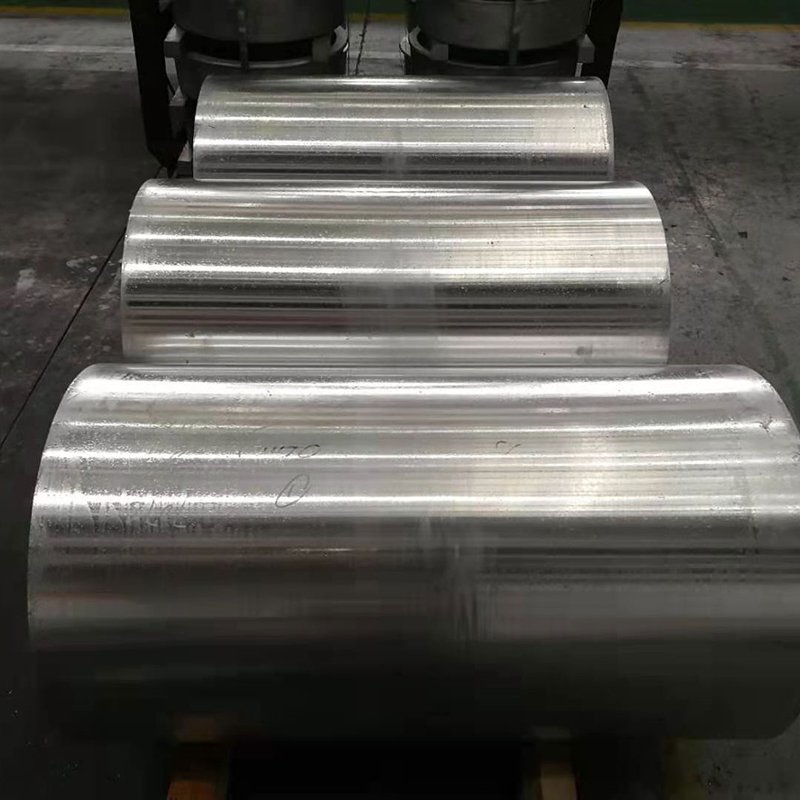
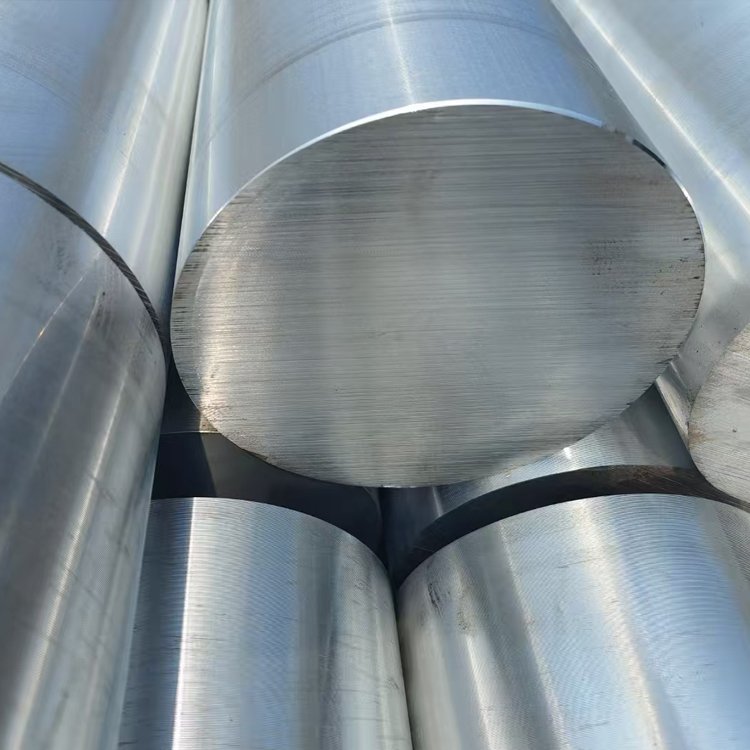
6061 large diameter aluminum alloy bar is a versatile, heat-treatable aluminum-magnesium-silicon alloy that offers excellent strength, good corrosion resistance, superior weldability, and machinability across a wide range of diameters, making it ideal for structural, mechanical parts, transportation, and general engineering applications:
- Primary Alloying Elements:
- Magnesium (Mg): 0.8-1.2% (enhances strength)
- Silicon (Si): 0.4-0.8% (forms Mg₂Si strengthening phase with Magnesium)
- Copper (Cu): 0.15-0.40% (improves strength, slightly reduces corrosion resistance)
- Chromium (Cr): 0.04-0.35% (inhibits recrystallization, improves stress corrosion resistance)
- Base Material:
- Aluminum (Al): ≥95.8% (balance)
- Controlled Impurities:
- Iron (Fe): ≤0.70% max
- Zinc (Zn): ≤0.25% max
- Manganese (Mn): ≤0.15% max
- Titanium (Ti): ≤0.15% max
- Other elements: ≤0.05% each, ≤0.15% total
Premium Manufacturing Process:
- Melt Preparation:
- High-purity primary aluminum (99.7% minimum)
- Precise alloying element additions with ±0.05% tolerance
- Advanced filtration through ceramic foam filters (30-40 ppi)
- SNIF degassing treatment (hydrogen < 0.10 ml/100g)
- Grain refinement with Al-Ti-B master alloy
- Direct-chill (DC) semi-continuous casting to produce large diameter ingots
- Homogenization:
- 550-580°C for 6-12 hours
- Uniform temperature control: ±5°C
- Controlled cooling rate: 15-25°C/hour
- Dissolution of coarse intermetallics, elimination of microsegregation
- Hot Working (Extrusion or Forging):
- Large extrusion presses: Capable of producing bars up to 400mm diameter
- Or Forging: Processing ingots into bars via radial forging or closed-die forging
- Deformation temperature: 450-500°C
- Ensures adequate deformation and grain refinement for optimal internal quality and grain flow
- Solution Heat Treatment:
- 520-550°C for 1-4 hours (diameter dependent)
- Temperature uniformity: ±3°C
- Rapid transfer to quenching medium (<10 seconds)
- Quenching:
- Water quench or polymer quench
- Controlled cooling rate for optimal hardness
- Stress Relief (for T651/T6511 Tempers):
- Controlled stretching (1-3% plastic deformation) to reduce residual stress
- Artificial Aging (T6 Temper):
- 160-180°C for 8-18 hours
- Temperature uniformity: ±3°C
All production stages are subject to rigorous quality control and traceability management.
2. Mechanical Properties of 6061 Large Diameter Aluminum Bar
| Property | O (Annealed) | T4 | T6 | T651/T6511 | Test Method |
| Ultimate Tensile Strength | 110-145 MPa | 180-220 MPa | 290-320 MPa | 290-320 MPa | ASTM E8 |
| Yield Strength (0.2%) | 40-60 MPa | 90-120 MPa | 240-270 MPa | 240-270 MPa | ASTM E8 |
| Elongation (2 inch) | 16-25% | 14-20% | 8-15% | 8-15% | ASTM E8 |
| Hardness (Brinell) | 30-40 HB | 60-75 HB | 95-105 HB | 95-105 HB | ASTM E10 |
| Fatigue Strength (5×10⁸ Cycles) | 70-90 MPa | 90-110 MPa | 95-110 MPa | 95-110 MPa | ASTM E466 |
| Shear Strength | 70-90 MPa | 110-130 MPa | 190-210 MPa | 190-210 MPa | ASTM B769 |
| Modulus of Elasticity | 68.9 GPa | 68.9 GPa | 68.9 GPa | 68.9 GPa | ASTM E111 |
Property Distribution:
- Axial vs. Radial properties: <5% variation in strength properties
- Internal property variation across large diameter bars: typically less than 7% for T6/T651 tempers
- Core to surface hardness variation: <5 HB
- Residual stress: Low stress levels in T651/T6511 tempers, reducing machining distortion
3. Microstructural Characteristics
Key Microstructural Features:
- Grain Structure:
- Elongated grains with some recrystallized grains after hot working
- ASTM grain size 4-7 (90-32μm)
- Ensures uniform grain structure and refinement within large diameter bars through strict process control
- Precipitate Distribution:
- Mg₂Si strengthening phase: Fine and uniformly dispersed, providing primary strengthening
- AlFeSi intermetallics: Controlled size and distribution
- Cr₂Si or Al₁₂Mg₂Cr dispersoids: Inhibits grain growth, improves stress corrosion resistance
- Texture Development:
- Fiber texture introduced by extrusion/forging
- Texture strength has minor impact on mechanical properties; grain refinement and precipitation hardening are dominant
- Special Features:
- Uniform distribution of precipitates at grain boundaries
- Supersaturated solid solution after solution treatment
- Formation of precipitation phases after aging treatment
4. Dimensional Specifications & Tolerances
| Parameter | Standard Range | Precision Tolerance | Commercial Tolerance | Test Method |
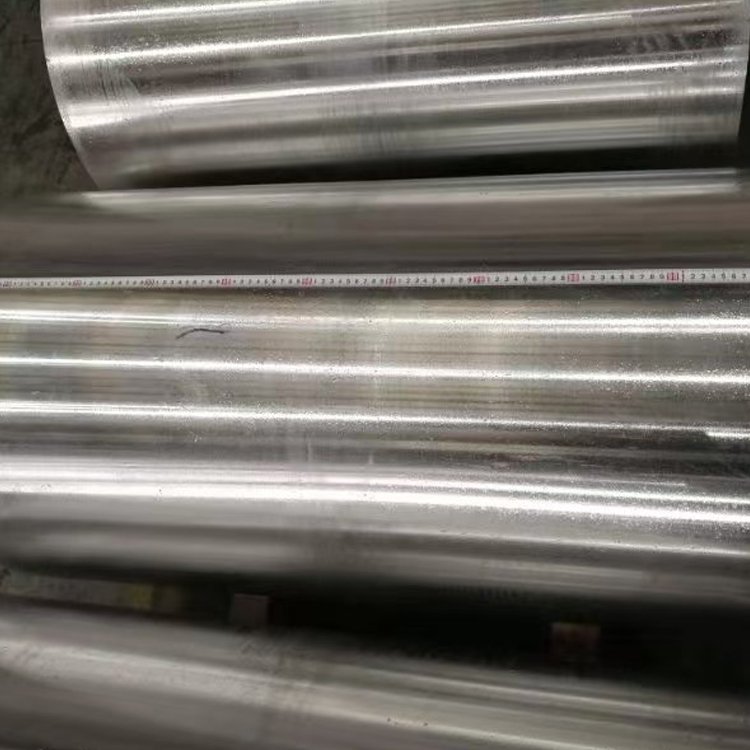
| Diameter | 100-600 mm | ±0.5mm up to 200mm | ±1.0mm up to 200mm | Micrometer/Caliper |
| ±0.25% above 200mm | ±0.5% above 200mm | |||
| Ovality | N/A | 50% of diameter tolerance | 75% of diameter tolerance | Micrometer/Caliper |
| Length | 1000-7000 mm | ±5mm | ±10mm | Tape measure |
| Straightness | N/A | 0.8mm/m | 1.5mm/m | Straightedge/Laser |
| Surface Roughness | N/A | 3.2 μm Ra max | 6.3 μm Ra max | Profilometer |
| Cut End Squareness | N/A | 0.5° max | 1.0° max | Protractor |
Standard Available Forms:
- Large Diameter Round Bar: Diameters 100mm to 600mm
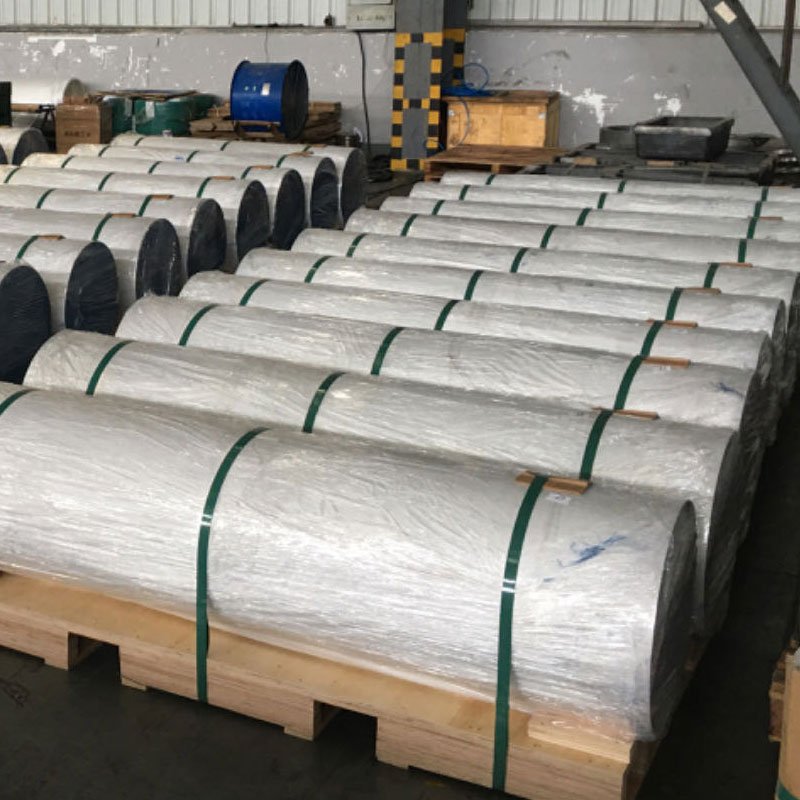
- Custom cut-to-length service available
- Special tolerances and surface finishes (e.g., peeled, ground, precision turned) available upon request
- Available in as-quenched and aged, or quenched-stretched-aged (T651) tempers
5. Temper Designations & Heat Treatment Options
| Temper Code | Process Description | Optimal Applications | Key Characteristics |
| O | Fully annealed, softened | Applications requiring maximum formability | Lowest strength, maximum ductility |
| T4 | Solution heat treated and naturally aged | Good formability with moderate strength requirements | Moderate strength, good formability |
| T6 | Solution heat treated and artificially aged | High-strength, structural applications | Maximum strength and hardness |
| T651 | T6 + stress relieved by stretching | Critical structural components, low residual stress | Excellent dimensional stability, low machining distortion |
| T6511 | T6 + slight stretch + straightening | Low residual stress for irregular shapes | Similar to T651, but for irregular cross-sections |
Temper Selection Guidance:
- O: For complex cold forming operations
- T4: For applications requiring subsequent forming or welding, with final heat treatment
- T6: For general structural and mechanical parts requiring high strength
- T651/T6511: For large diameter bars requiring minimal machining distortion and high dimensional stability
6. Machining & Fabrication Characteristics
| Operation | Tool Material | Recommended Parameters | Comments |
| Turning | Carbide, Diamond | Vc=250-600 m/min, f=0.1-0.5 mm/rev | High-speed machining yields excellent surface finish |
| Drilling | Carbide, TiN coated | Vc=80-200 m/min, f=0.15-0.40 mm/rev | Through-coolant drills recommended, good for deep holes |
| Milling | Carbide, HSS | Vc=200-800 m/min, fz=0.1-0.25 mm | High-positive rake angle tools, large depth of cut, high feed |
| Tapping | HSS-E-PM, TiCN coated | Vc=20-40 m/min | Good thread quality, easy to tap |
| Reaming | Carbide, HSS | Vc=80-150 m/min, f=0.2-0.6 mm/rev | H7/H8 tolerance achievable |
| Sawing | Carbide-tipped blade | Vc=1000-3000 m/min | Efficient cutting, smooth cut edges |
Fabrication Guidance:
- Machinability Rating: 80% (1100 aluminum = 100%), improved machinability in T6 temper
- Chip Formation: Easily forms short, curled chips, facilitating chip evacuation
- Coolant: Water-soluble cutting fluid (5-10% concentration)
- Tool Wear: Low, leading to long tool life
- Weldability: Excellent with TIG and MIG welding, minimal strength loss after welding
- Heat Treatment: Can be quenched and aged to enhance strength
- Anodizing: Easily anodized for aesthetic and corrosion-resistant surfaces
- Brazing and Soldering: Possible
- Residual Stress: T651/T6511 tempers significantly reduce residual stress, minimizing machining distortion
7. Corrosion Resistance & Protection Systems
| Environment Type | Resistance Rating | Protection Method | Expected Performance |
| Industrial Atmosphere | Very Good | Clean surface, optional anodizing | 15-20+ years |
| Marine Atmosphere | Good | Anodizing + sealing or painting | 5-10+ years with maintenance |
| Seawater Immersion | Fair | Cathodic protection or painting | Dependent on coating quality |
| High Humidity | Very Good | Clean surface, optional anodizing | 10-15+ years |
| Stress Corrosion | Very Good | Excellent performance in T6 temper | Low susceptibility |
| Exfoliation | Very Good | Standard protection | Good resistance |
| Galvanic Corrosion | Good | Proper isolation | Careful design with dissimilar metals |
Surface Protection Options:
- Anodizing:
- Type II (Sulfuric): 10-25μm thickness, for decorative and general protection
- Type III (Hard): 25-75μm thickness, for wear resistance and higher protection
- Dyeing and sealing: Enhances aesthetics and corrosion resistance
- Conversion Coatings:
- Chromate conversion coatings (MIL-DTL-5541): Excellent adhesion and corrosion protection
- Chromium-free alternatives: Environmentally compliant
- Painting Systems:
- Epoxy primer + polyurethane topcoat: For harsh environments
- Powder coating: High durability and aesthetics
- Others:
- Electroplating, vacuum coating, etc.
8. Physical Properties for Engineering Design
| Property | Value | Design Consideration |
| Density | 2.70 g/cm³ | Weight calculation and structural optimization |
| Melting Range | 582-652°C | Heat treatment and welding window |
| Thermal Conductivity | 167 W/m·K | Heat dissipation and transfer design |
| Electrical Conductivity | 40-43% IACS | Electrical conductivity in electrical applications |
| Specific Heat | 897 J/kg·K | Thermal mass and heat capacity calculations |
| Thermal Expansion (CTE) | 23.6 ×10⁻⁶/K | Dimensional changes due to temperature variations |
| Young’s Modulus | 68.9 GPa | Deflection and stiffness calculations |
| Poisson’s Ratio | 0.33 | Structural analysis parameter |
| Damping Capacity | Medium-Low | Vibration and noise control |
Design Considerations:
- Operating Temperature Range: -80°C to +150°C
- High-Temperature Performance: Strength begins to decrease above 100°C
- Cryogenic Performance: Slight increase in strength at low temperatures, no brittle transition
- Magnetic Properties: Non-magnetic
- Recyclability: 100% recyclable with high scrap value
- Formability: Good in T4 temper, limited in T6 temper
- Dimensional Stability: Excellent in T651/T6511 tempers, suitable for precision machining
- Strength-to-Weight Ratio: Advantageous in structural applications
9. Quality Assurance & Testing
Standard Testing Procedures:
- Chemical Composition:
- Optical emission spectroscopy
- X-ray fluorescence analysis
- Verification of all major elements and impurity content
- Mechanical Testing:
- Tensile testing (longitudinal and transverse)
- Hardness testing (Brinell, multiple locations)
- Fatigue testing (as required)
- Nondestructive Testing:
- Ultrasonic inspection (100% volumetric, per ASTM B594/E2375)
- Eddy current testing (surface and near-surface defects)
- Penetrant inspection (surface defects)
- Microstructural Analysis:
- Grain size determination
- Precipitate and intermetallic evaluation
- Grain flow pattern verification (for forged bars)
- Dimensional Inspection:
- CMM (Coordinate Measuring Machine) verification
- Diameter, length, straightness, ovality, etc.
Standard Certifications:
- Material Test Report (EN 10204 3.1 or 3.2)
- Chemical analysis certification
- Mechanical properties certification
- Heat treatment certification
- Nondestructive testing certification
- Conformance to ASTM B221 (for extruded bar), ASTM B211 (for rolled/cold-finished bar), or ASTM B247 (for forged bar) as applicable
10. Applications & Design Considerations
Primary Applications:
- Structural Components:
- Architectural frames and supports
- Bridge components
- Truck and marine structures
- Automation machinery bases
- Mechanical Parts:
- Valve bodies, pump bodies
- Drive shafts, gears
- Bolts, nuts, fasteners
- Jigs and fixtures
- Transportation Industry:
- Automotive parts (chassis, suspension)
- Railway car components
- Bicycle frames
- Yacht and boat components
- Electronics and Precision Equipment:
- Semiconductor equipment parts
- Electronic component housings
- Medical device components
- Optical equipment brackets
- Recreation and Consumer Goods:
- Fishing reels
- Sporting goods
- Photographic equipment
Design Advantages:
- Good overall performance: high strength, corrosion resistance, easy to machine, weldable
- Good strength-to-weight ratio in T6 temper
- Significant strength improvement after quenching and aging
- Low machining distortion in T651/T6511 tempers
- Easy to anodize and apply various surface treatments
- Excellent welding characteristics
- Highly versatile for various industries
- Non-magnetic for specific applications
- Good recyclability
Design Limitations:
- Lower strength compared to 7xxx series alloys
- Corrosion resistance in some marine environments is not as good as 5xxx series alloys
- Not suitable for applications requiring ultra-high hardness and wear resistance
- Limited high-temperature strength performance (above 150°C)
- Cold forming ability is not as good as alloys like 5052
- Strength in the welded area may slightly decrease
Economic Considerations:
- Excellent performance at a reasonable cost, making it ideal for many applications
- Wide supply chain and production capacity
- Relatively low machining costs
- Good recyclability reduces scrap costs
Sustainability Aspects:
- 100% recyclable, high resource utilization
- Lower energy consumption in production compared to steel
- Relatively low environmental impact throughout its lifecycle
- Long service life reduces replacement frequency
- Complies with RoHS and REACH standards, free of harmful substances
Material Selection Guidance:
- Choose 6061 when a general-purpose alloy with high strength, good weldability, and corrosion resistance is needed
- Choose 5052 when maximum formability is required and strength is less critical
- Consider 2xxx or 7xxx series alloys when higher strength is paramount and weldability is not a primary concern
- T6 temper is suitable for most structural and mechanical parts
- T651/T6511 tempers are suitable for parts requiring precision machining and low residual stress