1. Material Overview & Manufacturing Process
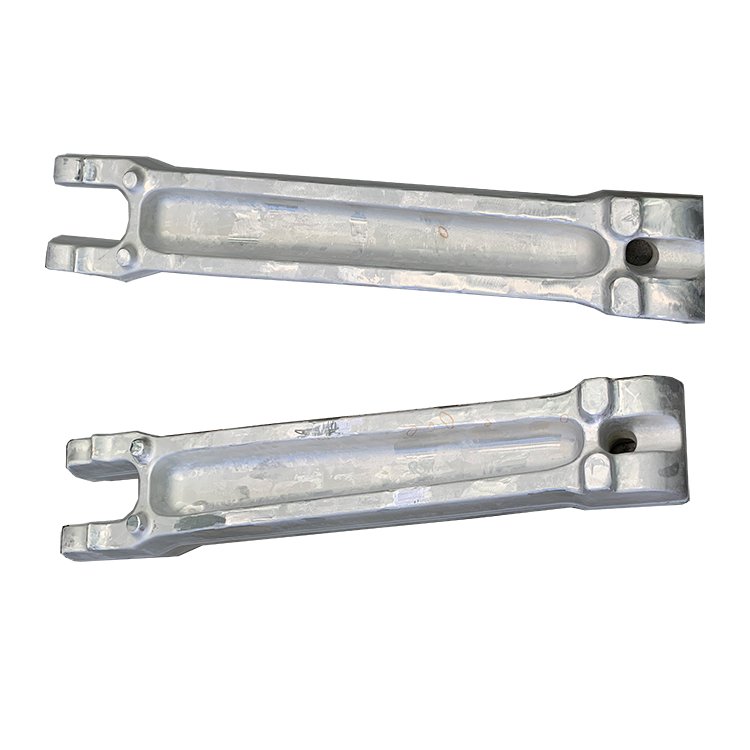
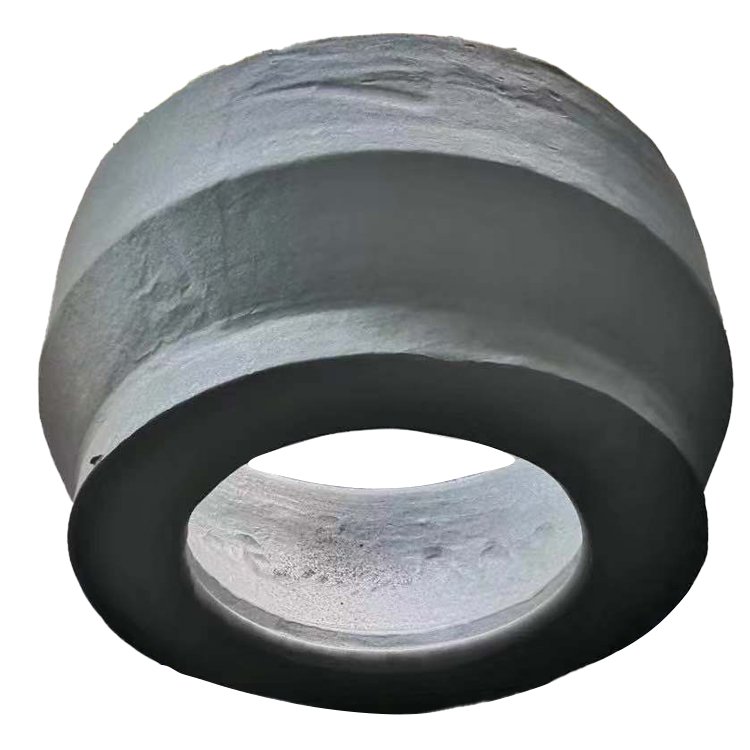
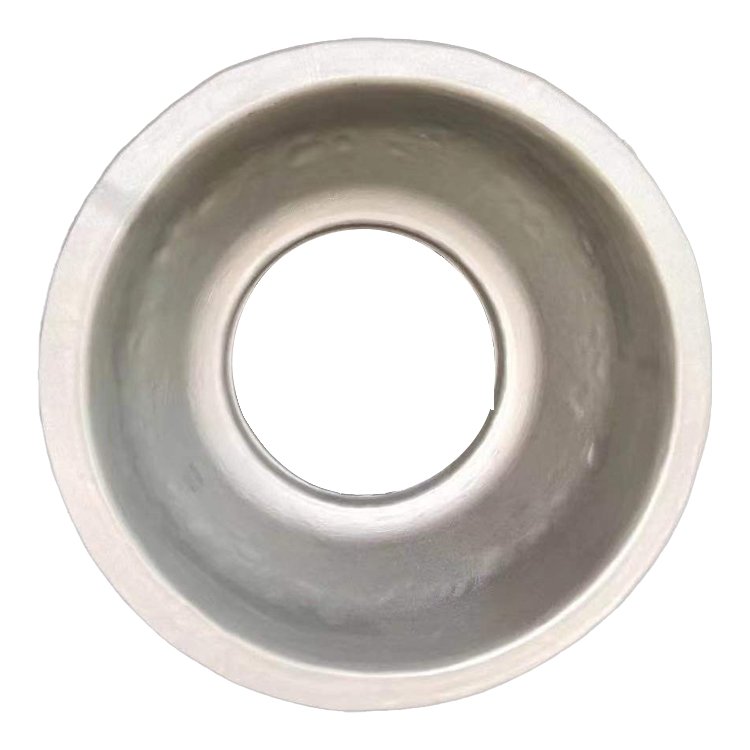
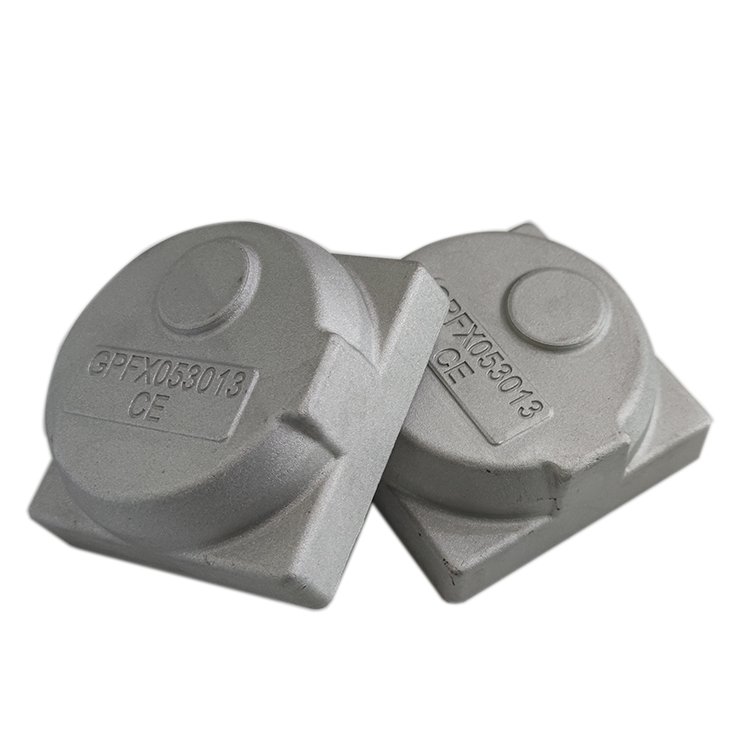
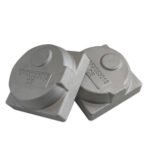
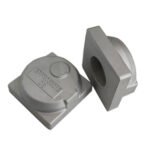
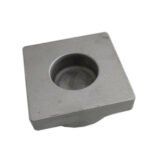
6082 aluminum alloy is a medium-strength Al-Mg-Si series alloy, renowned for its excellent strength, good corrosion resistance, superior weldability, and machinability. As one of the most commonly used structural aluminum alloys, 6082 offers higher strength than 6061, especially exhibiting better mechanical properties in thicker sections. Small parts manufactured through the die forging process effectively enhance the material’s mechanical properties and reliability, ensuring its performance in precise and complex applications.
- Primary Alloying Elements:
- Magnesium (Mg): 0.6-1.2% (strengthens with silicon)
- Silicon (Si): 0.7-1.3% (strengthens with magnesium, enhances age-hardening response)
- Manganese (Mn): 0.4-1.0% (refines grain, improves strength and toughness, inhibits recrystallization)
- Copper (Cu): 0.10% max (minor presence, negligible effect)
- Chromium (Cr): 0.25% max (inhibits recrystallization)
- Base Material:
- Aluminum (Al): Balance
- Controlled Impurities:
- Iron (Fe): 0.50% max
- Zinc (Zn): 0.20% max
- Titanium (Ti): 0.10% max
- Other elements: 0.05% max each, 0.15% max total
Manufacturing Process (for Small Die Forgings): The production process for small die forgings emphasizes precision and efficiency, aiming to obtain near-net shape components with excellent mechanical properties through one or more die forming steps.
- Raw Material Preparation:
- High-quality 6082 cast ingots or extruded bars are selected as forging billets. The material must undergo chemical composition analysis to ensure compliance with standards.
- Cutting:
- The billet length is precisely cut according to the forging dimensions and shape, ensuring volume and weight meet die forging requirements.
- Heating:
- Billets are uniformly heated in a precisely controlled furnace (typically at 450-500°C). For small parts, temperature uniformity and prevention of overheating are crucial.
- Die Forging Formation:
- Using a forging hammer or hydraulic press, the heated billet is placed into a pre-designed die and formed by one or more precise strikes/pressures. The die cavity is intricately designed to ensure metal flow lines follow the part’s shape, refining grains and eliminating internal defects.
- Pre-forging and Finish Forging: For complex shapes, this may involve two steps: pre-forging (preparing a rough blank) and finish forging (fine shaping).
- Trimming:
- After forging, excess flash around the periphery of the forging is removed.
- Heat Treatment:
- Solution Heat Treatment: The forging is heated to approximately 530-545°C and held for sufficient time to allow alloying elements to dissolve into the solid solution.
- Quenching: Rapid cooling from the solutionizing temperature, typically by water quenching (room temperature or warm water), to retain the supersaturated solid solution.
- Aging Treatment (T6 Temper): Standard artificial aging treatment (typically at 160-180°C for 8-18 hours). This treatment causes the precipitation of strengthening phases like Mg₂Si, achieving maximum strength and hardness.
- Finishing & Inspection:
- Deburring, straightening, dimensional inspection, surface quality checks.
- Finally, nondestructive testing (e.g., penetrant, eddy current) and mechanical property tests are performed to ensure the product meets specifications.
2. Mechanical Properties of 6082 Small Die Forging
6082 small die forgings in the T6 temper exhibit excellent mechanical properties, suitable for applications requiring moderate to high loads.
| Property Type | T6 Typical Value | Test Direction | Standard |
| Ultimate Tensile Strength (UTS) | 310-340 MPa | Longitudinal (L) | ASTM B557 |
| Yield Strength (0.2% YS) | 260-290 MPa | Longitudinal (L) | ASTM B557 |
| Elongation (2 inch) | 9-14% | Longitudinal (L) | ASTM B557 |
| Brinell Hardness | 95-105 HB | N/A | ASTM E10 |
| Fatigue Strength (10⁷ cycles) | 100-120 MPa | N/A | ASTM E466 |
| Shear Strength | 210-230 MPa | N/A | ASTM B769 |
| Elastic Modulus | 70 GPa | N/A | ASTM E111 |
Property Uniformity and Anisotropy:
- Due to the die forging process, which aligns the grain flow along the part’s contour, 6082 die forgings exhibit excellent properties in the main loading directions.
- Compared to plates or extrusions, forgings typically have better transverse (perpendicular to the main deformation direction) properties, with overall less anisotropy.
3. Microstructural Characteristics
The microstructure of 6082 small die forgings is the foundation of their high strength and reliability.
Key Microstructural Features:
- Refined and Dense Grain Structure:
- The forging process thoroughly breaks down coarse as-cast grains, forming fine, uniform, and dense equiaxed grains and elongated deformed grains along the metal flow lines. Average grain size typically ranges from 50-150 micrometers, depending on the specific forging ratio.
- Manganese (Mn) forms Al-Mn-based dispersoids, effectively pinning grain boundaries and inhibiting excessive grain growth and recrystallization.
- Optimized and Continuous Grain Flow:
- Metal flows within the die cavity, forming continuous grain flow lines that closely conform to the part’s geometry. This allows the forging to effectively transfer stress when loaded, improving fatigue life and fracture toughness, especially in complex shapes or areas with stress concentrations.
- Uniform Distribution of Strengthening Phases (Precipitates):
- T6 aging treatment promotes the uniform precipitation of Mg₂Si phases in fine, dispersed forms, which are the primary strengthening mechanism.
- The uniform distribution of precipitates within grains and at grain boundaries avoids harmful continuous grain boundary precipitation, thus ensuring good resistance to intergranular corrosion.
- High Metallurgical Cleanliness:
- Die forgings are dense internally, free from casting defects (such as shrinkage, porosity, coarse inclusions).
- Strict control of iron (Fe) content reduces the formation of harmful Al-Fe-Si phases, further improving the material’s toughness.
4. Dimensional Specifications & Tolerances
6082 small die forgings can achieve high precision and complex shapes during production.
| Parameter | Typical Size Range | Commercial Forging Tolerance (T6) | Precision Machining Tolerance | Test Method |
| Max Length/Diameter | 50 – 500 mm | ±0.5% or ±1 mm | ±0.05 – ±0.2 mm | CMM/Caliper |
| Min Wall Thickness | 3 – 20 mm | ±0.5 mm | ±0.1 – ±0.2 mm | CMM/Thickness Gauge |
| Weight Range | 0.05 – 10 kg | ±5% | N/A | Electronic Scale |
| Surface Roughness (Forged) | Ra 6.3 – 25 μm | N/A | Ra 1.6 – 6.3 μm | Profilometer |
| Flatness | N/A | 0.2 mm/100mm | 0.05 mm/100mm | Flatness Gauge/CMM |
| Perpendicularity | N/A | 0.5° | 0.1° | Angle Gauge/CMM |
Customization Capability:
- Can be designed and produced based on detailed customer CAD models and engineering drawings.
- Services such as preforming, finish forging, trimming, heat treatment, and rough/finish machining can be provided.
5. Temper Designations & Heat Treatment Options
6082 alloy primarily achieves its desired properties through heat treatment, with the T6 temper being the most commonly used.
| Temper Code | Process Description | Typical Applications | Key Characteristics |
| O | Fully annealed, softened | Intermediate state before further processing | Maximum ductility, lowest strength, easy for cold working |
| T4 | Solution heat treated, then naturally aged | Applications not requiring maximum strength, good ductility | Moderate strength, good ductility |
| T6 | Solution heat treated, then artificially aged | General high-strength structural components | Maximum strength, high hardness, good corrosion resistance |
| T651 | Solution heat treated, artificially aged, stretched stress-relieved | Requires precise machining, high dimensional stability | High strength, minimal residual stress, reduced machining distortion |
| T652 | Solution heat treated, artificially aged, compression stress-relieved | Requires precise machining, high dimensional stability | High strength, minimal residual stress, reduced machining distortion |
Temper Selection Guidance:
- T6 Temper: For die forgings requiring high strength, good corrosion resistance, and machinability, T6 is the most economical and high-performing choice.
- T651/T652 Tempers: For parts with extremely high dimensional accuracy requirements and extensive subsequent machining, T651 or T652 tempers are recommended to effectively control machining distortion.
6. Machining & Fabrication Characteristics
6082 small die forgings possess excellent machinability and weldability.
| Operation | Tool Material | Recommended Parameters | Comments |
| Turning | Carbide, HSS | Vc=150-400 m/min, f=0.2-0.8 mm/rev | Chips break easily, good chip evacuation |
| Milling | Carbide, HSS | Vc=200-600 m/min, fz=0.08-0.5 mm | High-speed cutting, good surface finish |
| Drilling | Carbide, HSS | Vc=50-120 m/min, f=0.08-0.2 mm/rev | Large helix angle, polished lands, through-coolant preferred |
| Welding | MIG/TIG | Good weldability, recommended filler 4043/5356 | Strength may decrease after welding, consider post-weld local aging |
| Surface Treatment | Anodizing, Conversion Coating | Anodizing is easy to color, hard, wear-resistant, corrosion-resistant | Widely applied, meets aesthetic and protective needs |
Fabrication Guidance:
- Machinability: 6082 in T6 temper has good machinability, allowing for parts with high surface quality and dimensional accuracy.
- Weldability: 6082 is a weldable aluminum alloy, compatible with common fusion welding methods like MIG or TIG. Strength in the heat-affected zone (HAZ) will decrease after welding, which can be improved by selecting high-strength filler wires or performing post-weld local aging.
- Cold Formability: Exhibits good cold formability in O or T4 tempers; ductility decreases in T6 temper, and large-scale cold deformation is not recommended.
7. Corrosion Resistance & Protection Systems
6082 alloy boasts excellent corrosion resistance, particularly against atmospheric and saltwater corrosion.
| Corrosion Type | T6 Temper Performance | Protection System |
| Atmospheric Corrosion | Excellent | No special protection needed, or anodizing |
| Seawater Corrosion | Good | Anodizing, high-performance coatings, galvanic isolation |
| Stress Corrosion Cracking (SCC) | Very Low Sensitivity | T6 temper inherently provides excellent resistance |
| Exfoliation Corrosion | Very Low Sensitivity | T6 temper inherently provides excellent resistance |
| Intergranular Corrosion | Very Low Sensitivity | Heat treatment control |
Corrosion Protection Strategies:
- Alloy and Temper Selection: 6082-T6 temper itself provides excellent corrosion resistance, with high resistance to SCC and exfoliation corrosion.
- Surface Treatment:
- Anodizing: The most common and effective protection method, providing an additional wear-resistant and corrosion-resistant layer, and can be colored.
- Chemical Conversion Coatings: Serve as good primers for paints or adhesives.
- High-Performance Coating Systems: Can be applied in special or extreme environments, such as fluorocarbon coatings, epoxy coatings, etc.
- Galvanic Corrosion Management: When in contact with incompatible metals, isolation measures (e.g., gaskets, insulating coatings) must be taken to prevent galvanic corrosion.
8. Physical Properties for Engineering Design
| Property | T6 Typical Value | Design Consideration |
| Density | 2.70 g/cm³ | Lightweight design |
| Melting Range | 555-650°C | Heat treatment and welding window |
| Thermal Conductivity | 180 W/m·K | Thermal management, heat dissipation design |
| Electrical Conductivity | 48% IACS | Good electrical conductivity |
| Specific Heat | 900 J/kg·K | Thermal inertia, thermal shock response calculation |
| Thermal Expansion (CTE) | 23.4 ×10⁻⁶/K | Dimensional changes due to temperature variations |
| Young’s Modulus | 70 GPa | Structural stiffness, deformation, and vibration analysis |
| Poisson’s Ratio | 0.33 | Structural analysis parameter |
Design Considerations:
- Strength-to-Weight Ratio: 6082 offers higher strength than 6061 while maintaining lightweight advantages.
- Versatility: Balanced properties make it suitable for various industrial applications, reducing material selection complexity.
- Ease of Manufacturing and Assembly: Excellent machinability and weldability help shorten production cycles and reduce costs.
- Damage Tolerance: In small parts, the dense microstructure and continuous grain flow formed by forging contribute to improved fatigue life and fracture toughness.
9. Quality Assurance & Testing
Quality control for 6082 small aluminum die forgings is a crucial aspect ensuring their performance and reliability.
Standard Testing Procedures:
- Raw Material Certification:
- Chemical composition analysis (optical emission spectrometer) to ensure compliance with ASTM, EN, etc.
- Billet surface defect inspection.
- Forging Process Monitoring:
- Real-time monitoring of forging temperature, pressure, and die condition.
- In-process random inspection of forging shape and dimensions.
- Heat Treatment Process Monitoring:
- Furnace temperature uniformity (per AMS 2750E Class 2) and time control.
- Quenching media temperature and agitation intensity control.
- Chemical Composition Analysis:
- Re-verification of batch chemical composition of final forgings.
- Mechanical Property Testing:
- Tensile Testing: Samples taken from representative locations and orientations (longitudinal, transverse) to test UTS, YS, EL.
- Hardness Testing: Multi-point measurements to assess overall uniformity.
- Impact Testing: Charpy V-notch impact test if required.
- Nondestructive Testing (NDT):
- Penetrant Testing (PT): 100% surface inspection to detect surface-breaking defects.
- Eddy Current Testing (ET): Detects surface and near-surface defects, such as micro-cracks and hardness non-uniformity.
- Ultrasonic Testing (UT): For critical or large-sized parts, internal defect inspection to ensure no pores, inclusions, or other internal flaws.
- Microstructural Analysis:
- Metallographic examination to evaluate grain size, grain flow continuity, degree of recrystallization, precipitate morphology and distribution, etc.
- Dimensional and Surface Quality Inspection:
- Precise measurements using calipers, micrometers, Coordinate Measuring Machines (CMM), or optical measuring instruments.
- Surface roughness measurement.
Standards and Certifications:
- Complies with ASTM B247 (Aluminum Alloy Forgings), EN 15908 (Aluminum and Aluminum Alloys – Forgings), EN 755 (Extruded Rod/Bar, as billet reference), AMS (Aerospace Material Specifications, if required).
- Quality Management System Certification: ISO 9001.
- EN 10204 Type 3.1 Material Test Reports can be provided, and third-party independent certification can be arranged upon customer request.
10. Applications & Design Considerations
6082 small aluminum die forgings are widely used in various industrial sectors due to their excellent strength, corrosion resistance, and manufacturing efficiency.
Primary Application Areas:
- Automotive Industry: Suspension components (e.g., control arms, steering knuckles), wheel components, engine mounts, powertrain components, body structure parts.
- Bicycles and Sports Equipment: High-performance bicycle parts (e.g., cranks, pedals), carabiners, sports equipment connectors.
- Mechanical Engineering: Pump bodies, valve bodies, hydraulic components, clamps, connecting blocks, small transmission gears, bearing housings.
- Electronics and Electrical Appliances: Heat sinks, structural supports, connector housings.
- Transportation: Non-critical structural components, connectors, and brackets in railway vehicles, ships, and aircraft.
- Medical Equipment: Structural frames, connecting parts, etc.
- General Hardware: Tool handles, lock components, etc.
Design Advantages:
- High Strength and Lightweighting: Provides good strength while achieving significant weight reduction, improving product performance and energy efficiency.
- High Reliability: Die forging eliminates casting defects, resulting in a dense internal structure and refined grains, significantly enhancing fatigue life and impact toughness.
- Complex Shape Realization: Die forging can produce near-net-shaped complex geometries, reducing subsequent machining, and lowering costs.
- Excellent Corrosion Resistance: Suitable for long-term use in outdoor, humid, or certain corrosive environments.
- Good Machinability and Weldability: Facilitates subsequent machining, surface treatment, and assembly.
- Cost-Effectiveness: 6082 offers a better price-performance ratio compared to high-performance specialty alloys.
Design Limitations:
- Strength Limits: Although stronger than 6061, it still cannot meet the demands of critical load-bearing structures requiring extremely high strength, such as primary aerospace structural components.
- Size Limitations: Die forging dimensions are limited by dies and equipment, making it unsuitable for integral forging of very large components.
- High-Temperature Performance: Similar to all aluminum alloys, it is not suitable for long-term operating environments above 150°C.
Economic and Sustainability Considerations:
- Total Life Cycle Value: While the initial cost of die forgings may be higher than castings, their superior performance and reduced subsequent processing costs make them competitive over their entire life cycle.
- Resource Utilization Efficiency: Die forging is an efficient near-net shape process, reducing material waste.
- Environmental Friendliness: Aluminum alloys are highly recyclable, aligning with green manufacturing and circular economy principles.