1. Material Composition & Manufacturing Process
7050 forged aluminum round bar is an ultra-high strength, heat-treatable aluminum-zinc-magnesium-copper alloy specifically engineered to provide exceptional strength, toughness, fatigue resistance, and superior stress corrosion cracking (SCC) resistance in critical structural components. Through precise forging, its internal microstructure is optimized, with grain flow aligned along the part’s contours, making it an ideal choice for aerospace, military, and extremely high-performance industrial applications:
- Primary Alloying Elements:
- Zinc (Zn): 5.9-6.9% (primary strengthening element)
- Magnesium (Mg): 2.0-2.6% (works with zinc to form strengthening phases)
- Copper (Cu): 2.0-2.6% (enhances strength and stress corrosion resistance)
- Zirconium (Zr): 0.08-0.15% (grain refiner, inhibits recrystallization)
- Base Material:
- Aluminum (Al): Balance
- Controlled Impurities:
- Iron (Fe): ≤0.15% max
- Silicon (Si): ≤0.12% max
- Manganese (Mn): ≤0.10% max
- Titanium (Ti): ≤0.06% max
- Chromium (Cr): ≤0.04% max
- Other elements: ≤0.05% each, ≤0.15% total
Premium Forging Process:
- Melt Preparation:
- High-purity primary aluminum (99.9% minimum)
- Precise control of alloying elements with ±0.03% tolerance
- Multi-stage filtration systems (ceramic foam filters, deep bed filters) for ultra-high cleanliness
- Vacuum degassing or advanced SNIF degassing (hydrogen < 0.08 ml/100g)
- Grain refinement and recrystallization control using Al-Zr master alloy
- Advanced Direct-Chill (DC) casting technology for defect-free, large-sized ingots
- Homogenization:
- Multi-stage homogenization at 460-480°C for 24-48 hours
- Strict temperature control: ±3°C
- Slow cooling rates to ensure uniform distribution of alloying elements and eliminate macro-segregation
- Billet Preparation:
- Surface conditioning (scalping or milling)
- 100% ultrasonic inspection (conforming to AMS 2630 class A1 or ASTM E2375 Level 2)
- Preheating: 380-420°C, with precise temperature uniformity control
- Forging Sequence:
- Multi-stage forging, including open-die, closed-die, or radial forging
- Deformation temperature: 350-400°C (precisely controlled below recrystallization temperature)
- Hydraulic press capacity: 5,000-50,000 tons (depending on bar size and complexity)
- Computer-aided design and control to optimize grain flow and deformation rates
- Minimum reduction ratio: 4:1 to 6:1, ensuring dense, uniform internal structure and elimination of cast structure
- Solution Heat Treatment:
- 475-485°C for 2-4 hours (diameter dependent)
- Temperature uniformity: ±3°C
- Rapid transfer to quenching medium (<5 seconds)
- Quenching:
- Hot water quench (60-80°C) or polymer quench
- Controlled cooling rate to optimize corrosion resistance
- Stress Relief (for T7451/T74511 Tempers):
- Controlled stretching (1-3% plastic deformation) to reduce residual stress
- Two-Stage Artificial Aging (for T7451/T74511 Tempers):
- First stage: 120°C for 6-10 hours (formation of GP zones)
- Second stage: 160°C for 8-16 hours (formation of η’ and η phases, enhancing SCC resistance)
All production stages are subject to stringent quality control, non-destructive testing, and traceability management.
2. Mechanical Properties of 7050 Forged Round Bar
| Property | T7451 | T74511 | T7651 | T76511 | Test Method |
| Ultimate Tensile Strength | 500-550 MPa | 500-550 MPa | 520-570 MPa | 520-570 MPa | ASTM E8 |
| Yield Strength (0.2%) | 450-500 MPa | 450-500 MPa | 470-520 MPa | 470-520 MPa | ASTM E8 |
| Elongation (2 inch) | 8-12% | 8-12% | 7-10% | 7-10% | ASTM E8 |
| Hardness (Brinell) | 150-165 HB | 150-165 HB | 160-175 HB | 160-175 HB | ASTM E10 |
| Fatigue Strength (5×10⁷ Cycles) | 170-200 MPa | 170-200 MPa | 180-210 MPa | 180-210 MPa | ASTM E466 |
| Shear Strength | 280-320 MPa | 280-320 MPa | 300-340 MPa | 300-340 MPa | ASTM B769 |
| Fracture Toughness (K1C, typical) | 30-40 MPa√m | 30-40 MPa√m | 25-35 MPa√m | 25-35 MPa√m | ASTM E399 |
Property Distribution:
- Axial vs. Radial properties: <5% variation in strength properties (forging provides excellent anisotropy)
- Internal property variation across large diameter bars: typically less than 5%
- Core to surface hardness variation: <5 HB
- Toughness-strength balance: 7050 alloy offers superior fracture toughness compared to 7075-T6 while maintaining high strength
- Stress Corrosion Cracking Resistance: T7451/T74511 tempers provide very high SCC resistance, superior to T6 tempers
3. Microstructural Characteristics
Key Microstructural Features:
- Grain Structure:
- Fine, uniform mixed structure of recrystallized and elongated grains
- Grain flow aligned with the forging shape, oriented along the stress direction, providing excellent mechanical properties
- Al₃Zr dispersoids formed by Zirconium effectively inhibit grain growth and recrystallization
- ASTM grain size 6-9 (45-16μm)
- Precipitate Distribution:
- η’ (MgZn₂) and η (MgZn₂) phases: Formed via two-stage aging, providing primary strengthening
- Cu and Mg content in solid solution is critical for SCC resistance
- Extremely low quantity and controlled size of primary intermetallic compounds like Al₂CuMg, AlZnCu, Al₂Cu
- Texture Development:
- Controlled forging process creates specific texture, optimizing strength, toughness, and SCC resistance
- Special Features:
- Size and distribution of grain boundary precipitates (GP zones and η’) precisely controlled to maximize SCC resistance
- Optimized zinc-depleted zones at grain boundaries, reducing anodic corrosion paths
- High metallurgical cleanliness, minimizing inclusion defects
4. Dimensional Specifications & Tolerances
| Parameter | Standard Range | Precision Tolerance | Commercial Tolerance | Test Method |
| Diameter | 100-700 mm | ±0.4mm up to 200mm | ±0.8mm up to 200mm | Micrometer/Caliper |
| ±0.2% above 200mm | ±0.4% above 200mm | |||
| Ovality | N/A | 40% of diameter tolerance | 60% of diameter tolerance | Micrometer/Caliper |
| Length | 1000-6000 mm | ±3mm | ±6mm | Tape measure |
| Straightness | N/A | 0.4mm/m | 0.8mm/m | Straightedge/Laser |
| Surface Roughness | N/A | 1.6 μm Ra max | 3.2 μm Ra max | Profilometer |
| Cut End Squareness | N/A | 0.3° max | 0.6° max | Protractor |
Standard Available Forms:
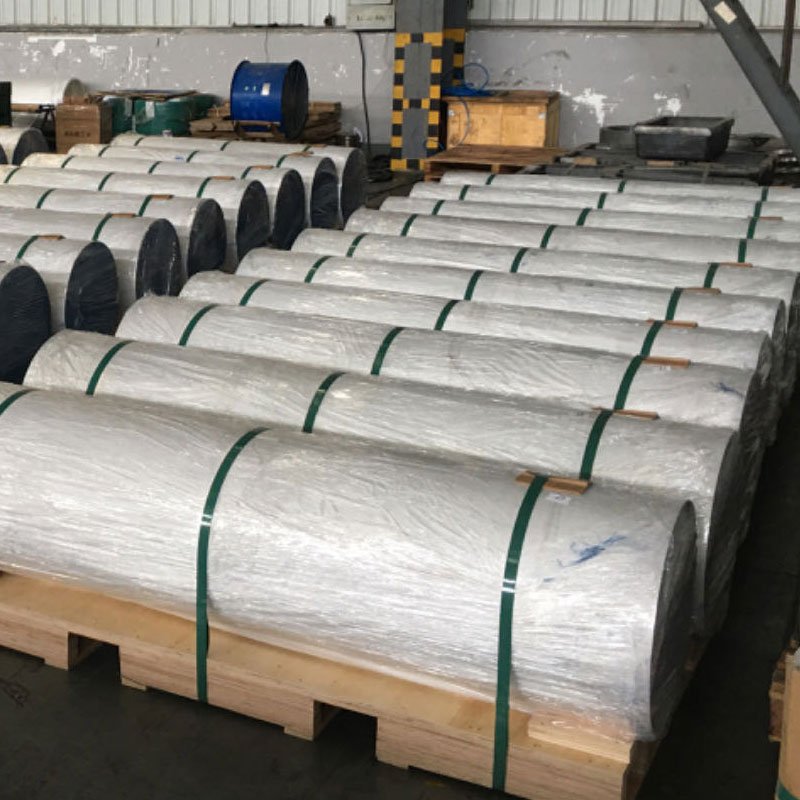
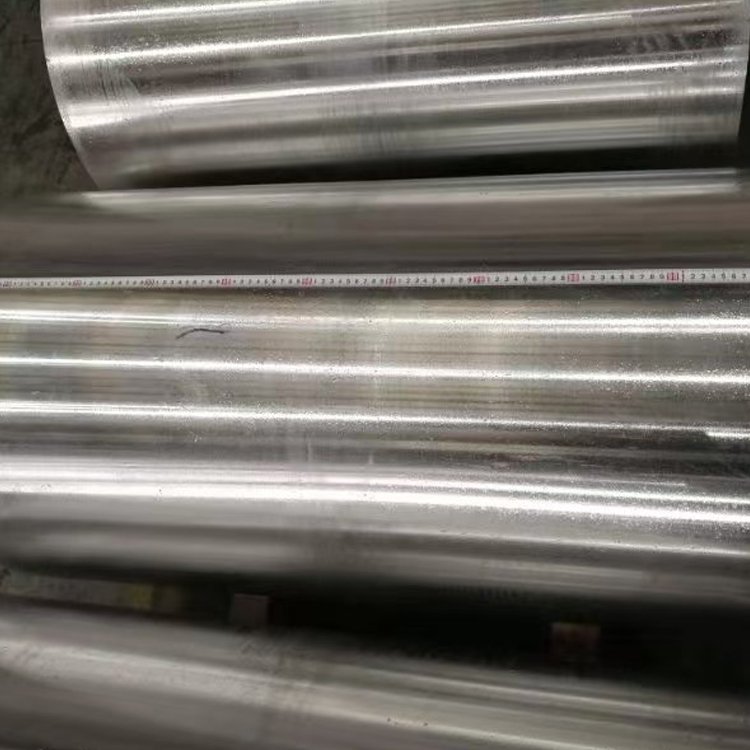
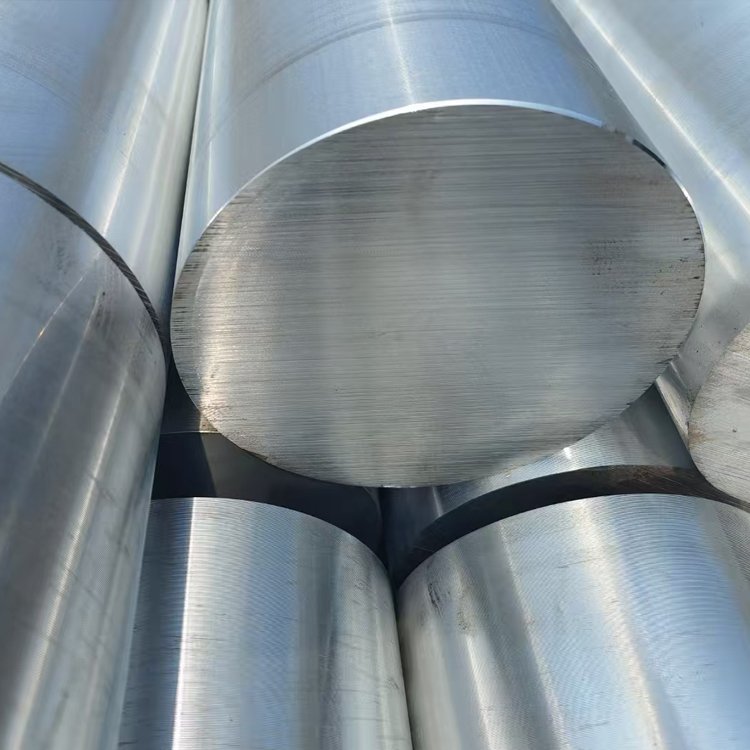
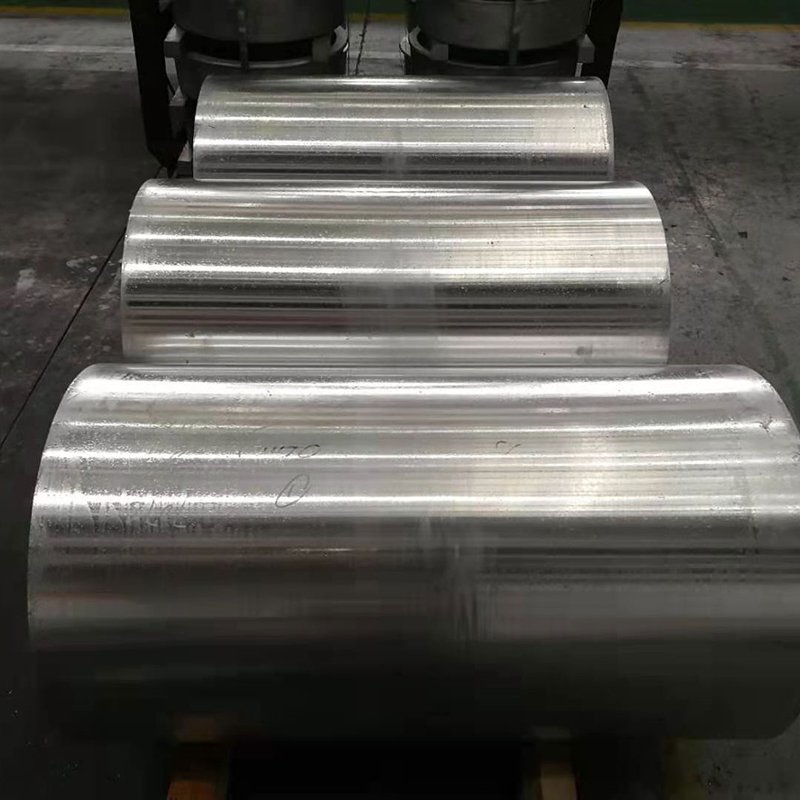
- Forged Round Bar: Diameters 100mm to 700mm
- Custom cut-to-length service available
- Special tolerances and surface finishes (e.g., peeled, ground, precision turned) available upon request
- Available in various heat treatment tempers, such as T7451, T74511, T7651, T76511
5. Temper Designations & Heat Treatment Options
| Temper Code | Process Description | Optimal Applications | Key Characteristics |
| T7451 | Solution treated + stretched for stress relief + two-stage artificial aging | Excellent stress corrosion cracking resistance with high strength | High strength, superior SCC resistance, dimensional stability |
| T74511 | T7451 + straightened | Suitable for irregular sections, low residual stress | Similar to T7451, but for complex shapes |
| T7651 | Solution treated + stretched for stress relief + two-stage artificial aging | Excellent exfoliation corrosion resistance with high strength | High strength, superior exfoliation corrosion resistance |
| T76511 | T7651 + straightened | Suitable for irregular sections, low residual stress | Similar to T7651, but for complex shapes |
Temper Selection Guidance:
- T7451/T74511: Primary choice when design requires a balance of high strength and exceptional stress corrosion cracking (SCC) resistance
- T7651/T76511: Used when design requires slightly higher strength and specific resistance to exfoliation corrosion
- Forging process provides more uniform properties in all directions and lower residual stress, making it more suitable for critical structural components
6. Machining & Fabrication Characteristics
| Operation | Tool Material | Recommended Parameters | Comments |
| Turning | Carbide, PCD | Vc=150-450 m/min, f=0.1-0.4 mm/rev | High-speed machining for excellent surface finish, attention to chip evacuation |
| Drilling | Carbide, TiN coated | Vc=60-150 m/min, f=0.1-0.3 mm/rev | Through-coolant drills recommended, good for deep holes |
| Milling | Carbide, HSS | Vc=200-700 m/min, fz=0.08-0.2 mm | High-positive rake angle tools, large depth of cut, high feed |
| Tapping | HSS-E-PM, TiCN coated | Vc=10-25 m/min | Proper lubrication for good thread quality |
| Reaming | Carbide, HSS | Vc=40-100 m/min, f=0.15-0.4 mm/rev | H7 tolerance achievable |
| Sawing | Carbide-tipped blade | Vc=600-1500 m/min | Suitable for precision cutting of large diameter bars |
Fabrication Guidance:
- Machinability Rating: 50% (1100 aluminum = 100%), harder to machine than 6061, easier than 7075
- Chip Formation: Tends to form fine, broken chips, but chips can pile up, requiring good chip evacuation
- Coolant: Water-soluble cutting fluid (10-15% concentration), high flow rate cooling; oil-based cutting fluids can also be used
- Tool Wear: Higher, recommend PCD or coated carbide tools
- Weldability: Conventional welding methods are not recommended, limited to special applications (e.g., friction stir welding), significant strength loss after welding
- Cold Working: Poor formability, not suitable for cold bending, stamping, etc.
- Hot Working: Forging must be performed under strictly controlled temperature and strain rates
- Surface Treatment: Can be anodized (sulfuric anodizing recommended), but may exhibit a yellowish tint due to higher copper content
- Stress Corrosion Cracking: T7451/T74511 tempers offer very high SCC resistance, which is its primary advantage
7. Corrosion Resistance & Protection Systems
| Environment Type | Resistance Rating | Protection Method | Expected Performance |
| Industrial Atmosphere | Good | Anodizing + sealing | 10-15 years |
| Marine Atmosphere | Good | Anodizing + sealing/painting | 5-10 years |
| Seawater Immersion | Fair | Strict coating system, or cladding | Depends on coating quality and maintenance |
| High Humidity | Good | Anodizing + sealing | 10-15 years |
| Stress Corrosion | Excellent (T74/T76 tempers) | No additional protection needed | Extremely low susceptibility, superior to 7075-T6 |
| Exfoliation | Excellent (T76 temper) | No additional protection needed | Extremely low susceptibility |
| Galvanic Corrosion | Good | Proper isolation | Careful design with dissimilar metals |
Surface Protection Options:
- Anodizing:
- Type II (Sulfuric): 10-25μm thickness, enhances wear and corrosion resistance, can be dyed
- Type III (Hard): 25-75μm thickness, for high wear applications
- Conversion Coatings:
- Chromate conversion coatings (MIL-DTL-5541): Excellent base for paints or adhesives, provides corrosion protection
- Chromium-free alternatives: Environmentally compliant
- Painting Systems:
- Epoxy primer + polyurethane topcoat: Provides excellent long-term protection, suitable for aerospace environments
- Cladding:
- In extreme corrosive environments, cladding with pure aluminum or corrosion-resistant alloy layers may be considered
8. Physical Properties for Engineering Design
| Property | Value | Design Consideration |
| Density | 2.80 g/cm³ | Weight calculation and structural optimization |
| Melting Range | 482-635°C | Heat treatment window and welding limitations |
| Thermal Conductivity | 150 W/m·K | Thermal management, heat transfer design |
| Electrical Conductivity | 37-39% IACS | Electrical conductivity in electrical applications |
| Specific Heat | 860 J/kg·K | Thermal mass and heat capacity calculations |
| Thermal Expansion (CTE) | 23.6 ×10⁻⁶/K | Dimensional changes due to temperature variations |
| Young’s Modulus | 71.0 GPa | Deflection and stiffness calculations |
| Poisson’s Ratio | 0.33 | Structural analysis parameter |
| Damping Capacity | Medium-Low | Vibration and noise control |
Design Considerations:
- Operating Temperature Range: -60°C to +100°C (strength significantly degrades above this)
- Cryogenic Performance: Slight increase in strength at low temperatures, toughness remains good
- Magnetic Properties: Non-magnetic
- Recyclability: High-value recyclable material
- Dimensional Stability: Excellent in T7451/T74511 tempers, suitable for precision machining
- Strength-to-Weight Ratio: Among the highest for aluminum alloys, ideal for aerospace materials
9. Quality Assurance & Testing
Standard Testing Procedures:
- Chemical Composition:
- Optical emission spectroscopy
- Inert gas fusion (hydrogen content)
- Verification of all alloying elements and ultra-low impurity content
- Mechanical Testing:
- Tensile testing (longitudinal, transverse, short transverse)
- Hardness testing (Brinell, multiple locations)
- Fracture toughness testing (K1C, per ASTM E399)
- Fatigue testing (as required, e.g., rotating beam fatigue)
- Stress Corrosion Cracking testing (SCC, per ASTM G44, G47)
- Nondestructive Testing:
- Ultrasonic inspection (100% volumetric, per AMS 2630 class A1, AMS-STD-2154, or ASTM E2375 Level 2)
- Eddy current testing (surface and near-surface defects)
- Penetrant inspection (surface defects)
- Radiographic testing (internal macroscopic defects)
- Microstructural Analysis:
- Grain size determination
- Grain flow pattern verification
- Precipitate evaluation (TEM/SEM)
- Recrystallization degree assessment
- Dimensional Inspection:
- CMM (Coordinate Measuring Machine) verification
- Diameter, length, straightness, ovality, etc.
Standard Certifications:
- Mill Test Report (EN 10204 3.1 or 3.2)
- Chemical analysis certification
- Mechanical properties certification
- Heat treatment/forging certification
- Nondestructive testing certification
- Conformance to AMS 4106 (forgings), AMS 4107 (bar), ASTM B247 (forgings), and other aerospace standards
- AS9100 or ISO 9001 quality management system certification
10. Applications & Design Considerations
Primary Applications:
- Aerospace Structures:
- Fuselage frames, wing spars, stringers
- Landing gear components
- Aircraft connectors and fasteners
- Engine pylon components
- Military and Defense:
- Military aircraft structural components
- Missile and rocket structures
- Critical load-bearing parts for armored vehicles
- High-Performance Machinery:
- High-precision test equipment components
- Critical racing car parts
- Molds and die components (in specific cases)
Design Advantages:
- Ultra-high strength and excellent strength-to-weight ratio
- Superior stress corrosion cracking (SCC) resistance (especially in T7451 temper)
- Good fracture toughness, better than 7075-T6
- Forging process optimizes grain flow, enhancing fatigue resistance and anisotropy
- Lower quenching residual stress (through stress relief treatment)
- Excellent dimensional stability, suitable for precision machining
- Non-magnetic
Design Limitations:
- High cost, primarily used for critical aerospace applications
- Poor weldability, conventional welding not recommended
- Extremely poor formability, not suitable for cold working
- Poor heat resistance, performance degrades rapidly at elevated temperatures
- Extremely demanding processing and heat treatment requirements, necessitating specialized equipment and strict control
- Moderate corrosion resistance, typically requires anodizing or coating protection
Economic Considerations:
- A high-performance alloy, initial cost is significantly higher than general-purpose aluminum alloys
- Complex manufacturing and inspection processes add to production costs
- Despite the high cost, its superior performance is irreplaceable in critical applications
Sustainability Aspects:
- High-value recyclable material, contributing to circular economy
- Lightweight design in aerospace contributes to reduced fuel consumption and carbon emissions
- Production processes are under strict environmental regulation
Material Selection Guidance:
- Choose 7050 when the design requires a balance of maximum strength, excellent fracture toughness, fatigue resistance, and superior stress corrosion cracking resistance, and cost is not the primary limiting factor
- Particularly suitable for pressure-bearing components, landing gear, wing spars, and other critical aerospace structures
- Choose T7651 temper when slightly higher strength is needed and specific resistance to exfoliation corrosion is required
- Not suitable for applications requiring welding or complex cold forming