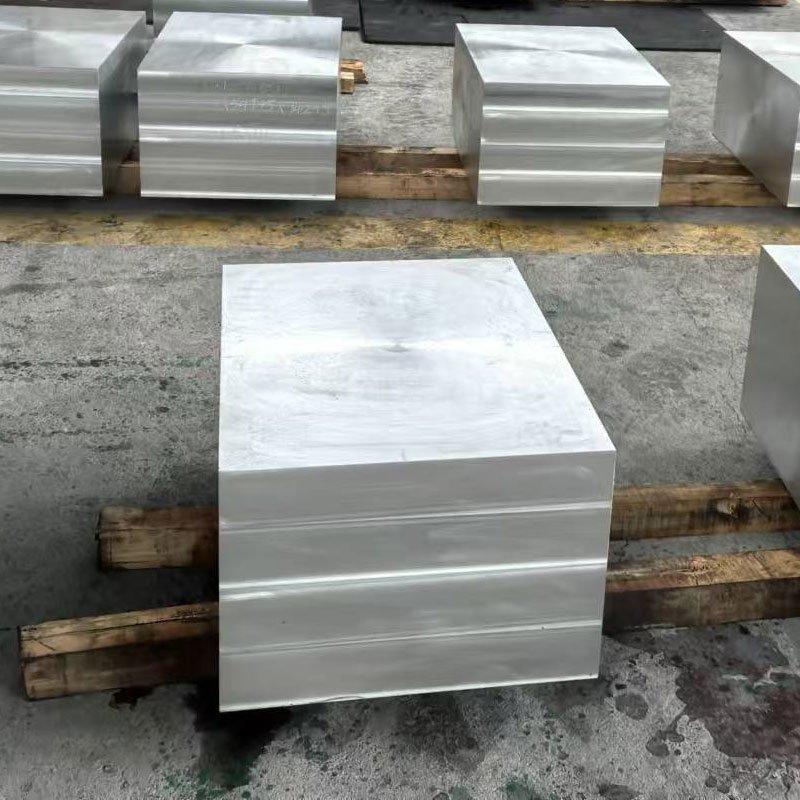
1. Material Composition & Manufacturing Process
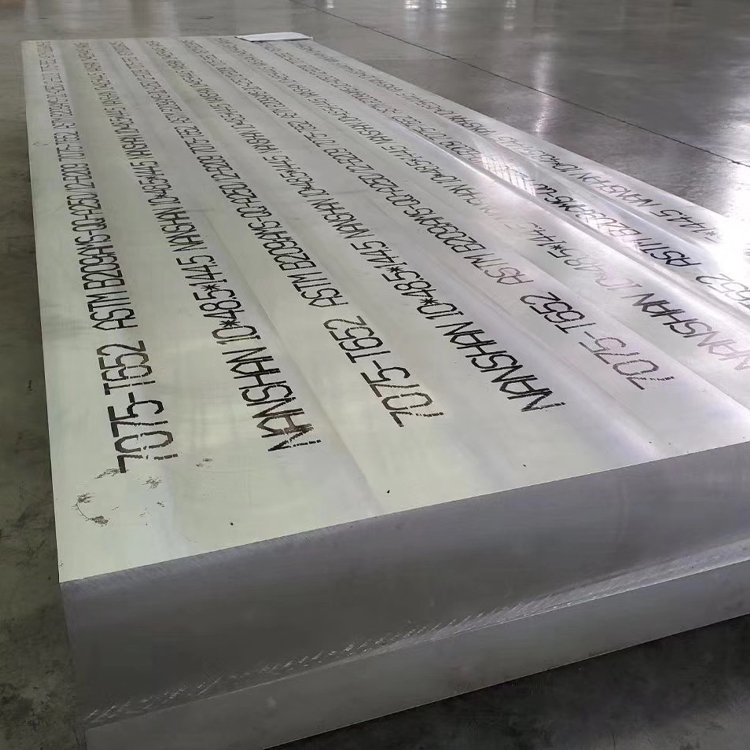
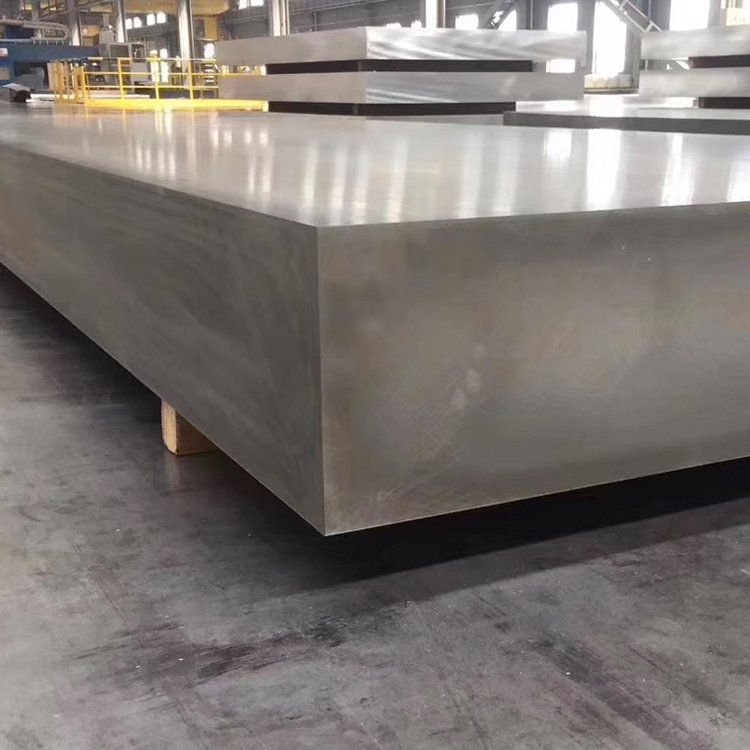
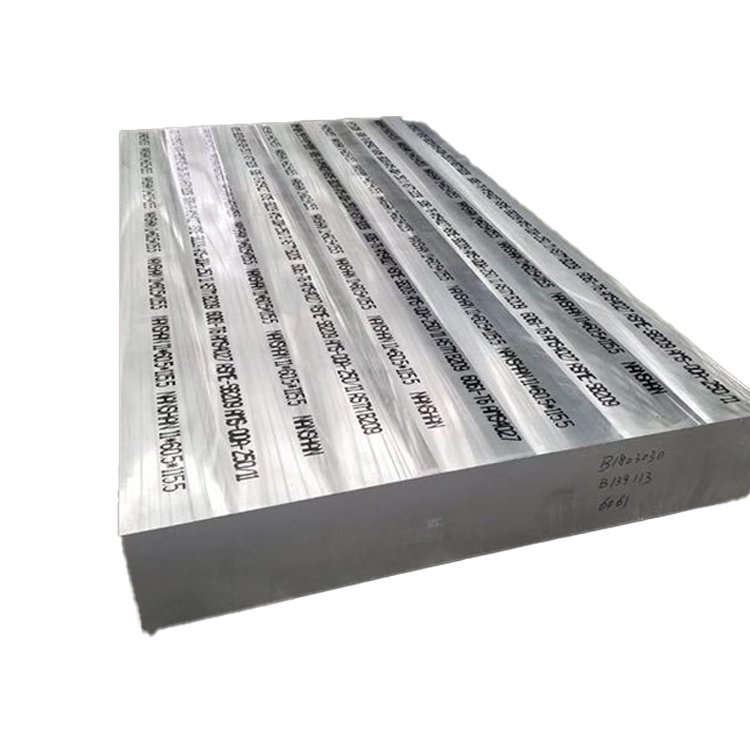
7050 aluminum alloy (AMS 4050, ASTM B247) represents an advanced aerospace-grade Al-Zn-Mg-Cu alloy engineered for superior damage tolerance and exceptional strength-to-weight ratio. The ultra-hard forged plate variant delivers optimized mechanical properties through precision thermomechanical processing:
- Alloy Chemistry:
- Zinc (Zn): 5.7-6.7% (primary strengthening element)
- Copper (Cu): 2.0-2.6% (precipitation hardening)
- Magnesium (Mg): 1.9-2.6% (strengthening precipitates)
- Zirconium (Zr): 0.08-0.15% (grain structure control)
- Base Material:
- Aluminum (Al): ≥87.3% (balance)
- Controlled Impurities:
- Iron (Fe): ≤0.15% max
- Silicon (Si): ≤0.12% max
- Manganese (Mn): ≤0.10% max
- Titanium (Ti): ≤0.06% max
- Chromium (Cr): ≤0.04% max
Premium Forging Production Sequence:
- Ingot Casting: Proprietary low-hydrogen, vacuum-degassed process
- Homogenization: 470-490°C for 24-36 hours (computer-controlled ramp)
- Surface Scalping: Minimum 10mm per surface to eliminate segregation
- Pre-forging Preparation: Protective coating application
- Multi-directional Forging:
- Initial Deformation: 400-425°C
- Intermediate Passes: 375-395°C
- Final Deformation: 350-370°C
- Minimum Deformation Ratio: 4:1
- Post-forge Annealing: 413°C for 4-8 hours (stress equalization)
- Precision Machining: Surface preparation for heat treatment
- Solution Heat Treatment: 475-485°C for thickness-dependent time
- Controlled Quenching: High-velocity polymer quench (>100°C/sec)
- Cryogenic Treatment: Optional -75°C stabilization (24 hours)
- Multi-stage Aging:
- T7451: 120°C/8hr + 175°C/8hr
- T7651: 120°C/6hr + 165°C/24hr
Full material traceability with digital process monitoring throughout manufacturing.
2. Mechanical Properties of Ultra-Hard 7050 Forged Plate
| Property | Minimum | Typical | Test Standard | Performance Advantage |
| Ultimate Tensile Strength | 510 MPa | 540-570 MPa | ASTM E8/E8M | 15% higher than 7075-T6 |
| Yield Strength (0.2%) | 455 MPa | 480-510 MPa | ASTM E8/E8M | Superior aerospace loading capacity |
| Elongation (2 inch) | 8% | 10-13% | ASTM E8/E8M | Better damage tolerance than 7075 |
| Fracture Toughness (K₁c) | 30 MPa√m | 33-38 MPa√m | ASTM E399 | 25% improvement over 7075-T6 |
| Shear Strength | 305 MPa | 320-345 MPa | ASTM B769 | Enhanced joint performance |
| Bearing Strength (e/D=2.0) | 785 MPa | 800-850 MPa | ASTM E238 | Exceptional fastener capacity |
| Fatigue Strength (10⁷) | 145 MPa | 160-180 MPa | ASTM E466 | Superior cyclic loading resistance |
| Hardness (Brinell) | 140 HB | 150-165 HB | ASTM E10 | Improved wear resistance |
| Compressive Yield | 470 MPa | 490-520 MPa | ASTM E9 | Critical for compression structures |
Directionality Performance:
- L/LT Tensile Strength Ratio: 1.05-1.08
- L/ST Tensile Strength Ratio: 1.07-1.12
- L/45° Tensile Strength Ratio: 1.02-1.06
- Core-to-Surface Property Variation: <5% in thickness up to 150mm
3. Microstructural Engineering for Ultra-Hard Performance
Precision Thermomechanical Control:
- Grain Structure Management:
- Unrecrystallized, fibrous grain morphology
- Controlled pancaking ratio: 5:1 to 8:1
- Zr-stabilized substructure retention
- Precipitate Engineering:
- η’ (MgZn₂) primary strengthening
- η (MgZn₂) overaging controlled
- T (Al₂Mg₃Zn₃) phase distribution
- S (Al₂CuMg) phase minimization
- Quench Rate Control:
- Critical cooling rate: >100°C/sec at surface
- Core cooling rate: >60°C/sec minimum
- Residual stress minimization through polymer quenchant
- Multi-stage Aging Kinetics:
- Nucleation stage: 120°C/6-8hr (GP zone formation)
- Growth stage: 165-175°C/8-24hr (η’ precipitation)
Microstructural Characteristics:
- Grain Size: ASTM 8-10 (15-30μm)
- Dispersoid Size: 50-100nm (Al₃Zr)
- Precipitate Density: >10^17/cm³
- Recrystallized Fraction: <5% maximum
- Texture: Strong brass {011}<211> component
- Inclusion Rating: ≤0.3 per ASTM E45
- Void Content: <0.1% volumetric
4. Dimensional Specifications & Tolerances
| Parameter | Standard Range | Aerospace Tolerance | Commercial Tolerance |
| Thickness | 20-250 mm | ±0.5mm or ±1%* | ±1.5mm or ±2%* |
| Width | 1000-2500 mm | ±2 mm | ±5 mm |
| Length | 2000-10000 mm | +10/-0 mm | +20/-0 mm |
| Flatness | N/A | 0.1% of length | 0.2% of length |
| Surface Roughness | N/A | 3.2 μm Ra max | 6.3 μm Ra max |
| Edge Straightness | N/A | 1 mm per meter | 3 mm per meter |
| Parallelism | N/A | 0.5% of thickness | 1.0% of thickness |
*Whichever is greater
Special Processing Options:
- Near Net Shape Forging: Reduced machining allowance
- Contour Pre-machining: 15mm minimum stock allowance
- Stress Relief: Pre-machining stress equalization
- Ultrasonic Inspection: 100% volumetric testing per AMS 2154
- Density: 2.83 g/cm³ (±0.02)
- Weight Formula: Thickness(mm) × Width(m) × Length(m) × 2.83 = Weight(kg)
5. Heat Treatment & Performance Optimization
| Temper Designation | Process Details | Optimized Properties | Target Applications |
| T7451 | Solution heat treat, controlled stretch (1.5-3%), stress relief, overaged | Best SCC resistance with high strength | Primary aircraft structures |
| T7651 | Solution heat treat, controlled stretch (1.5-3%), overaged (higher peak temperature) | Maximum strength with good SCC resistance | Critical load-bearing components |
| T7351 | Solution heat treat, stress relief by stretching, specially overaged | Optimal combination of strength/fracture toughness | Fatigue-critical structures |
| T74 | Solution heat treat, multi-stage overaging | Maximum SCC resistance | Marine/naval aerospace applications |
Heat Treatment Parameters:
- Solution Temperature: 475-485°C
- Soak Time: 1 hour per 25mm thickness (minimum)
- Quench Delay: <10 seconds maximum
- Quench Medium: Polymer concentration 12-18%
- Quench Velocity: 3-5 m/sec minimum
- Aging Temperature Control: ±3°C tolerance
- Post-quench Storage: <8 hours at <20°C before aging
Material Response Characteristics:
- Natural Aging: Significant property changes within 48 hours
- Artificial Aging: 90% of properties developed in first aging stage
- Thermal Stability: Maintains >95% of properties at 100°C
- Cryogenic Performance: Increased strength at subzero temperatures
- Stress Relief: 2-3% permanent deformation recommended
6. Machinability & Manufacturing Considerations
| Operation | Tool Material | Recommended Parameters | Special Considerations |
| High-Speed Milling | Premium carbide | Vc=500-1000 m/min, fz=0.1-0.25 mm | Climb milling essential |
| Deep Hole Drilling | Carbide coolant-fed | Vc=80-150 m/min, fn=0.15-0.35 mm/rev | Pecking cycle required |
| Turning | PCD/CBN inserts | Vc=600-1200 m/min | Sharp cutting edges vital |
| Threading | Premium HSS-E-PM | Vc=15-25 m/min | Thread rolling preferred |
| Reaming | Carbide reamers | Vc=40-70 m/min | H7 tolerance achievable |
| EDM | Copper electrodes | Low current settings | Recast layer removal required |
Machining Optimization Strategies:
- Cutting Fluids: Water-soluble coolants (pH 8.5-9.5)
- Tool Coatings: TiAlN or Diamond preferred
- Chip Management: High-pressure (70+ bar) coolant
- Clamping Force: Moderate (avoid distortion)
- Feeds/Speeds: High speed, moderate feed approach
- Tool Engagement: Maximum 60% of cutter diameter
- Roughing Strategy: High-efficiency machining (HEM)
- Finishing: Light cuts with high surface speed
7. Corrosion Resistance & Protection Systems
| Environment Type | Resistance Rating | Protection Method | Performance Expectation |
| Industrial Atmosphere | Moderate | Anodizing + primer/topcoat | 10+ years with maintenance |
| Marine Environment | Poor-Fair | Anodizing + chromated primer + topcoat | 5-8 years with maintenance |
| High-Humidity | Fair | Anodizing Type II or III | 3-5 years without topcoat |
| Chemical Exposure | Fair | Chemical conversion + sealed anodize | Application dependent |
| Stress Corrosion | Good (T7 tempers) | Overaging + surface compression | Significant improvement over 7075 |
| Exfoliation | Good (T7 tempers) | Proper heat treatment | EXCO rating of EA or better |
Surface Treatment Options:
- Anodizing:
- Type II (Sulfuric): 10-25μm
- Type III (Hard): 25-75μm
- Thin Film Sulfuric: 3-8μm
- Tartaric-Sulfuric: 5-15μm
- Conversion Coatings:
- Chromate per MIL-DTL-5541 Class 1A
- Trivalent chromium pretreatment
- Sol-gel technology
- Paint Systems:
- High-solids epoxy primer
- Polyurethane topcoat
- Rain erosion coatings
- Specialty anti-corrosion primers
- Mechanical Surface Enhancement:
- Shot peening (0.008-0.012A intensity)
- Laser shock peening
- Burnishing
8. Physical Properties for Engineering Design
| Property | Value | Design Significance |
| Density | 2.83 g/cm³ | Weight-critical structures |
| Melting Range | 490-630°C | Welding/heat treatment limitations |
| Thermal Conductivity | 153-167 W/m·K | Heat dissipation capability |
| Electrical Conductivity | 35-40% IACS | EMI shielding applications |
| Specific Heat | 860 J/kg·K | Thermal mass calculations |
| Thermal Expansion (CTE) | 23.5 ×10⁻⁶/K | Thermal stress prediction |
| Young’s Modulus | 71.7 GPa | Structural stiffness |
| Poisson’s Ratio | 0.33 | Elasticity modeling |
| Fatigue Crack Growth Rate | da/dN = 3×10⁻⁹(ΔK)³·⁵ | Damage tolerance design |
| Fracture Energy (G₁c) | 28-32 kJ/m² | Impact resistance assessment |
9. Quality Assurance & Testing Protocols
Mandatory Inspection Regime:
- Chemical Composition:
- Optical emission spectroscopy
- Verification of all major elements and impurities
- Mechanical Testing:
- Full tensile test (L, LT, ST directions)
- K₁c fracture toughness testing
- Hardness survey (25mm grid minimum)
- Non-Destructive Testing:
- Ultrasonic inspection per AMS-STD-2154 Class A
- Penetrant inspection of critical surfaces
- Eddy current testing (optional)
- Microstructural Analysis:
- Grain size and morphology
- Recrystallization assessment
- Inclusion rating per ASTM E45
- Production Testing:
- Heat treatment parameters verification
- Quench sensitivity testing
- Electrical conductivity mapping
Certification Documentation:
- Material Test Report (MTR) per EN 10204 3.1/3.2
- Chemical analysis certification
- Mechanical properties certification
- Heat treatment chart records
- NDT reports with acceptance criteria
- Temper verification documentation
- Process control parameters
- Statistical process data summary
- Lot traceability information
10. Applications & Performance Advantages
Primary Aerospace Applications:
- Bulkhead structures
- Wing spars and carry-through structures
- Landing gear components
- Fuselage frames and longerons
- Thick section structural members
- Upper wing skins
- High-load fittings
- Missile structures
- Structural backup hardware
- Critical connection fittings
Performance Advantages vs. 7075:
- 10-15% higher tensile strength
- 20-25% improved fracture toughness
- Superior stress corrosion resistance
- Enhanced exfoliation corrosion resistance
- Better fatigue crack growth resistance
- Improved damage tolerance
- Higher residual strength after impact
- Better thermal stability
- Superior machinability in thick sections
- Enhanced through-thickness properties
11. Storage & Handling Requirements
Material Handling Protocol:
- Storage Environment:
- Temperature: 15-25°C
- Humidity: <65% RH
- Protection from precipitation
- Isolation from steel products
- Lifting Guidelines:
- Multi-point lifting with spreader bars
- Non-metallic slings