

1. Material Overview & Manufacturing Process
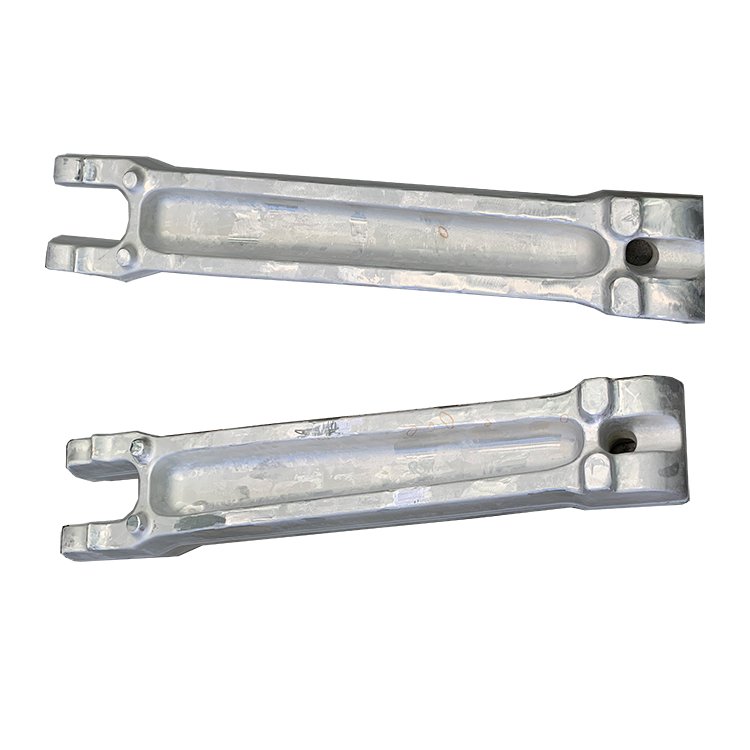
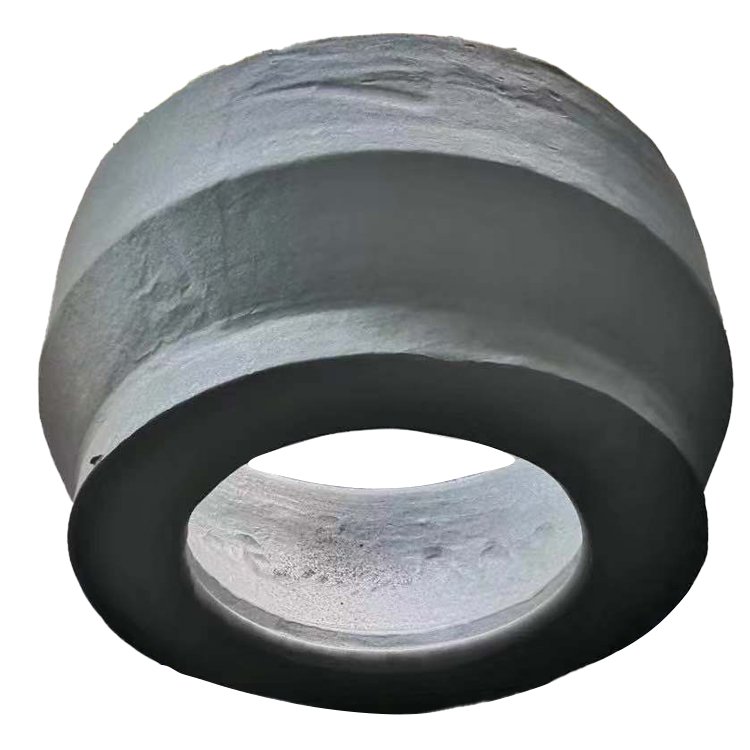
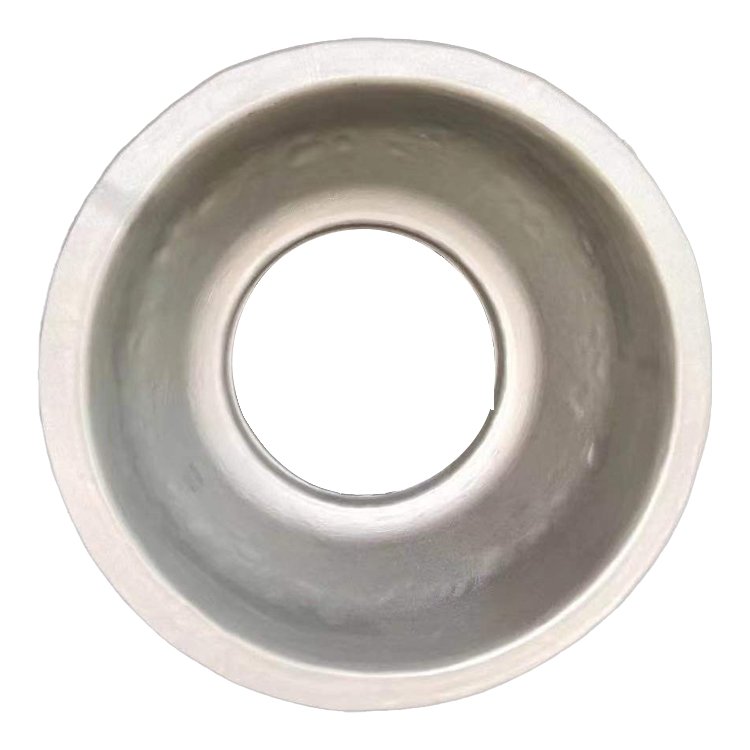
Small aluminum alloy die forgings refer to aluminum alloy components produced through the die forging process, which are relatively small in size (typically weighing from tens of grams to several kilograms) and have complex shapes or high mechanical property requirements. Compared to castings, forgings, through plastic deformation, can refine grains, improve microstructural uniformity, eliminate casting defects (such as porosity, shrinkage), and form continuous fibrous flow lines. This significantly enhances the material’s mechanical properties, especially strength, toughness, fatigue life, and impact resistance. Commonly used aluminum alloy grades include 6061, 6082, and 7075, each with specific strengths, meeting the demands of various applications.
- Common Aluminum Alloy Grades and Their Characteristics:
- 6061 Alloy (Al-Mg-Si Series):
- Characteristics: Medium strength, excellent corrosion resistance, good weldability, and machinability. One of the most versatile and widely used general-purpose alloys.
- Primary Alloying Elements: Magnesium (Mg), Silicon (Si), Copper (Cu), Chromium (Cr).
- 6082 Alloy (Al-Mg-Si Series):
- Characteristics: Higher strength than 6061, especially better mechanical properties in thicker sections, with good corrosion resistance and weldability.
- Primary Alloying Elements: Magnesium (Mg), Silicon (Si), Manganese (Mn).
- 7075 Alloy (Al-Zn-Mg-Cu Series):
- Characteristics: Ultra-high strength, high yield strength, excellent fatigue performance. A high-strength alloy commonly used in aerospace, but sensitive to stress corrosion cracking in the T6 temper.
- Primary Alloying Elements: Zinc (Zn), Magnesium (Mg), Copper (Cu), Chromium (Cr).
- Base Material:
- Aluminum (Al): Balance
- Controlled Impurities:
- The content of impurities such as iron, silicon, manganese, and titanium is strictly controlled according to the specific alloy grade to optimize performance.
Manufacturing Process (for Small Die Forgings): The production process for small aluminum alloy die forgings emphasizes precision and efficiency, aiming to obtain near-net shape components with excellent mechanical properties through one or more die forming steps.
- Raw Material Preparation & Cutting:
- High-quality ingots or extruded bars are selected as forging billets. The material must undergo strict chemical composition analysis and necessary internal defect inspection (e.g., ultrasonic).
- The billet length and weight are precisely cut according to the forging dimensions, shape, and material utilization requirements.
- Heating:
- Billets are uniformly heated in a precisely controlled forging furnace to the plastic deformation temperature range. Different alloys have different optimal forging temperatures to ensure sufficient plastic deformability while avoiding overburning.
- Die Forging Formation:
- Using a forging hammer, hydraulic press, or screw press, the heated billet is placed into a pre-designed die and formed by one or more precise strikes/pressures. The die cavity is intricately designed to guide metal flow lines along the part’s shape, refining grains and eliminating internal defects.
- Multi-pass Forging: For small parts with complex shapes, pre-forging and finish forging, or even multi-stage die forging, may be required to progressively achieve the desired shape.
- Near-Net Shaping: Die forging aims to achieve near-net shaping, minimizing subsequent machining allowance.
- Trimming:
- After forging, excess flash around the periphery of the forging is removed.
- Heat Treatment:
- Solution Heat Treatment: The forging is heated to a specific temperature and held for sufficient time to allow alloying elements to dissolve into the solid solution.
- Quenching: Rapid cooling from the solutionizing temperature, typically by water quenching or polymer quenching, to retain the supersaturated solid solution.
- Aging Treatment:
- Artificial Aging (T6 Temper): Provides optimal strength and hardness.
- Underaging or Overaging (e.g., T73, T76 Tempers): Used to improve stress corrosion cracking and exfoliation resistance for certain alloys (like 7075), though with a slight reduction in strength.
- Straightening & Stress Relief (if required):
- Mechanical straightening may be required after quenching to correct dimensions and shape.
- For certain high-precision parts or those requiring extensive subsequent machining, tensile or compression stress relief (e.g., T651/T7351 tempers) can be performed to reduce residual stress and minimize machining distortion.
- Finishing & Inspection:
- Deburring, shot peening (improves surface fatigue performance), dimensional inspection, surface quality checks.
- Finally, comprehensive nondestructive testing (e.g., penetrant, ultrasonic) and mechanical property tests are performed to ensure the product meets specifications.
2. Mechanical Properties of Small Aluminum Alloy Die Forgings
The mechanical properties of small aluminum alloy die forgings vary depending on the specific alloy grade and heat treatment temper, but generally outperform castings and many wrought products of the same grade.
| Property Type | 6061-T6 Typical Value | 6082-T6 Typical Value | 7075-T6 Typical Value | 7075-T7351 Typical Value | Test Direction | Standard |
| Ultimate Tensile Strength (UTS) | 290-330 MPa | 310-340 MPa | 550-590 MPa | 480-520 MPa | Longitudinal (L) | ASTM B557 |
| Yield Strength (0.2% YS) | 240-290 MPa | 260-290 MPa | 480-520 MPa | 410-450 MPa | Longitudinal (L) | ASTM B557 |
| Elongation (2 inch) | 10-18% | 9-14% | 8-12% | 10-15% | Longitudinal (L) | ASTM B557 |
| Brinell Hardness | 95-105 HB | 95-105 HB | 160-175 HB | 135-150 HB | N/A | ASTM E10 |
| Fatigue Strength (10⁷ Cycles) | 95-115 MPa | 100-120 MPa | 150-180 MPa | 140-170 MPa | N/A | ASTM E466 |
| Fracture Toughness K1C | 25-35 MPa√m | N/A | 25-30 MPa√m | 28-35 MPa√m | N/A | ASTM E399 |
| Shear Strength | 190-220 MPa | 210-230 MPa | 310-340 MPa | 280-310 MPa | N/A | ASTM B769 |
Property Uniformity and Anisotropy:
- The die forging process aligns the grain flow along the part’s contour, resulting in excellent properties in the main loading directions.
- Compared to plates or extrusions, forgings typically exhibit better transverse (perpendicular to the main deformation direction) properties, with overall less anisotropy.
3. Microstructural Characteristics
The microstructure of small aluminum alloy die forgings is the fundamental reason for their excellent mechanical properties.
Key Microstructural Features:
- Refined and Dense Grain Structure:
- The forging process thoroughly breaks down coarse as-cast grains, forming fine, uniform, and dense equiaxed grains and elongated deformed grains along the metal flow lines. This significantly improves the material’s ductility, toughness, and fatigue life, and eliminates casting defects.
- Optimized and Continuous Grain Flow:
- This is the most significant characteristic and advantage of die forgings. As the metal flows within the die cavity, its grains are elongated and form continuous fibrous flow lines that closely conform to the part’s geometry. This grain flow aligns with the part’s primary stress direction under actual operating conditions, effectively transferring stress and significantly improving the part’s fatigue performance, impact toughness, and stress corrosion cracking resistance in critical areas (e.g., corners, hole edges).
- Uniform Distribution of Strengthening Phases (Precipitates):
- After solution heat treatment and aging, strengthening phases (e.g., Mg₂Si in 6xxx series, MgZn₂ in 7xxx series) precipitate uniformly as fine, dispersed particles within the aluminum matrix. These precipitates effectively hinder dislocation movement, thereby increasing strength and hardness.
- Precise control of the aging process ensures optimal size and distribution of precipitates while avoiding harmful continuous grain boundary precipitation, thus ensuring good corrosion resistance.
- High Metallurgical Cleanliness:
- Die forgings are internally dense, free from casting defects (such as shrinkage, porosity, coarse inclusions). Through strict control of raw material impurities, the material’s toughness and fatigue resistance are further improved.
4. Dimensional Specifications & Tolerances
Small aluminum alloy die forgings can achieve high precision and complex shapes in production.
| Parameter | Typical Size Range | Commercial Forging Tolerance | Precision Machining Tolerance | Test Method |
| Max Length/Diameter | 20 – 500 mm | ±0.5% or ±1 mm | ±0.05 – ±0.2 mm | CMM/Caliper |
| Min Wall Thickness | 2 – 25 mm | ±0.5 mm | ±0.1 – ±0.2 mm | CMM/Thickness Gauge |
| Weight Range | 0.01 – 10 kg | ±5% | N/A | Electronic Scale |
| Surface Roughness (Forged) | Ra 6.3 – 25 μm | N/A | Ra 1.6 – 6.3 μm | Profilometer |
| Flatness | N/A | 0.2 mm/100mm | 0.05 mm/100mm | Flatness Gauge/CMM |
| Perpendicularity | N/A | 0.5° | 0.1° | Angle Gauge/CMM |
Customization Capability:
- Die design and production can be carried out based on detailed customer CAD models and engineering drawings, enabling highly customized forgings.
- Services such as pre-forming, finish forging, trimming, heat treatment, and rough/finish machining can be provided.
5. Temper Designations & Heat Treatment Options
The properties of aluminum alloys are highly dependent on the heat treatment temper.
| Temper Code | Process Description | Typical Applications | Key Characteristics |
| O | Fully annealed, softened | Intermediate state before further processing | Maximum ductility, lowest strength, easy for cold working |
| T4 | Solution heat treated, then naturally aged | Moderate strength, good ductility | Usually a temporary temper or for low-strength applications |
| T6 | Solution heat treated, then artificially aged | General high-strength structural components | Maximum strength, high hardness, good corrosion resistance (6xxx series) |
| T73/T7351 | Solution heat treated, then artificially aged, stress-relieved | Aerospace, high SCC resistance | High strength, optimal stress corrosion cracking resistance, low residual stress (7xxx series) |
| T76/T7651 | Solution heat treated, then artificially aged, stress-relieved | Excellent exfoliation corrosion resistance, moderate SCC resistance | Good exfoliation resistance, high strength (7xxx series) |
Temper Selection Guidance:
- 6061/6082 Alloys: Typically use the T6 temper to obtain the best combination of strength and corrosion resistance.
- 7075 Alloy: Depending on the application’s sensitivity to SCC (stress corrosion cracking), choose T6 (highest strength, SCC sensitive) or T7351/T7651 (slightly reduced strength, but excellent SCC and exfoliation corrosion resistance).
6. Machining & Fabrication Characteristics
Small aluminum alloy die forgings generally have good machinability, but weldability varies depending on the alloy grade.
| Operation | Tool Material | Recommended Parameters | Comments |
| Turning | Carbide, HSS | Vc=100-400 m/min, f=0.1-0.8 mm/rev | Chip management, anti-built-up edge |
| Milling | Carbide, HSS | Vc=150-600 m/min, fz=0.05-0.5 mm | High rigidity, high speed, attention to heat dissipation |
| Drilling | Carbide, HSS | Vc=40-120 m/min, f=0.05-0.2 mm/rev | Sharp cutting edges, large helix angle, through-coolant preferred |
| Welding | MIG/TIG (6xxx series) | 6xxx series has good weldability, 7xxx series has poor weldability, fusion welding not recommended | For 7075 etc., mechanical joining or solid-state welding recommended |
| Surface Treatment | Anodizing, Conversion Coating | Anodizing is easy to color, hard, wear-resistant, corrosion-resistant | Widely applied, meets aesthetic and protective needs |
Fabrication Guidance:
- Machinability: Most aluminum alloy forgings in T6/T7351 tempers have good machinability, allowing for parts with high surface quality and dimensional accuracy.
- Weldability: 6xxx series alloys (e.g., 6061, 6082) have excellent weldability and can be conventionally fusion welded. However, 7xxx series alloys (e.g., 7075) have very poor conventional fusion weldability, being highly prone to hot cracking and severe loss of joint strength. Therefore, fusion welding is generally not recommended, and mechanical joining or advanced solid-state welding techniques (e.g., friction welding, friction stir welding FSW) should be prioritized.
- Residual Stress: Quenched forgings may have residual stress. Especially for precision machined parts, Txx51 (including stress relief) tempers should be considered, and appropriate machining paths employed.
7. Corrosion Resistance & Protection Systems
The corrosion resistance of small aluminum alloy die forgings varies depending on the alloy grade and heat treatment temper, but generally, it can meet application requirements through appropriate protective measures.
| Corrosion Type | 6xxx Series (T6) | 7075 (T6) | 7075 (T7351) | Protection System |
| Atmospheric Corrosion | Excellent | Good | Excellent | Anodizing, or no special protection needed |
| Seawater Corrosion | Good | Moderate | Good | Anodizing, high-performance coatings, galvanic isolation |
| Stress Corrosion Cracking (SCC) | Very Low Sensitivity | Highly Sensitive | Very Low Sensitivity | Select specific temper, or cathodic protection |
| Exfoliation Corrosion | Very Low Sensitivity | Moderately Sensitive | Very Low Sensitivity | Select specific temper, surface coating |
| Intergranular Corrosion | Very Low Sensitivity | Moderately Sensitive | Very Low Sensitivity | Heat treatment control |
Corrosion Protection Strategies:
- Alloy and Temper Selection: Choose the most suitable alloy grade and heat treatment temper based on the corrosive environment and strength requirements. For 7xxx series applications with SCC or exfoliation corrosion risk, T7351 or T7651 tempers are mandatory.
- Surface Treatment:
- Anodizing: The most common and effective protection method, forming a dense oxide film on the forging surface, enhancing corrosion and wear resistance. This includes sulfuric acid anodizing, chromic acid anodizing, etc.
- Chemical Conversion Coatings: Serve as good primers for paints or adhesives, providing additional corrosion protection.
- High-Performance Coating Systems: Corrosion-resistant coatings can be applied in extremely corrosive environments.
- Galvanic Corrosion Management: When in contact with incompatible metals, isolation measures (e.g., gaskets, insulating coatings) must be taken to prevent galvanic corrosion.
8. Physical Properties for Engineering Design
The physical properties of small aluminum alloy die forgings are important aspects for design consideration.
| Property | 6061-T6 Value | 6082-T6 Value | 7075-T6/T7351 Value | Design Consideration |
| Density | 2.70 g/cm³ | 2.70 g/cm³ | 2.81 g/cm³ | Lightweight design |
| Melting Range | 582-652°C | 555-650°C | 477-635°C | Heat treatment and welding window |
| Thermal Conductivity | 167 W/m·K | 180 W/m·K | 130 W/m·K | Thermal management, heat dissipation design |
| Electrical Conductivity | 43% IACS | 48% IACS | 33% IACS | Electrical conductivity |
| Specific Heat | 896 J/kg·K | 900 J/kg·K | 960 J/kg·K | Thermal inertia, thermal shock response calculation |
| Thermal Expansion (CTE) | 23.4 ×10⁻⁶/K | 23.4 ×10⁻⁶/K | 23.6 ×10⁻⁶/K | Dimensional changes due to temperature variations |
| Young’s Modulus | 68.9 GPa | 70 GPa | 71 GPa | Structural stiffness, deformation, and vibration analysis |
| Poisson’s Ratio | 0.33 | 0.33 | 0.33 | Structural analysis parameter |
Design Considerations:
- Strength-to-Weight Ratio: Aluminum alloy forgings offer an excellent strength-to-weight ratio, making them an ideal choice for lightweight design.
- Reliability: The combination of the forging process and alloy characteristics endows parts with excellent fatigue and impact resistance, ensuring long-term service under severe loads.
- Integration of Complex Shapes: Die forging can produce near-net-shaped complex geometries, significantly reducing subsequent machining, lowering manufacturing costs and lead times.
- Versatility: Different grades of aluminum alloy forgings have distinct performance characteristics, allowing selection based on specific application needs, catering to a wide range of fields from general industry to aerospace.
9. Quality Assurance & Testing
Quality control for small aluminum alloy die forgings is extremely critical, covering all stages from raw materials to final products.
Standard Testing Procedures:
- Raw Material Certification:
- Chemical composition analysis to ensure compliance with AMS, ASTM, EN, etc.
- Internal defect inspection (e.g., ultrasonic testing) to ensure billets are free from internal defects.
- Forging Process Monitoring:
- Real-time monitoring of forging temperature, pressure, and die condition.
- In-process random inspection of forging shape and dimensions.
- Heat Treatment Process Monitoring:
- Furnace temperature uniformity (per AMS 2750E Class 1 or 2) and time control, especially precise control of multi-stage aging.
- Quenching media temperature and agitation intensity control.
- Chemical Composition Analysis:
- Re-verification of batch chemical composition of final forgings.
- Mechanical Property Testing:
- Tensile Testing: Samples taken from representative locations and orientations to test UTS, YS, EL.
- Hardness Testing: Multi-point measurements to assess overall uniformity.
- Impact Testing: Charpy V-notch impact test if required.
- Fracture Toughness Testing: K1C or JIC testing for critical components (especially important for 7xxx series).
- Stress Corrosion Cracking (SCC) Testing:
- SCC sensitivity testing (e.g., C-Ring testing) for 7xxx series alloys (especially in T6 temper) to ensure their SCC resistance meets requirements.
- Nondestructive Testing (NDT):
- Ultrasonic Testing (UT): 100% internal defect inspection for all critical forgings to ensure no pores, inclusions, delaminations, etc.
- Penetrant Testing (PT): 100% surface inspection to detect surface-breaking defects.
- Eddy Current Testing (ET): Detects surface and near-surface defects, as well as material uniformity.
- Microstructural Analysis:
- Metallographic examination to evaluate grain size, grain flow continuity, degree of recrystallization, precipitate morphology and distribution, etc.
- Dimensional and Surface Quality Inspection:
- Precise measurements using calipers, micrometers, Coordinate Measuring Machines (CMM), or optical measuring instruments.
- Surface roughness measurement.
Standards and Certifications:
- Complies with ASTM B247 (Aluminum Alloy Forgings), EN 15908 (Aluminum and Aluminum Alloys – Forgings), AMS (Aerospace Material Specifications, e.g., AMS 4117/4133/4134), and other relevant industry standards.
- Quality Management System Certifications: ISO 9001, AS9100 (for aerospace sector).
- EN 10204 Type 3.1 Material Test Reports can be provided, and third-party independent certification can be arranged upon customer request.
10. Applications & Design Considerations
Small aluminum alloy die forgings are widely used in various industrial sectors due to their excellent strength-to-weight ratio, high reliability, and manufacturing efficiency.
Primary Application Areas:
- Automotive Industry: Suspension system components (e.g., control arms, steering knuckles), wheel components, engine mounts, powertrain components, brake parts, for weight reduction and performance improvement.
- Aerospace: Aircraft structural components (e.g., brackets, connectors, flap attachments, landing gear components), engine components, critical connectors.
- Bicycles and Sports Equipment: High-performance bicycle parts (e.g., cranks, pedals), carabiners, sports equipment connectors, arrow shafts.
- Mechanical Engineering: Pump bodies, valve bodies, hydraulic components, clamps, connecting blocks, small transmission gears, bearing housings, robot joints.
- Electronics and Electrical Appliances: Heat sinks, structural supports, connector housings.
- Medical Equipment: Structural frames, connecting parts, etc., requiring high dimensional accuracy and surface quality.
- Defense and Military: Critical structural components for various weapon systems, missile body parts, fuse components, aiming system brackets.
- General Hardware: Tool handles, lock components, etc.
Design Advantages:
- High Strength and Lightweighting: Provides high strength while achieving significant weight reduction, improving product performance and energy efficiency.
- High Reliability: The die forging process eliminates casting defects, resulting in a dense internal structure, refined grains, and continuous flow lines, significantly enhancing fatigue life and impact toughness.
- Near-Net Shaping and Complex Geometries: Die forging can produce complex geometries close to final dimensions, significantly reducing subsequent machining and material waste, lowering manufacturing costs and lead times.
- Excellent Corrosion Resistance: Depending on alloy selection, it can be used long-term in outdoor, humid, or certain corrosive environments.
- Good Machinability: Facilitates subsequent machining and surface treatment.
Design Limitations:
- Die Cost: For small batch production, die design and manufacturing costs are relatively high, making it more suitable for large-volume or serialized production.
- Size Limitations: Forging dimensions are limited by forging equipment; very large components are difficult to forge in one piece.
- High-Temperature Performance: A common limitation for all aluminum alloys; not suitable for long-term operating environments above 150°C (120°C for 7xxx series).
- Weldability (for 7xxx series): 7xxx series alloys have poor weldability, requiring consideration of non-fusion welding connection methods.
Economic and Sustainability Considerations:
- Total Life Cycle Value: While the initial cost of die forgings may be higher than castings, their superior performance, longer service life, and reduced subsequent processing costs make them competitive over their entire life cycle.
- Resource Utilization Efficiency: Die forging is an efficient near-net shaping process, reducing material waste.
- Environmental Friendliness: Aluminum alloys are highly recyclable, aligning with green manufacturing and circular economy principles.