
Are you choosing between 7075 and 5083 aluminum? Making the wrong choice can be costly. I will help you understand the key differences for your project's success.
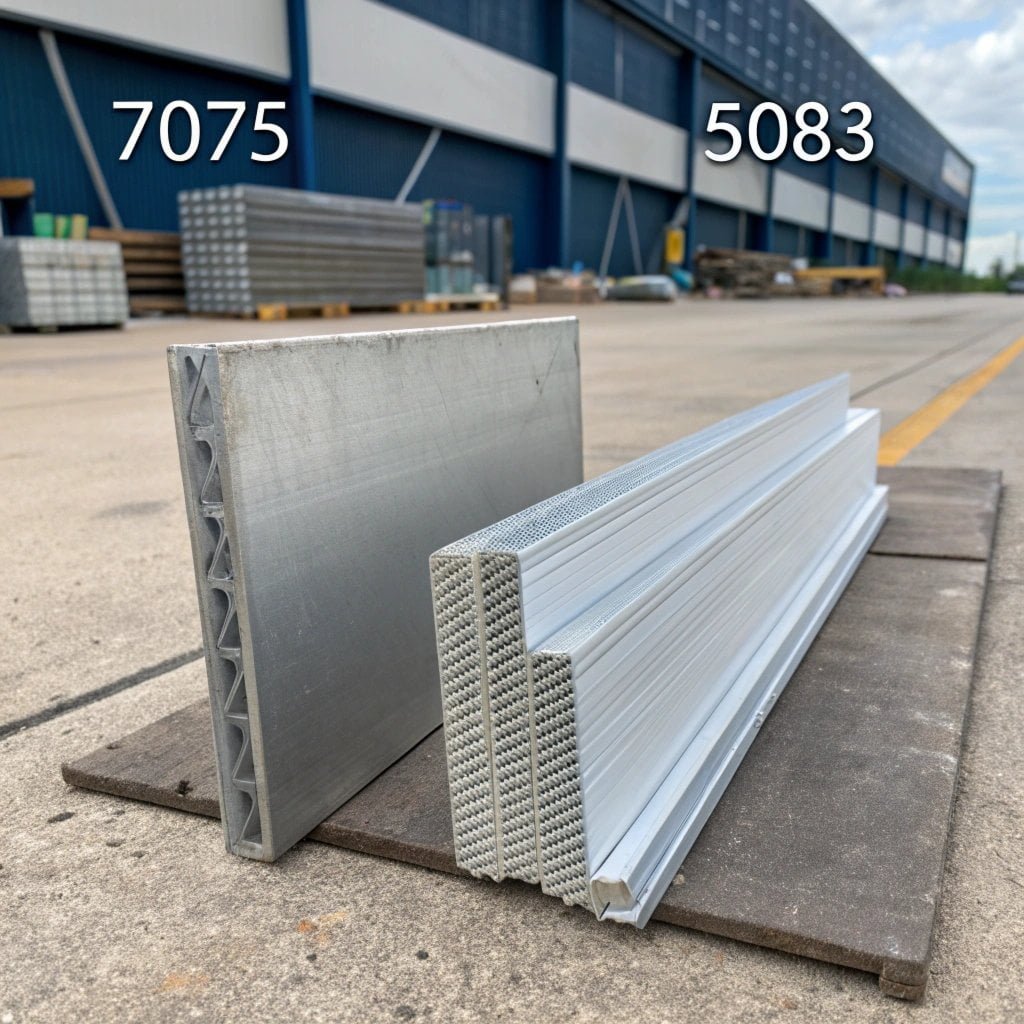
The main difference is strength versus corrosion resistance. 7075 aluminum1 is exceptionally strong, making it ideal for high-stress aerospace parts2. In contrast, 5083 aluminum offers superior corrosion resistance, perfect for marine and chemical environments. The choice depends on balancing strength against long-term durability.
Choosing the right aluminum alloy is one of the most critical decisions a sourcing manager or engineer can make. It directly impacts the performance, lifespan, and cost of your final product. Over my years in the aluminum forging industry, I've seen clients succeed by matching the alloy to the environment. Let's dig deeper into these two popular alloys so you can make an informed choice that you'll be happy with for years to come.
What is 5083 aluminum used for?
Need an aluminum alloy for a harsh, wet, or chemical-heavy environment? Using the wrong material will lead to rapid corrosion and failure, costing you time and money.
5083 aluminum is primarily used in applications that demand high corrosion resistance3. You will find it in shipbuilding, pressure vessels, LNG tankers, and vehicle armor. Its excellent performance in saltwater makes it the go-to choice for marine and chemical transport industries.
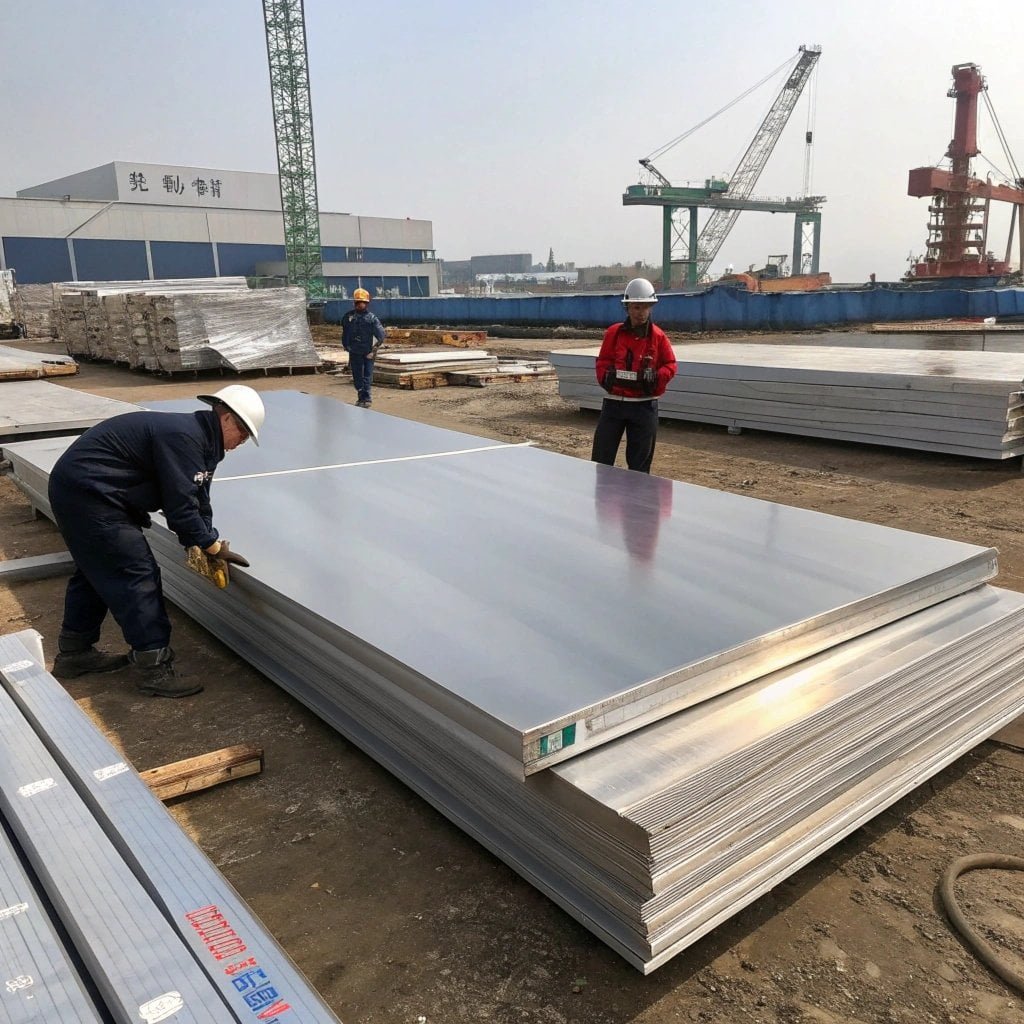
The secret to 5083's performance lies in its chemistry. It belongs to the 5xxx series of aluminum alloys, where magnesium is the main alloying element. This composition gives it outstanding resistance to corrosion, especially from saltwater and industrial chemicals. This makes it a favorite for any application that is constantly exposed to the elements. I've worked with many clients in the Middle East who build large transport tankers, and they rely on 5083 aluminum4 exclusively for its durability.
Key Applications and Why 5083 is Chosen
The combination of good strength, excellent corrosion resistance, and good weldability makes 5083 a very versatile material for heavy-duty applications. Unlike the high-strength 7xxx series, 5083 can be easily welded, which is essential for fabricating large structures like ship hulls or storage tanks. This ease of fabrication helps keep production costs down.
Here’s a breakdown of its common uses:
| Application | Primary Reason for Using 5083 Aluminum |
|---|---|
| Shipbuilding | Its exceptional resistance to saltwater corrosion prevents degradation and extends the vessel's life. |
| LNG Tankers | It maintains its strength and doesn't become brittle at cryogenic (extremely low) temperatures. |
| Pressure Vessels | It offers good strength in its annealed state and can be formed into complex shapes without cracking. |
| Vehicle Armor | It provides good ballistic resistance while being lightweight and weldable for vehicle assembly. |
What is equivalent to 5083 alloy?
Are you having trouble sourcing 5083 aluminum under that exact name? Project delays from supply chain issues are a real headache. Knowing its international equivalents can keep you on schedule.
The most common international equivalent for 5083 aluminum is EN AW-5083, also known as AlMg4.5Mn0.7. Other standards include UNS A95083 (American) and JIS A5083P (Japanese). These alloys are chemically and mechanically very similar, making them interchangeable for most uses.
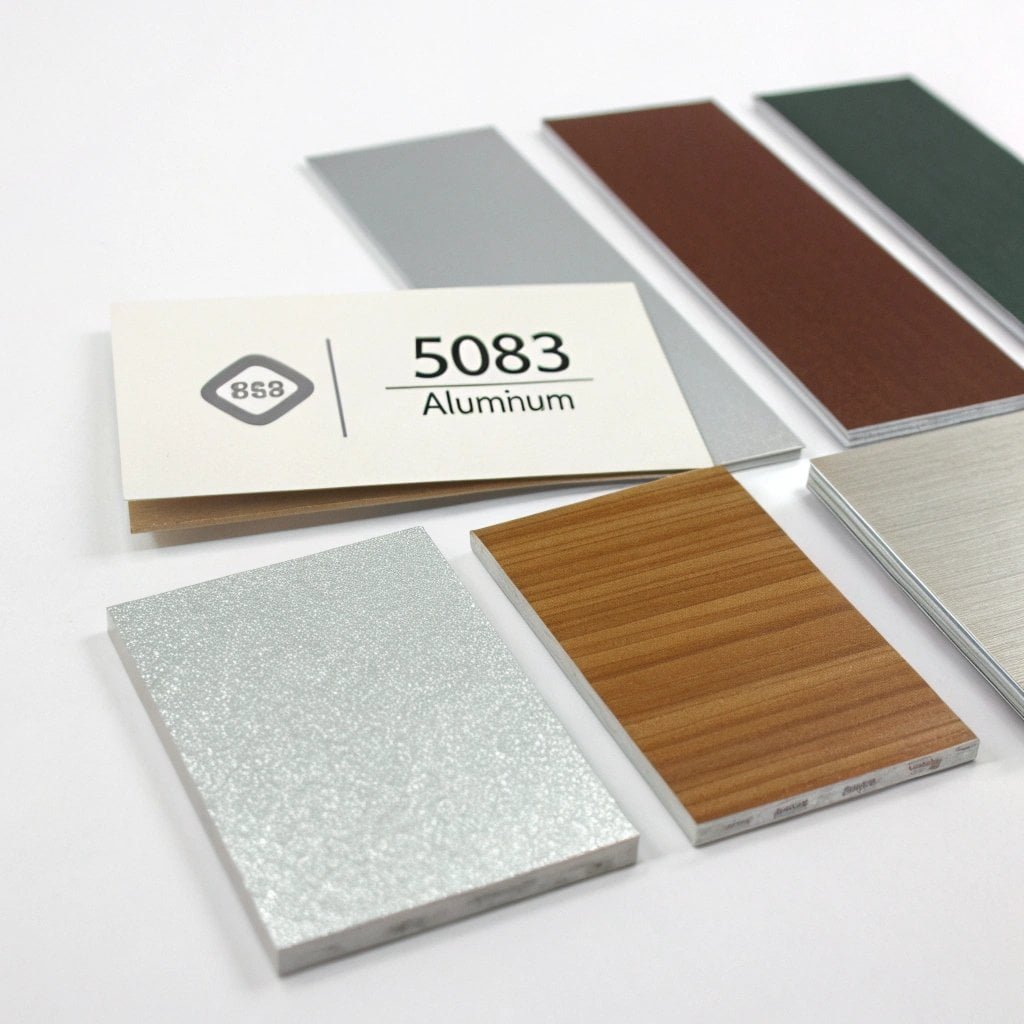
As a global supplier, we at SWA Forging deal with international standards every day. It's common for a customer in one region to ask for an alloy using a local designation. Understanding these equivalents is key to serving our clients effectively. While the chemical compositions are nearly identical, it's always important to check the specific standard and, more importantly, the temper designation. The temper (like H116 or H321) tells you how the material has been processed and has a huge impact on its final properties.
Comparing International Standards for 5083
Different countries and regions have developed their own systems for classifying metals. While this can seem confusing, it's just a different name for the same type of product. For a sourcing manager at a machining plant, knowing these codes can open up more supplier options.
Here is a simple table of the most common equivalents:
| Standard | Designation | Region/Organization | Notes |
|---|---|---|---|
| EN | EN AW-5083 | Europe | The most widely used standard in international trade. |
| UNS | A95083 | USA (Unified Numbering System) | The standard designation used in North America. |
| JIS | A5083P | Japan (Japanese Industrial Stds) | Often includes temper in the designation. |
| ISO | AlMg4,5Mn0,7 | International Organization | Based on the chemical composition. |
I once had a client who needed 5083-H321 for a structural application. Another supplier offered them 5083-H116, saying it was the "same thing." While both are 5083, H116 is specifically for marine plate to resist exfoliation corrosion, while H321 is strain-hardened for general purposes. The properties are different. We made sure they got the correct H321 temper, which was critical for their machining process.
What are the disadvantages of 7075 aluminum?
You know 7075 aluminum is one of the strongest alloys available. But is it perfect? Overlooking its weaknesses can lead to unexpected and catastrophic failures in your product.
The main disadvantages of 7075 aluminum are its relatively poor corrosion resistance and difficulty in welding. It is susceptible to stress corrosion cracking (SCC) and cannot be reliably joined using common welding methods, which limits its application in fabricated structures.
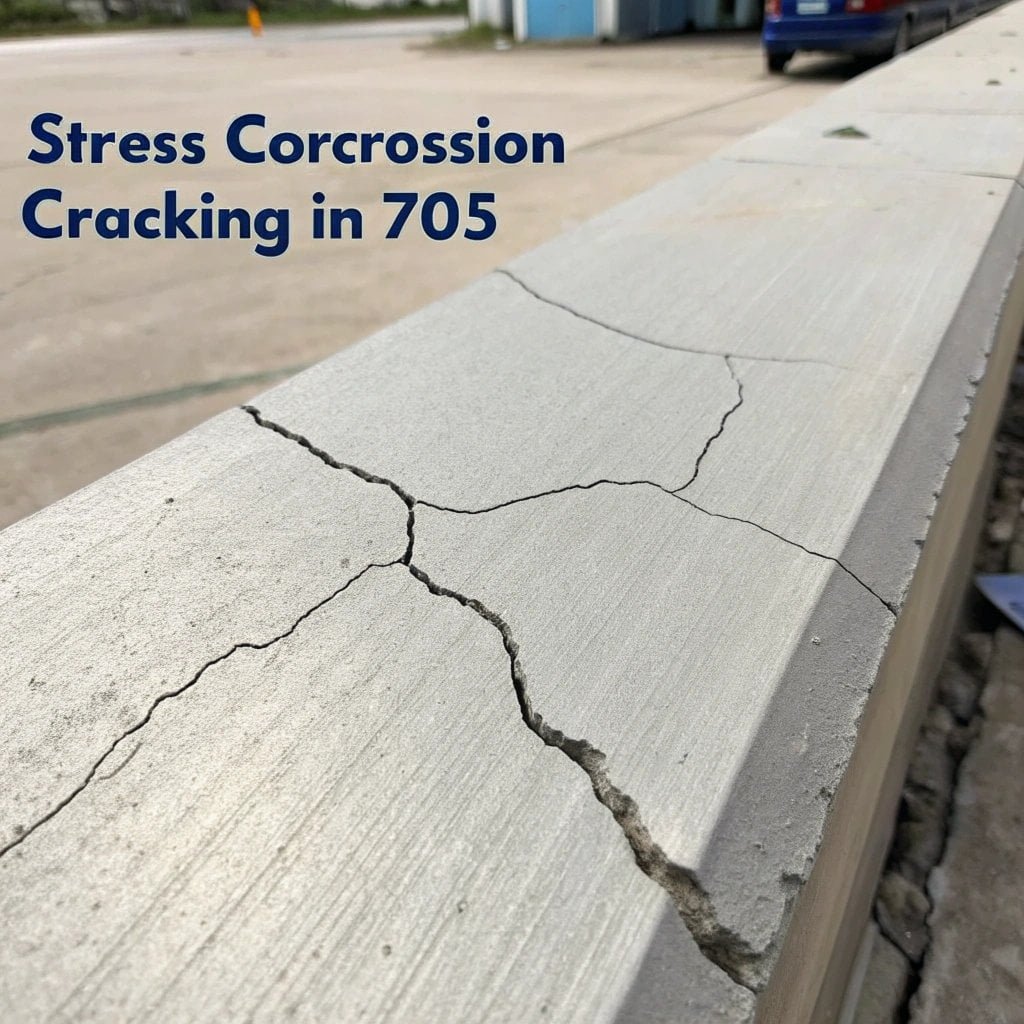
7075 gets its incredible strength from its primary alloying element, zinc. However, this same element makes it more reactive and less resistant to corrosion compared to the 5xxx series. This is a classic engineering trade-off. You gain top-tier strength, but you sacrifice durability in corrosive environments and ease of fabrication. For this reason, 7075 parts are almost always machined from a solid forged block or plate rather than welded together from smaller pieces.
Balancing Strength with Practical Limitations
For applications in aerospace and high-performance machinery, the strength-to-weight ratio of 7075 is often non-negotiable. Engineers design around its weaknesses. For example, 7075 parts are often coated or anodized to protect them from corrosion. The design will also avoid welding entirely. However, if your application requires welding or will be exposed to moisture without protection, 7075 is likely the wrong choice.
Let's compare these key properties directly:
| Property | 7075-T6 (High Strength) | 5083-H116 (Marine Grade) |
|---|---|---|
| Ultimate Tensile Strength | ~572 MPa (Very High) | ~317 MPa (Good) |
| Corrosion Resistance | Poor | Excellent |
| Weldability | Not Recommended | Excellent |
| Primary Use Case | High-stress structural parts | Corrosive environments |
A client designing high-performance automotive suspension parts came to me asking for 7075. They needed maximum strength. We supplied them with 7075-T6 forged discs. They knew from the start that every part had to be machined from a solid piece and then anodized. They never even considered welding it. This is the correct way to use 7075.
Is 5083 aluminium strong?
You need a durable alloy that resists corrosion, but you're worried it might not be strong enough for your structural parts. Will 5083 hold up under pressure?
Yes, 5083 is a high-strength aluminum alloy. It has the highest strength of any non-heat-treatable (5xxx series) alloy. While not as strong as 7075, its excellent strength combined with superior toughness and fatigue resistance makes it very robust for demanding applications.
When we talk about "strength," it's easy to just look at a single number like tensile strength. But in the real world, strength is more complex. It's also about how a material handles repeated stress (fatigue strength) and how it performs over its entire service life (durability). 5083 aluminum gets its strength from strain-hardening and its magnesium content. This process makes it tough and resistant to damage. It doesn't achieve the peak strength of heat-treated alloys like 7075, but it provides a more balanced and durable kind of strength.
Understanding "Lifetime Strength"
I often advise my customers to think about "lifetime strength." An alloy's initial strength is one thing, but how strong is it after five years in its service environment? A 7075 part might be stronger on day one, but in a saltwater environment, it could weaken significantly due to corrosion. 5083, on the other hand, will maintain its structural integrity. This makes it "stronger" over the long term for that specific application.
Furthermore, 5083 has a unique strength: it performs very well at extremely low temperatures. Many metals become brittle and fracture easily in the cold, but 5083 actually retains or even slightly increases its strength. This is why it's the material of choice for LNG (liquefied natural gas) tanks, which operate at -162°C (-260°F). So, yes, 5083 is absolutely a strong alloy, offering a fantastic combination of power, toughness, and long-lasting durability.
Conclusion
For high-stress aerospace and structural applications, choose 7075. For marine and chemical environments, 5083 is your best bet. It's a trade-off between peak strength and long-term durability.
Explore the unique properties of 7075 aluminum, ideal for high-stress applications, and understand its best uses. ↩
Find out which materials are optimal for aerospace applications, focusing on strength and weight. ↩
Learn how corrosion resistance plays a crucial role in choosing the right aluminum alloy for your project. ↩
Discover why 5083 aluminum is preferred for marine environments due to its corrosion resistance and durability. ↩