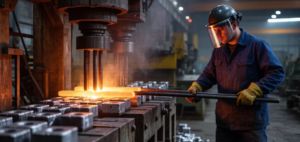

Die forging is a process that shapes metal into desired forms using dies. Understanding this process can help you appreciate the strength and reliability of aluminum components.
In die forging, a die is used to shape the metal by applying pressure, resulting in stronger and more precise components. This process enhances the mechanical properties of the material, making it favored in many industries.
The quality of forged components largely depends on the die used. It's a crucial factor in determining the finished product’s strength and precision. If you want to know more about how dies function in the forging process, keep reading.
What is a Die in Forging?
A die in forging is a specialized tool that shapes and compresses the metal into a desired form. It's not merely a mold; it plays a pivotal role in controlling the flow of the metal's grains. This control is essential for producing high-quality components with enhanced mechanical properties.
The die ensures that the metal retains its strength while shaping it into precise dimensions. The die's design can be tailored to produce components with different shapes and mechanical properties.1
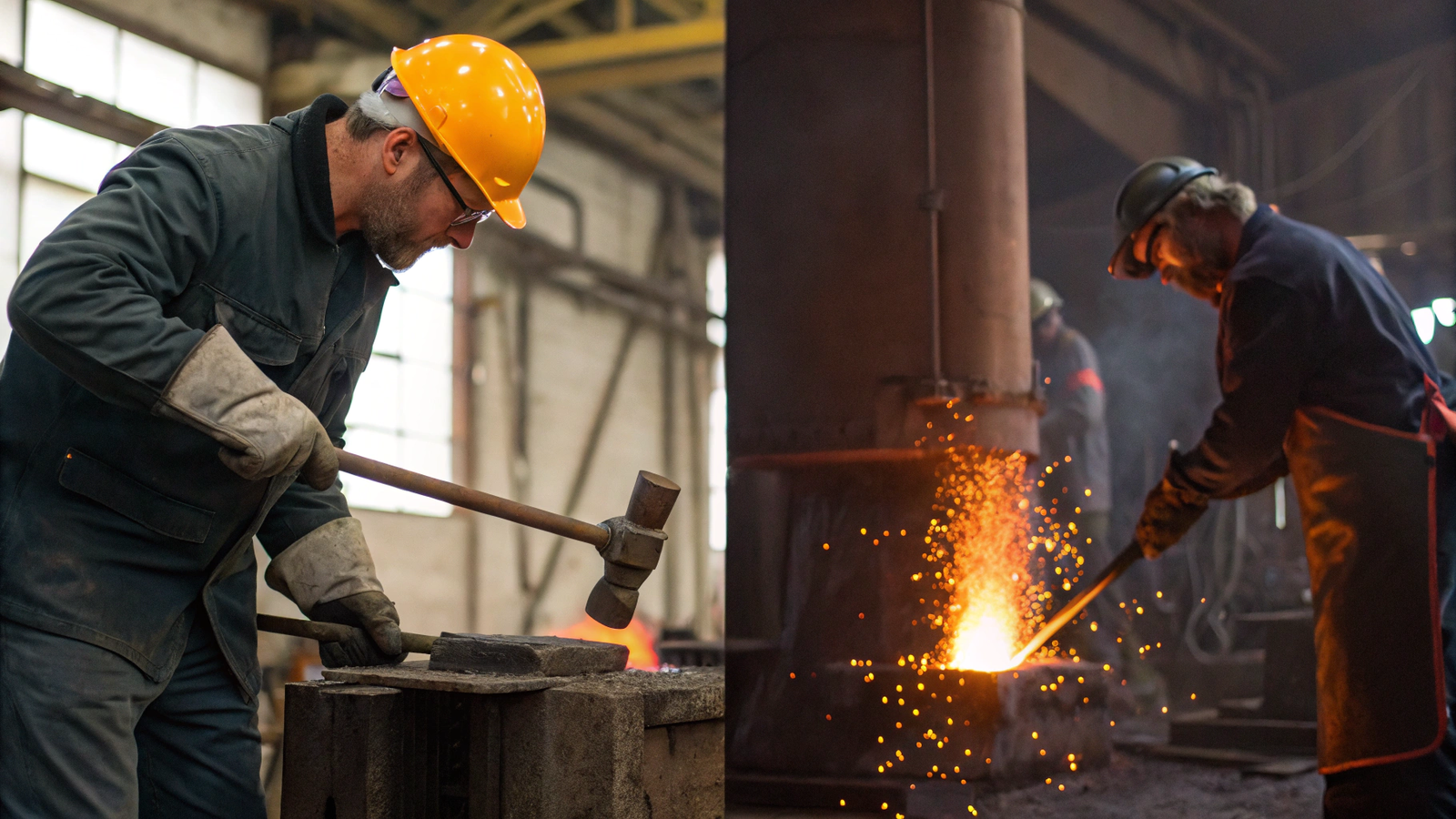
To understand die forging better, let’s take a closer look at the differences between forging and die forging.
What is the Difference Between Forging and Die Forging?
Forging is a general term for the process of shaping metal using compressive forces. This can be done through various methods, including hammering, pressing, or rolling. Die forging is a specific type of forging that uses dies to achieve its shapes.
In die forging, the use of dies allows for precise control over the shape and size of the finished product. This results in components that have improved performance and durability compared to those made through other forging methods.
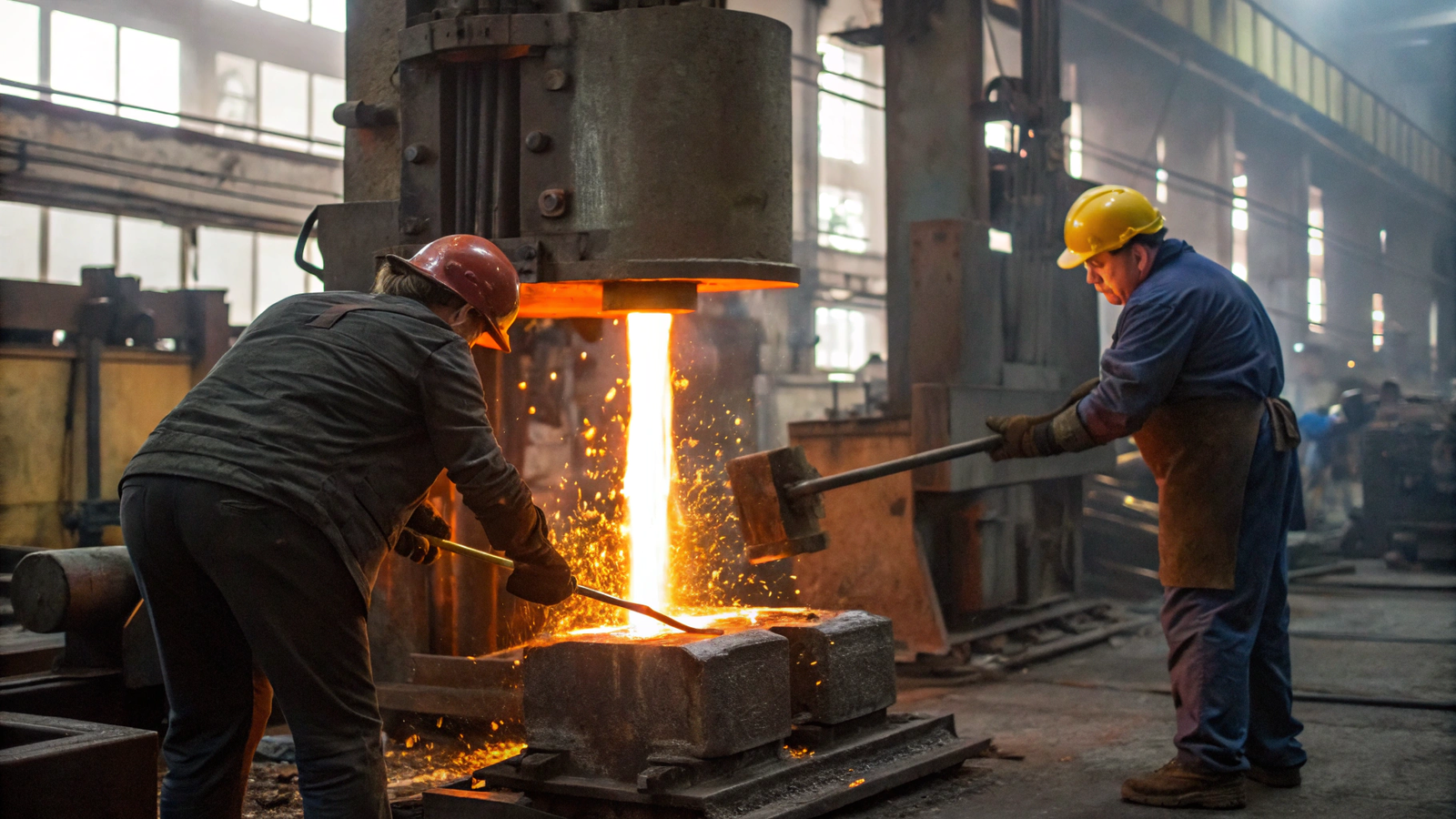
As we delve deeper, let’s explore what open die forging means, as it’s a commonly used process.
What Does Open Die Forging Mean?
Open die forging involves shaping metal by placing it between two flat dies. Unlike closed die forging, where the metal is completely enclosed, open die allows for more flexibility in the shaping process. The metal is repeatedly struck to achieve the desired shape.
Open die forging is often used for larger components where precision is less critical.2 This method allows for greater versatility in terms of shapes and sizes, making it suitable for producing large-scale items.
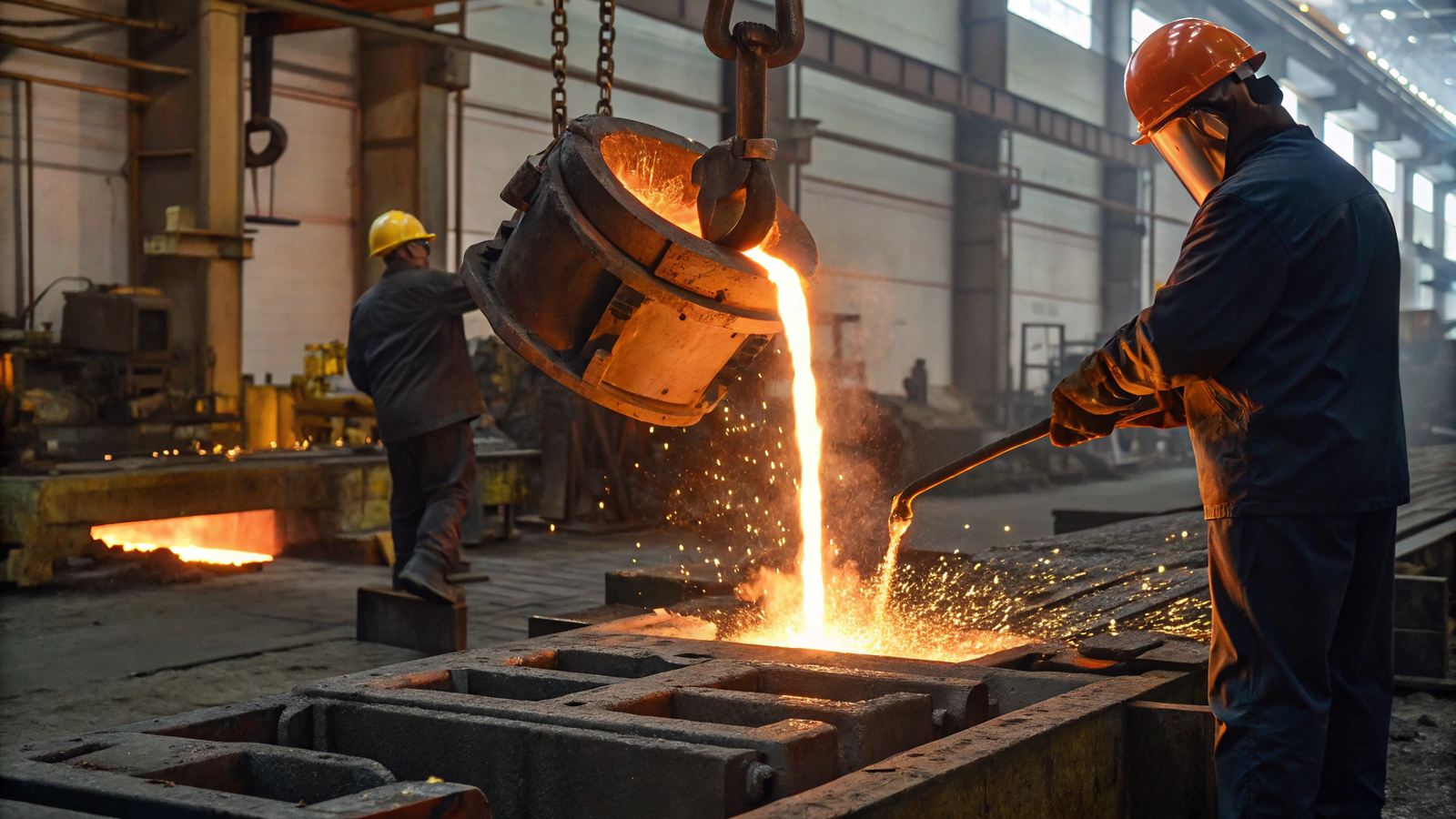
Now, let’s compare open die and impression die forging to understand their differences.
What is the Difference Between Open Die and Impression Die Forging?
Open die forging uses flat dies to shape metal, while impression die forging uses dies that have a specific shape, which can enclose the metal partially. This leads to more intricate designs and shapes in the finished product.
The key difference lies in the die design and the level of detail that can be achieved. Impression die forging can create more complex shapes and is often used for smaller components, while open die is better suited for larger, simpler pieces.
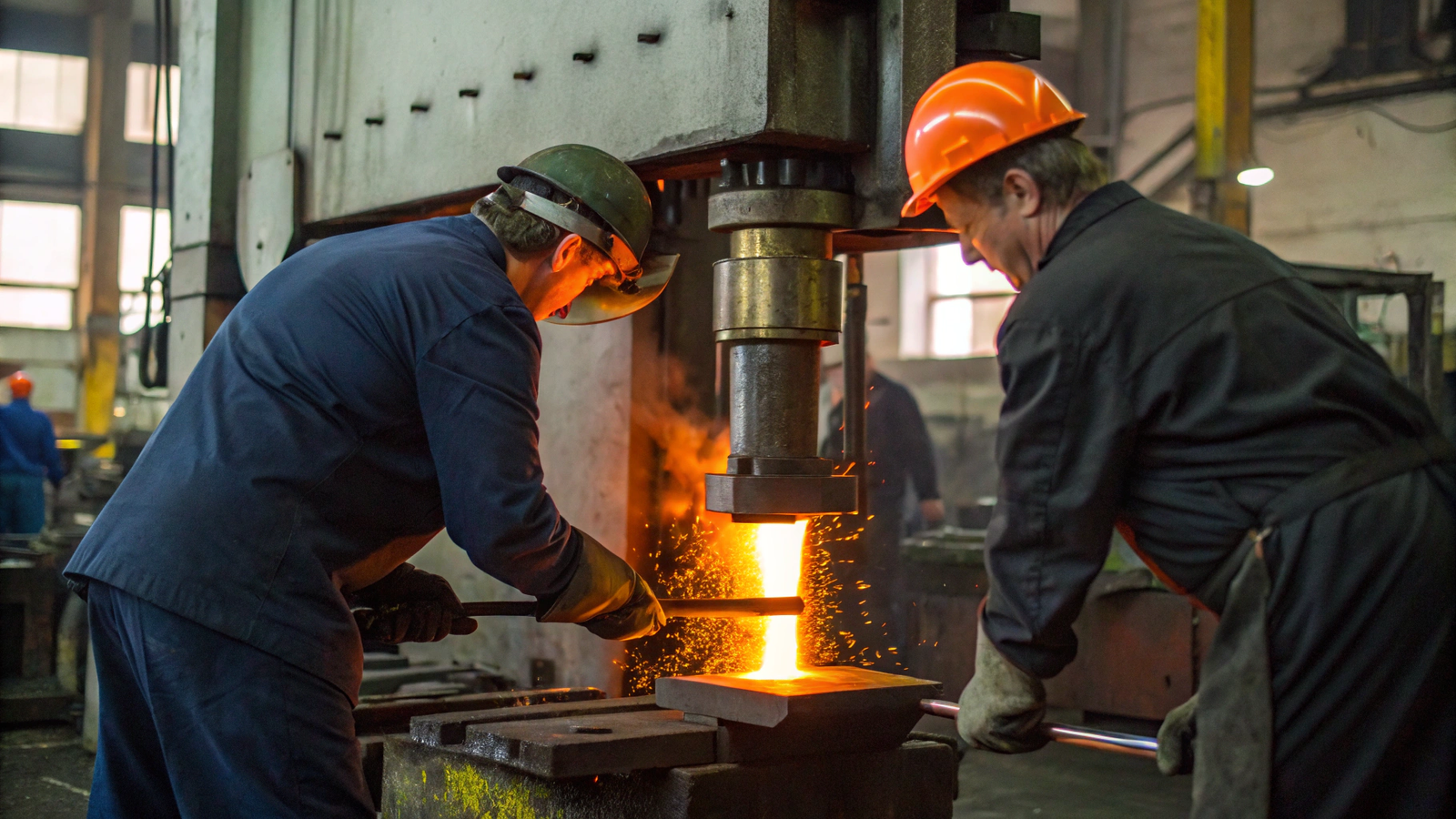
Understanding these differences can help you choose the right forging method for your project needs.
Conclusion
Die forging is a critical process that shapes high-quality aluminum components, enhancing their strength and durability.
"A Study on Cold Forging Die Design Using Different Techniques", https://www.academia.edu/24916623/A_Study_on_Cold_Forging_Die_Design_Using_Different_Techniques. The source explains that die geometry and forging process parameters affect material flow, final geometry, strain distribution, and resulting mechanical properties in forged parts. Evidence role: mechanism; source type: research. Supports: Die design can be engineered to influence both part shape and mechanical properties.. Scope note: The support is general; actual properties require alloy-specific process data and testing. ↩
"[PDF] Metallurgical Impact of Switching from Hammer Units to Hydraulic ...", https://digitalcommons.calpoly.edu/context/matesp/article/1298/viewcontent/auto_convert.pdf. The source states that open-die forging is commonly used for large or simple-shaped workpieces and generally provides less dimensional detail than impression-die or closed-die forging. Evidence role: general_support; source type: education. Supports: Open-die forging is commonly suited to large components and is generally less precise than impression-die forging.. Scope note: The comparison is typical rather than absolute; open-die forging can still meet demanding tolerances with machining and process control. ↩