
Selecting aluminum for machining can feel overwhelming. Many factors influence the choice, including alloy grades, properties, and your project's specific needs.
The best grade of aluminum for machining depends on your project's requirements. Generally, 6061 and 7075 are popular choices due to their excellent machinability and strength1. However, the true quality lies in the material's metallurgical structure.
Choosing the right aluminum alloy is critical. It impacts the performance, durability, and cost of your machined components. However, many people mistakenly believe that the alloy grade alone determines quality. In reality, the metallurgical structure plays a crucial role. When you use forged aluminum rings and discs, for example, they offer a uniform grain structure2. This means less distortion, better surface finish, and enhanced mechanical properties. Ultimately, this elevates any alloy choice, setting a new standard for what constitutes quality material.
What is the best grade of aluminum for machining?
The best grade of aluminum for your machining project truly hinges on what you're aiming to achieve. If your project requires lightweight materials with good corrosion resistance, 6061 is typically recommended. It offers good weldability and is quite versatile, making it suitable for a range of applications. On the other hand, 7075 aluminum is known for its high strength-to-weight ratio. It's often chosen for aerospace applications3 and other demanding environments.
When selecting aluminum for machining, consider your project specifications, including weight, strength, and corrosion resistance. Each grade has unique properties that can enhance the performance of your final product.
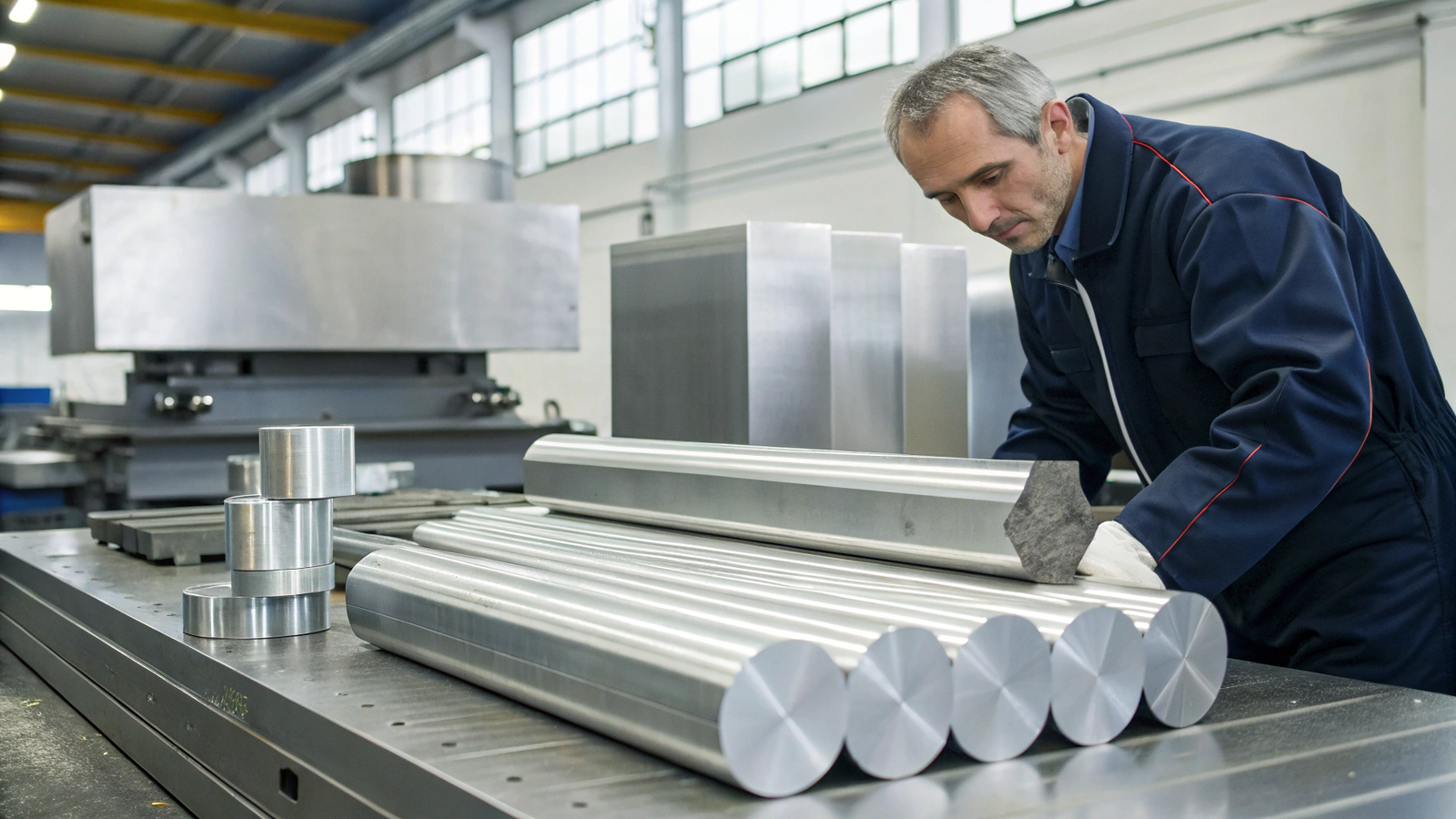
Diving deeper into the options, it’s evident that the choice between 6061 and 7075 is not merely about strength. 6061 aluminum is a go-to for general machining tasks. It’s easy to work with and has good mechanical properties. Conversely, 7075 is a stronger alloy, but it can be harder to machine due to its toughness.
Both grades serve distinct purposes, and understanding their applications can help you decide. For projects that need durability without extreme weight concerns, 6061 is a solid choice. If extreme strength is your priority, especially in high-stress applications, 7075 is the better option. The decision should reflect the demands of your specific machining project.
What is better, 6061 or 7075 aluminum?
When comparing 6061 and 7075 aluminum, the decision often comes down to application and performance needs. 6061 aluminum is generally more affordable and easier to machine. It's also more versatile, with applications ranging from structural components to automotive parts.
On the other hand, 7075 aluminum shines in high-stress applications with its superior strength. While it may be pricier and trickier to work with, the performance gains can justify the investment.
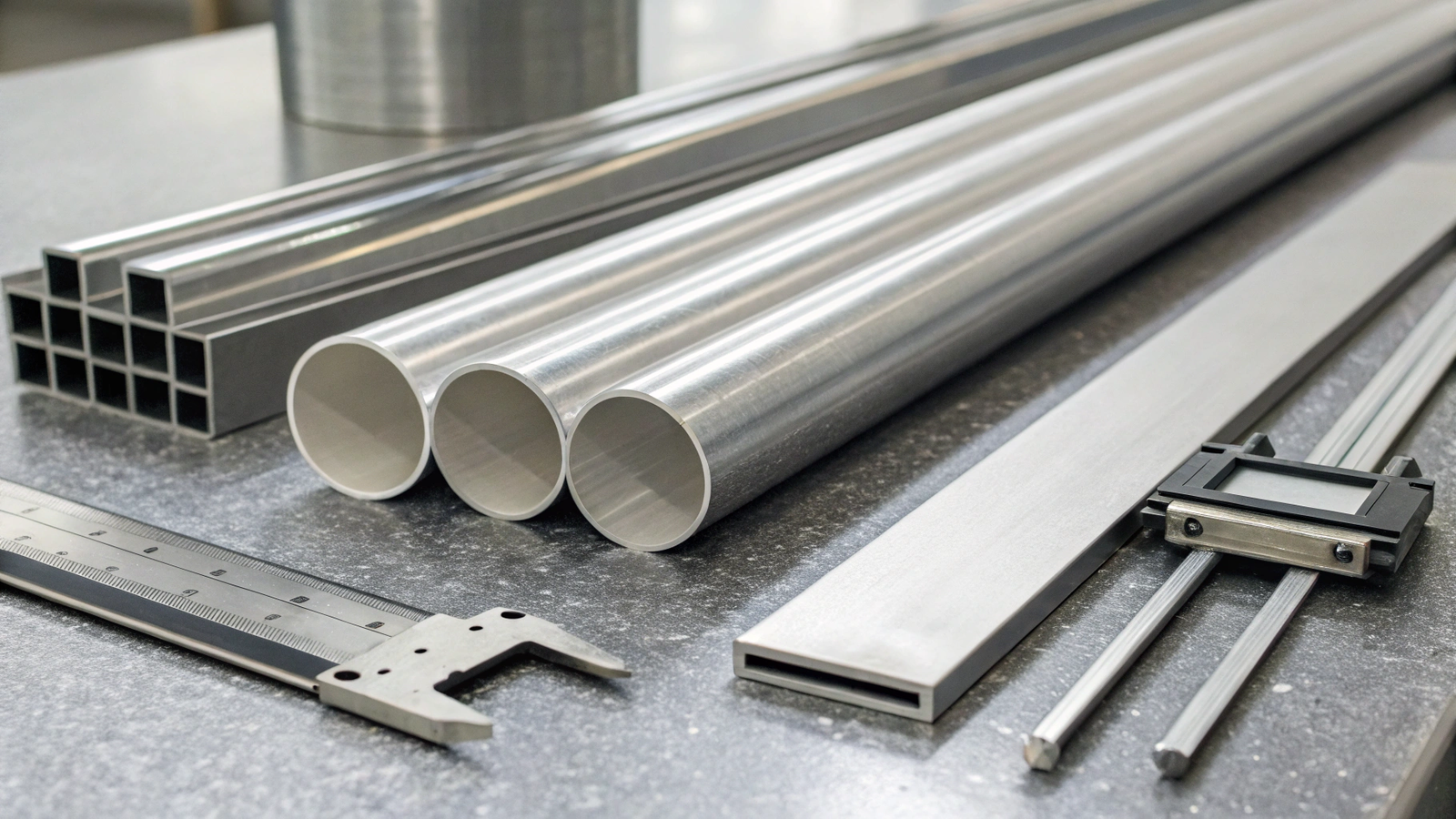
To understand their differences in detail, let’s look at their mechanical properties in a table:
| Property | 6061 Aluminum | 7075 Aluminum |
|---|---|---|
| Yield Strength | 35,000 psi | 73,000 psi |
| Ultimate Tensile Strength | 45,000 psi | 83,000 psi |
| Machinability Rating | Good | Fair |
| Corrosion Resistance | Good | Moderate |
| Cost | Lower | Higher |
From this comparison, it’s clear that while 6061 is a reliable, all-purpose aluminum, 7075 offers the strength required for more demanding applications. Your choice should reflect the performance needs of your project, balancing cost with required mechanical properties.
Which is better, 6061 or 6063 aluminum?
The choice between 6061 and 6063 aluminum often depends on the specific application. Both belong to the same series, but they have different properties. 6063 is known for its excellent extrudability and is often used in architectural applications, such as window frames and door frames.
However, 6061 is favored in structural applications due to its higher strength and versatility. If you need something that can withstand loads and is easier to machine, 6061 is the better option.
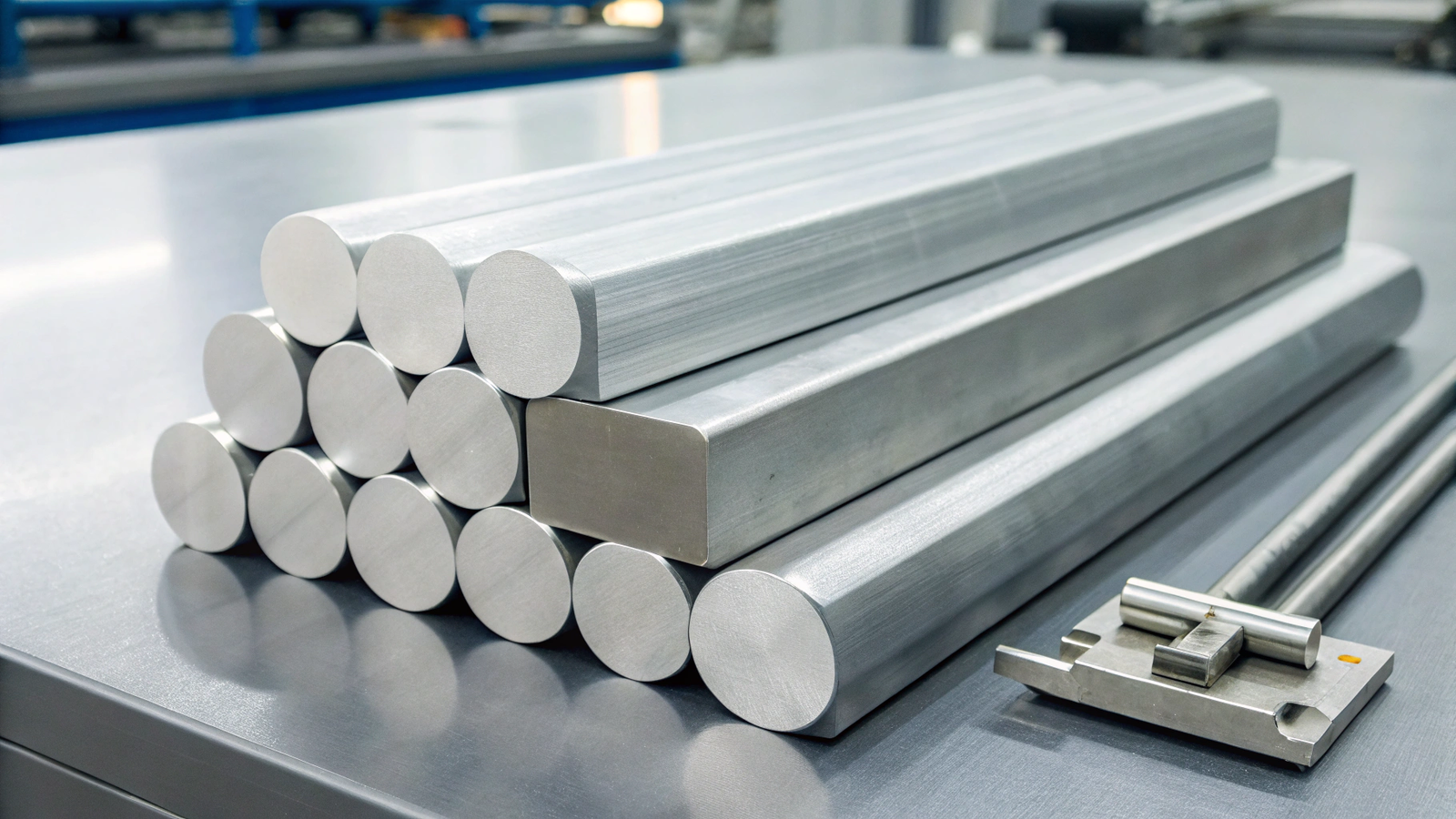
To explore their differences further, consider a table that outlines key properties:
| Property | 6061 Aluminum | 6063 Aluminum |
|---|---|---|
| Yield Strength | 35,000 psi | 27,000 psi |
| Ultimate Tensile Strength | 45,000 psi | 37,000 psi |
| Machinability Rating | Good | Excellent |
| Extrudability | Moderate | Excellent |
| Cost | Moderate | Lower |
This breakdown shows that while 6063 is easier to extrude, 6061 provides superior strength and versatility. If your machining project requires higher structural integrity, 6061 should be your go-to.
Which is stronger, 5052 or 6061?
The comparison between 5052 and 6061 aluminum comes down to the specifics of your project. 5052 aluminum is well-known for its excellent corrosion resistance and moderate strength. This makes it ideal for marine applications and environments prone to corrosion.
However, 6061 offers higher strength and better machinability, making it a more suitable choice for structural components and machining applications.
To get a clearer picture of their differences, here’s a comparison table:
| Property | 5052 Aluminum | 6061 Aluminum |
|---|---|---|
| Yield Strength | 28,000 psi | 35,000 psi |
| Ultimate Tensile Strength | 33,000 psi | 45,000 psi |
| Corrosion Resistance | Excellent | Good |
| Machinability Rating | Fair | Good |
| Cost | Moderate | Moderate |
From this comparison, it is evident that 6061 is stronger than 5052, making it more suitable for applications requiring high strength and good machinability. On the other hand, if corrosion resistance is your primary concern, 5052 may be the better choice.
Conclusion
Choosing quality aluminum for machining involves understanding the specific needs of your project and recognizing that metallurgical structure often determines true quality, not just alloy grade.
"[PDF] MATERIALS DATA HANDBOOK Aluminum Alloy 7075", https://ntrs.nasa.gov/api/citations/19670004550/downloads/19670004550.pdf. A materials handbook or alloy database can document that 6061 is commonly rated as readily machinable and that 7075 is a high-strength aluminum alloy, supporting their frequent selection for machined parts. Evidence role: general_support; source type: institution. Supports: 6061 and 7075 are popular machining choices because of machinability and strength.. Scope note: This supports the technical rationale for the alloys’ use but may not directly measure market popularity. ↩
"[PDF] Forging of Carbon and Alloy Steels - Mines Files", https://wpfiles.mines.edu/wp-content/uploads/aspprc/ResearchMaterials/Publications/280-Van-Tyne.pdf. A forging metallurgy source can describe how forging can refine and orient grain flow in aluminum components, improving structural uniformity compared with some cast forms. Evidence role: mechanism; source type: research. Supports: Forged aluminum rings and discs can have a more uniform or controlled grain structure.. Scope note: The degree of uniformity depends on alloy, forging process, heat treatment, and component geometry. ↩
"A review on aluminium 7075 alloy: Micro structure, mechanical ...", https://ui.adsabs.harvard.edu/abs/2024AIPC.3221b0001V/abstract. An aerospace materials source can document that 7075 aluminum has been widely used in aircraft structures because of its high strength and low density. Evidence role: historical_context; source type: government. Supports: 7075 aluminum is often used in aerospace applications.. Scope note: The source may describe common or historical aerospace use rather than prove present-day selection for every aerospace component. ↩